
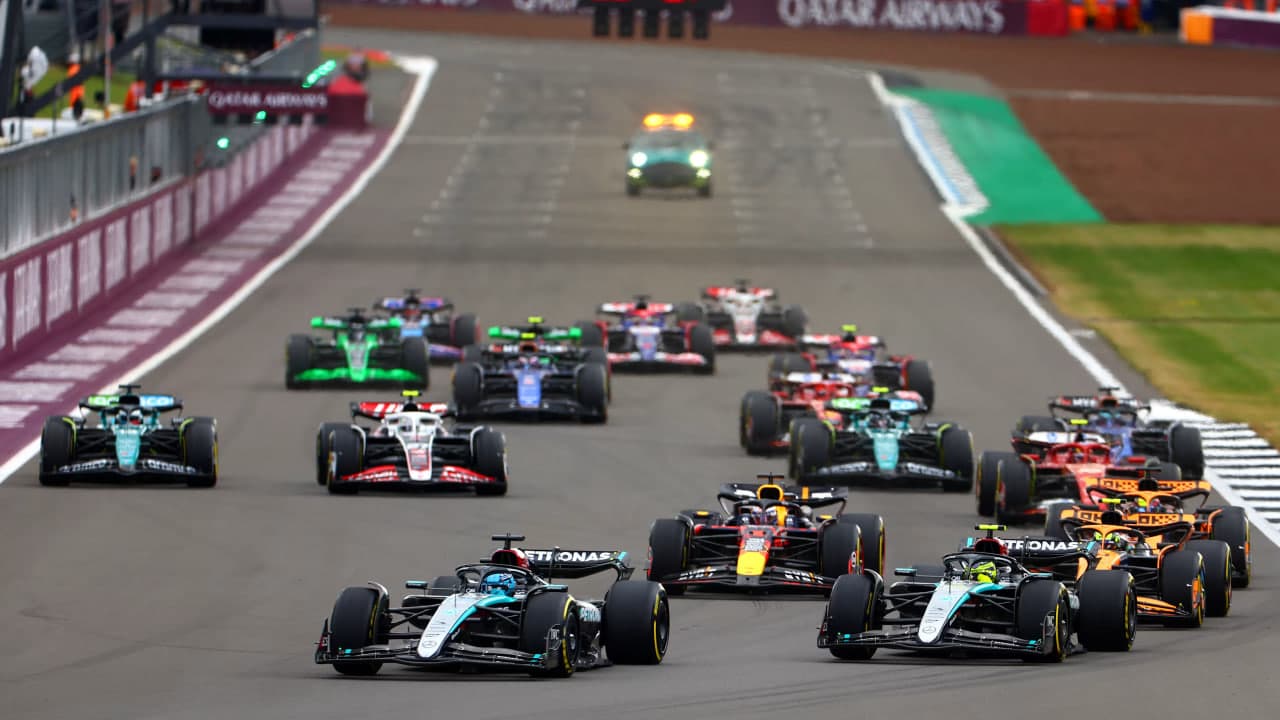
The 75th Formula 1 season delivered non-stop drama from start to finish and confirmed that the sport is entering a new phase. Fresh faces led the charge, long-standing stars faced new challenges and Formula 1 continued to push deeper into popular culture.
The year began with a high-profile season launch in London, setting the tone for a record-breaking calendar. Ten teams travelled across five continents for the longest season in F1 history, racing in packed grandstands and street circuits that felt more like festivals than traditional race weekends.
Norris takes his moment at the top
At the centre of it all was Lando Norris. The McLaren driver became world champion for the first time after a title fight that stayed alive until the final round. Norris opened the season with victory in Australia and later claimed his first win at Silverstone in front of home fans.
McLaren’s biggest strength, the fast car, was also its biggest headache. Norris and his teammate, Oscar Piastri, were often separated by tenths of a second and fought hard on track. Team boss Zak Brown introduced the so-called «Papaya Rules», asking both drivers to race hard but avoid contact. While the rules kept things clean, they also sparked debate, especially when team orders appeared to favour Norris late in the season, according to fans, media and even the Australian senators.
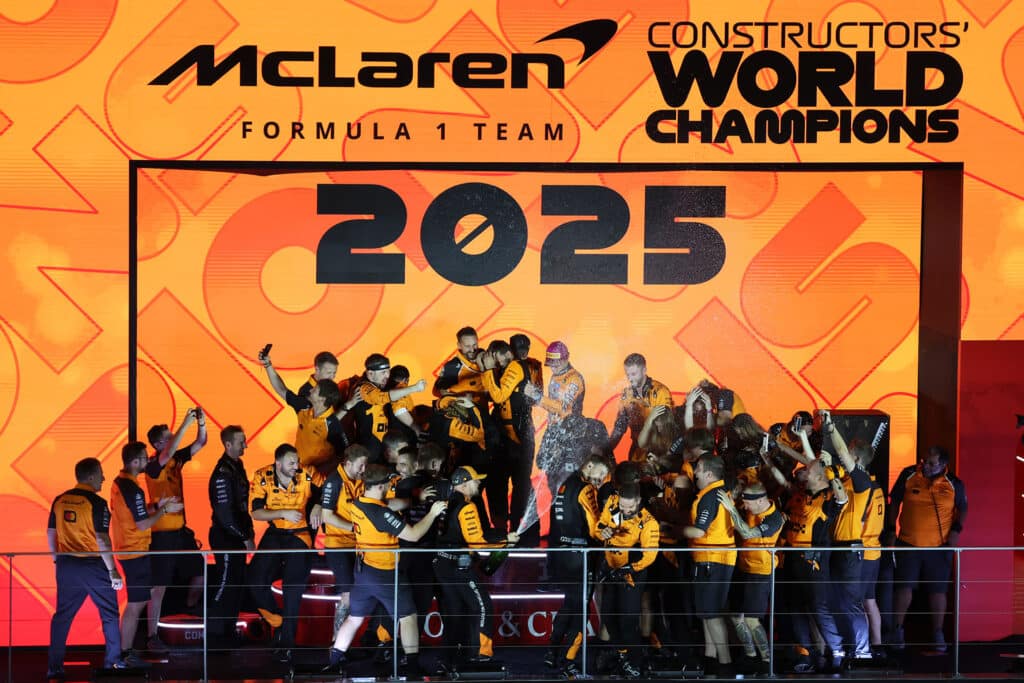
Despite the tension, McLaren wrapped up the Constructors’ Championship at the Singapore Grand Prix in October with six races still remaining.
Verstappen’s late charge keeps it alive
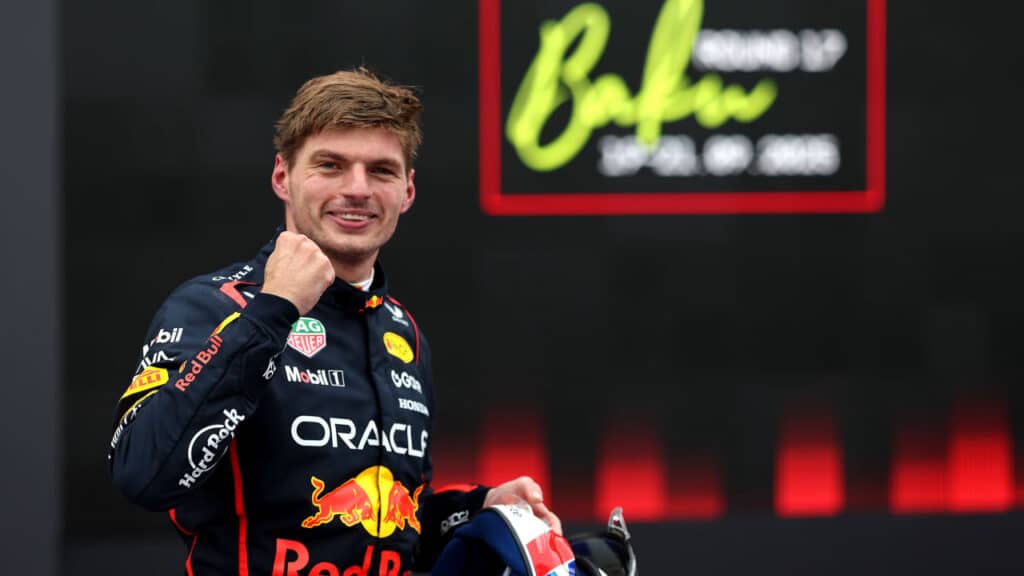
Max Verstappen showed why he remains one of the sport’s greats. The four-time champion struck back late in the year with wins in Las Vegas and Qatar. McLaren faltered in Vegas when Norris and Piastri were both disqualified for excessive plank wear, and Norris then failed to reach the podium in Qatar.
Still, Norris did what he needed to do. A calm third place finish in Abu Dhabi was enough to seal the title and fulfil a lifelong dream.
Changing times for established stars
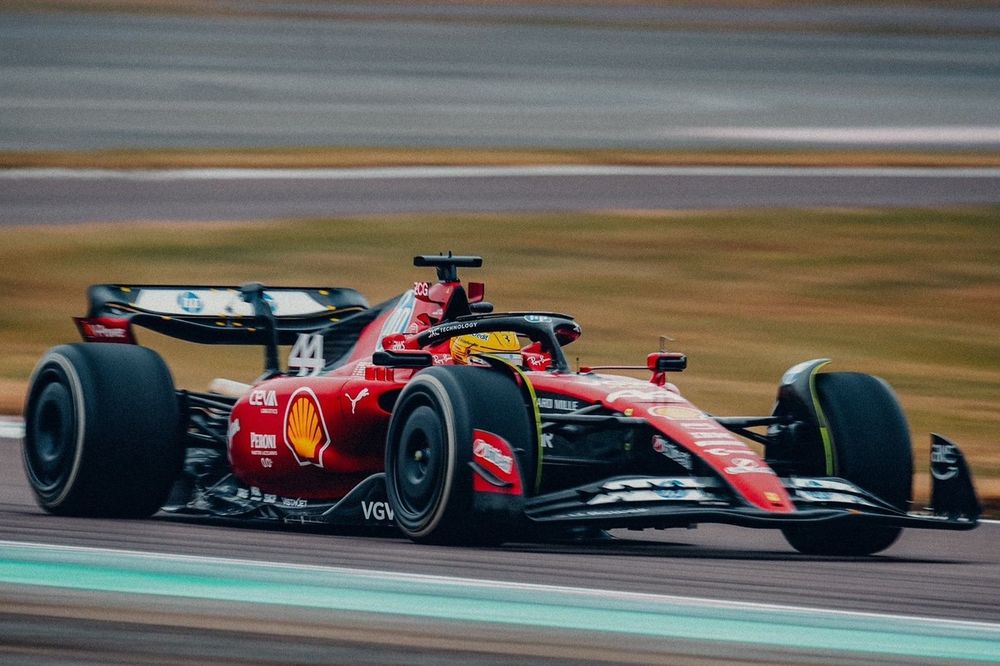
Lewis Hamilton’s switch to Ferrari was the biggest story of the offseason, but 2025 proved challenging. Although he won the sprint race in China, the seven-time champion did not score a Grand Prix podium for the first time in his career.
The season hinted at a wider shift in the sport, with younger drivers increasingly setting the pace across the grid.
Rookies make their mark
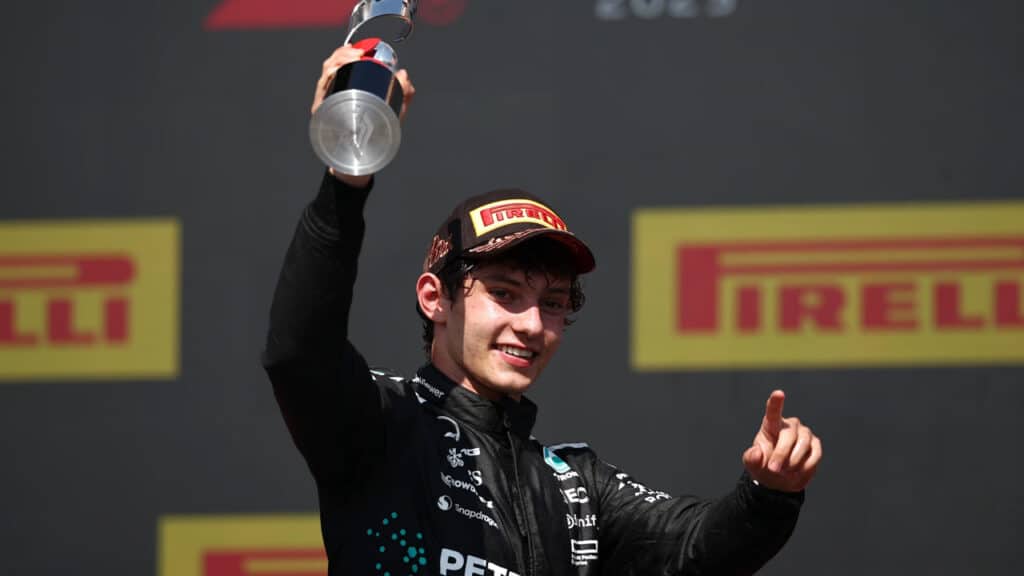
Several first-year drivers stood out. Kimi Antonelli impressed at Mercedes with 150 points and three podium finishes. Isack Hadjar became a fan favourite after recovering from a formation-lap crash in Australia to claim his first podium with third place in the Netherlands. His consistency earned him a promotion to Red Bull for 2026.
Oliver Bearman also caught attention at Haas, putting together five consecutive points finishes late in the season, first ever for Haas.
Lego steals the spotlight
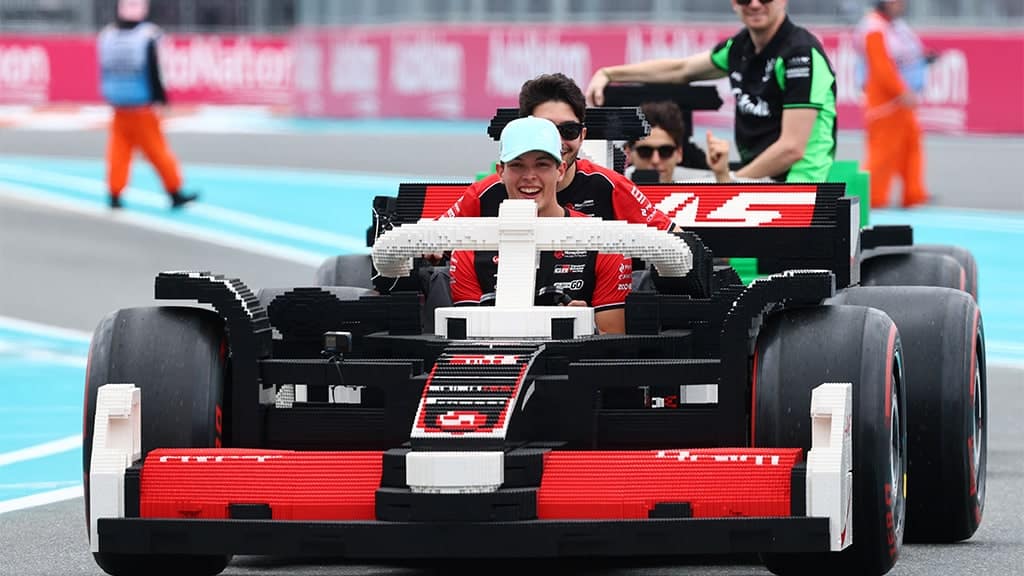
Off the track, Lego emerged as the season’s most memorable sponsor. Drivers paraded in life-sized Lego cars in Miami, brick-built trophies were handed out at Silverstone and Lego flowers appeared during F1 Academy celebrations.
The highlight came in Las Vegas when actor Terry Crews drove the podium finishers to their post-race interviews in a pink Lego Cadillac, adding to the city’s already over-the-top atmosphere.
Unicorns and unexpected podiums at Williams
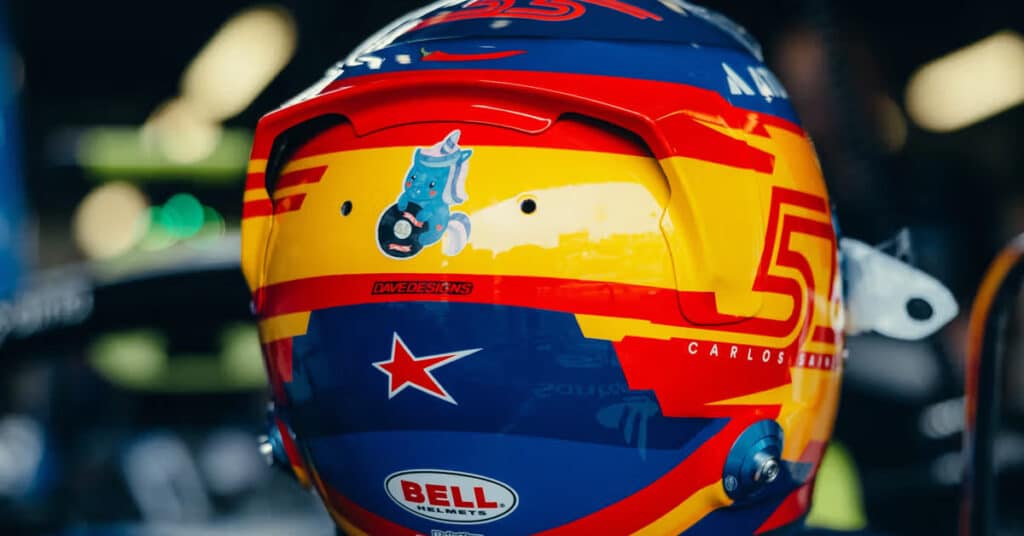
Williams enjoyed one of its most positive seasons in years. Carlos Sainz delivered two podium finishes despite joining a rebuilding team. A unicorn sticker named Sparkles, added to his helmet after a request from a young fan, became a symbol of the team’s unexpected success.
Sainz finished third in Azerbaijan and Qatar and ended the season with a full Sparkles-themed helmet, confirming the mascot would stay with him in 2026.
A long wait finally ends for Hulkenberg
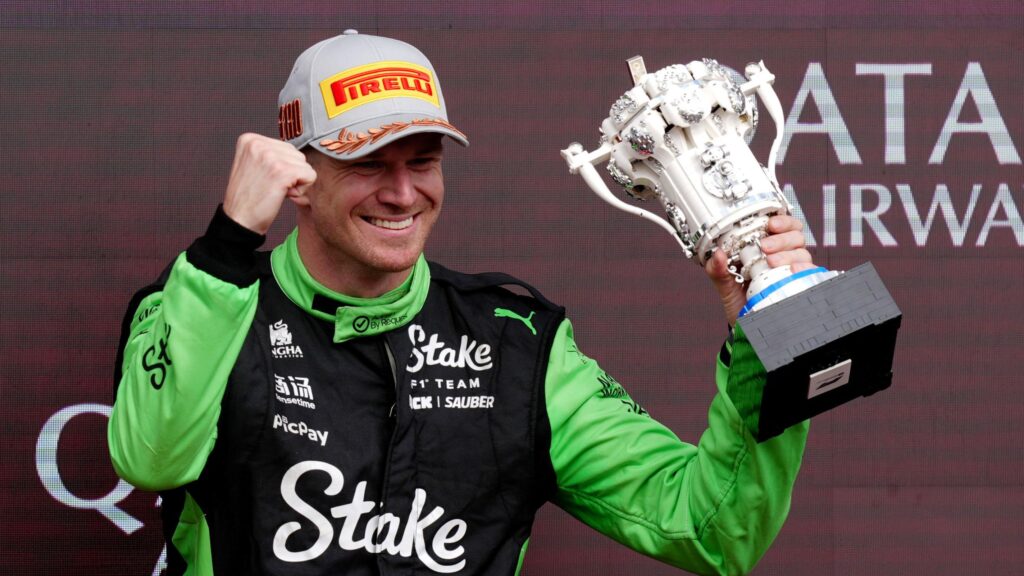
The British Grand Prix delivered another emotional moment. While Norris celebrated victory, Nico Hulkenberg finished third to claim the first podium of his Formula 1 career after 239 starts.
His team had not prepared champagne, and rival garages stepped in to help celebrate a moment that was warmly welcomed across the paddock.
A new grid, new rules and a very different 2026 season
The 2026 Formula 1 season is shaping up to be one of the biggest resets the sport has ever seen. The calendar will again feature 24 races, starting in Melbourne on March 6-8 and ending in Abu Dhabi on December 4-6. Madrid will join the schedule with a new street race in September, while Imola drops off.
For the first time since 2016, there will be 11 teams on the grid. American manufacturer Cadillac joins Formula 1, increasing competition and adding another major name to the championship.
Teams, drivers and engine suppliers
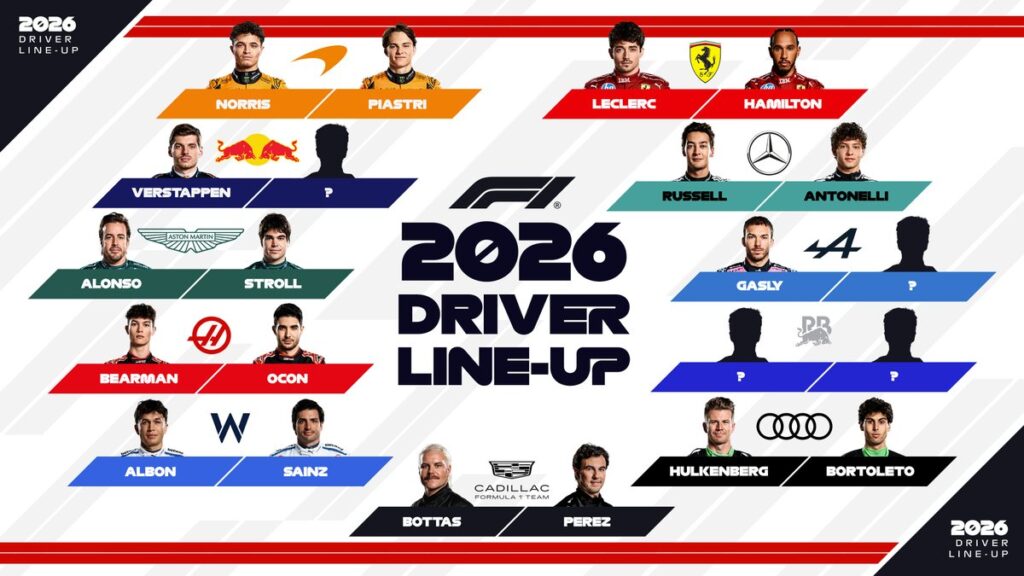
McLaren will keep its title-winning pairing of Lando Norris and Oscar Piastri, powered by Mercedes engines. Mercedes sticks with George Russell and rising star Kimi Antonelli, also running its own power units.
Red Bull continues with Max Verstappen, now joined by Isack Hadjar. Both Red Bull and Racing Bulls will use Red Bull-Ford engines under the new rules. Racing Bulls fields Liam Lawson alongside rookie Arvid Lindblad.
Ferrari retains Charles Leclerc and Lewis Hamilton and continues with its in-house engines. Williams pairs Carlos Sainz with Alex Albon and remains a Mercedes customer team.
Aston Martin keeps Fernando Alonso and Lance Stroll but switches to Honda power. Haas runs Ferrari engines with Esteban Ocon and Oliver Bearman. Audi enters its first full works era with Nico Hulkenberg and Gabriel Bortoleto, using its own power units. Alpine moves to Mercedes engines and fields Pierre Gasly and Franco Colapinto.
Cadillac joins with an experienced line-up of Sergio Perez and Valtteri Bottas and will run Ferrari power in its first season.
Smaller, lighter and built to race closer
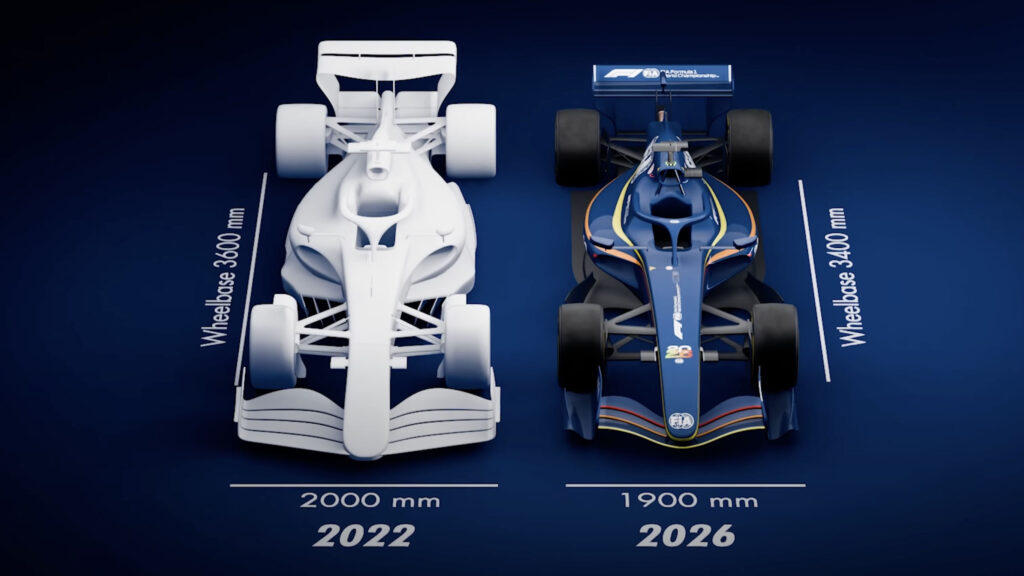
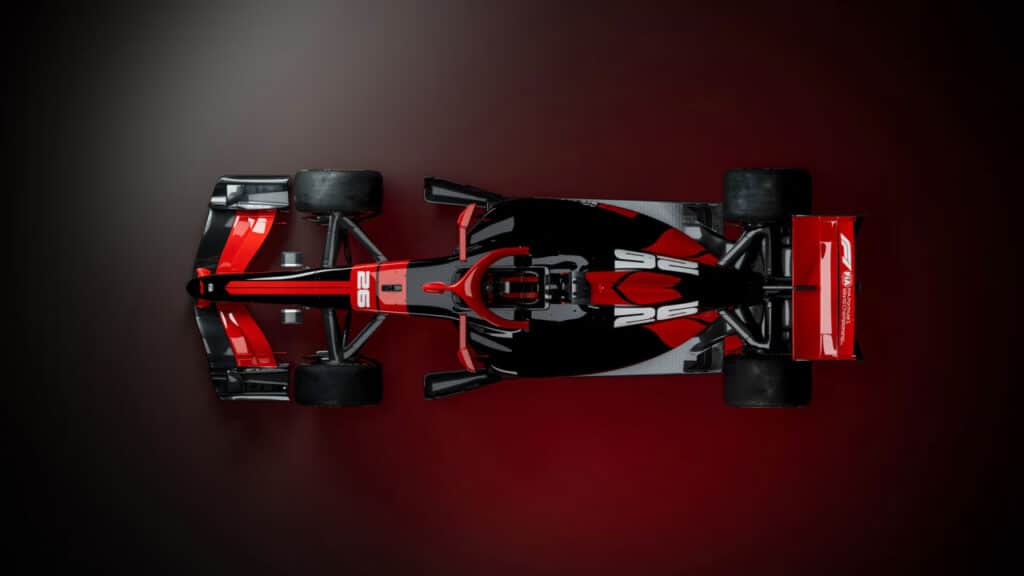
From 2026, Formula 1 cars will be very different. New aerodynamic and power unit rules are being introduced to make the racing closer, the cars more agile and the sport more attractive to manufacturers.
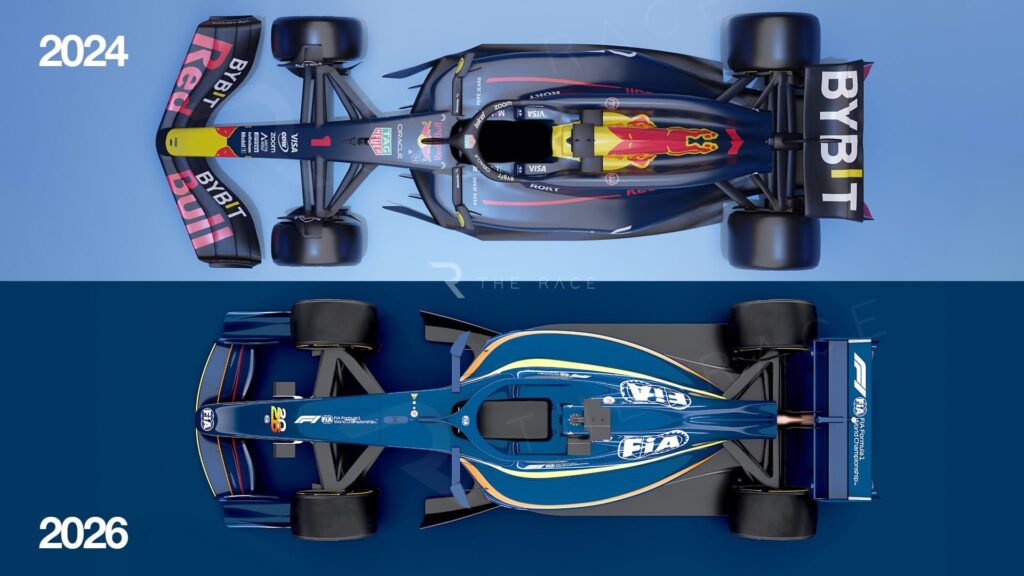
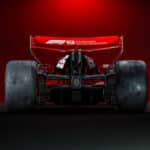
The cars will be shorter, narrower and around 30kg lighter than the current generation. The wheelbase has been reduced, which should make the cars more responsive through corners. Tyres will remain 18-inch, but they will be narrower to cut drag and reduce weight. The small arches above the front tyres will also be removed, helping clean up airflow.
The aim is simple: cars that are easier to race wheel to wheel.
Big changes underneath the car
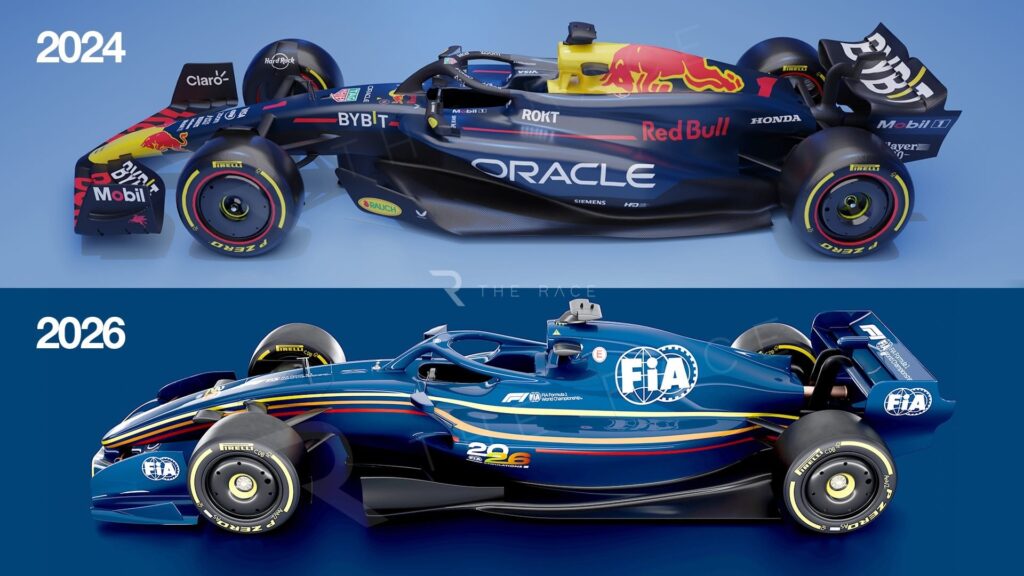
The focus on complex ground-effect floors is being scaled back. The long tunnels used from 2022 to 2025 are gone. In their place are flatter floors with larger diffuser openings.
This reduces overall downforce and raises ride heights. Teams will have more freedom to choose different set-ups, which should suit a wider range of driving styles and help close the gap between teams.
Simpler wings and active aerodynamics
Both the front and rear wings are being simplified. There will be fewer elements, no rear beam wing and narrower front wing sections. The front wing remains a key performance area, so teams will still fight hard for gains there.
The biggest change is the introduction of Active Aero. Cars will now adjust their front and rear wings depending on where they are on the track.
In corners, the wings stay in a high-downforce position for grip. On designated straights, drivers can manually switch to a low-drag mode that flattens the wings and increases top speed. This is available to every driver, on every lap.
DRS as we know it is gone.
The Boost button stays
Drivers will still have a Boost button. This allows them to use stored electrical energy anywhere on the lap, either to attack or defend. It can be used all at once or spread out, depending on strategy and battery charge.
Along with Active Aero and Overtake Mode, this gives drivers three tools to manage during races.
A major power unit shift
The 1.6-litre V6 turbo hybrid remains, but the balance of power changes sharply. From 2026, around half of the power will come from electricity and half from the combustion engine.
Electric power output increases significantly, while the combustion engine becomes less dominant. The complex MGU-H system is removed, cutting cost and weight. Energy recovery under braking is increased, making battery management a bigger part of racing.
These changes have helped attract and retain manufacturers. Ferrari and Mercedes stay on board. Red Bull Powertrains enters with Ford, Audi joins as a full works team, Honda returns and General Motors will follow with its own power unit from 2029.
Fully sustainable fuel and stronger safety
All 2026 cars will run on 100 percent sustainable fuel made from non-food sources such as waste and captured carbon. This allows Formula 1 to keep internal combustion engines while reducing its environmental impact.
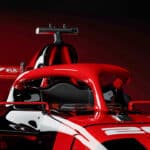
Safety standards are also being raised. The survival cell will be stronger, the roll hoop will handle much higher loads and the front impact structure will better protect drivers in heavy crashes.
New rules almost always shake up Formula 1, and 2026 is expected to be no different. Teams that get the regulations right early could gain an advantage for several seasons. And for now, the rumours on the paddock are leaning towards Mercedes domination.
With new cars, new engines, an extra team and fresh racing tools, Formula 1 heads into 2026 with more unknowns than it has faced in decades. After the spectacle of 2025, the sport now prepares for a future that promises closer racing, new rivalries and a very different look on track.
Kursiv also reports on the 2026 Formula 1 calendar.