Trump Claims U.S. Control of Venezuela After Maduro Seized in Raid

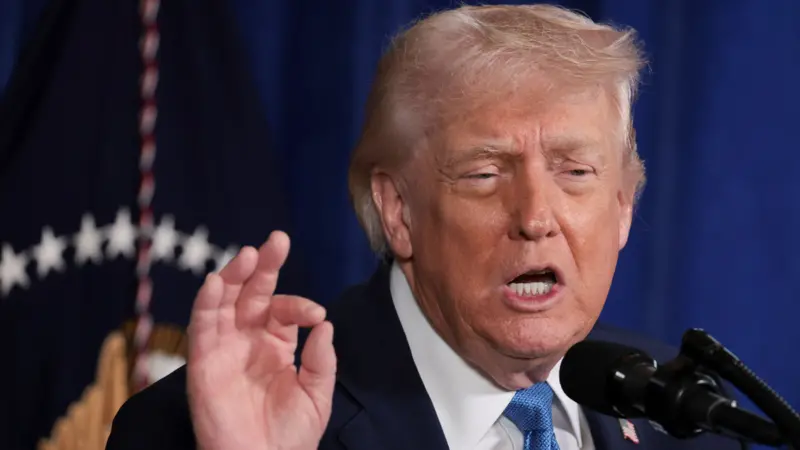
U.S. President Donald Trump said on Saturday that the United States was placing Venezuela under temporary American control after U.S. forces captured President Nicolas Maduro in a surprise operation and flew him to New York to face drug-trafficking charges.
«We will run the country until such time as we can do a safe, proper and judicious transition,» Trump said during a press conference at his Mar-a-Lago resort in Florida. «We can’t take a chance that someone else takes over Venezuela who doesn’t have the interests of Venezuelans in mind.»
Raid and arrest
Trump said U.S. Special Forces captured Maduro in or near one of his safe houses during an overnight operation that knocked out electricity in parts of Caracas and included strikes on military installations.
Maduro and his wife, Cilia Flores, were taken to a U.S. Navy ship offshore before being flown to the United States on Saturday evening.
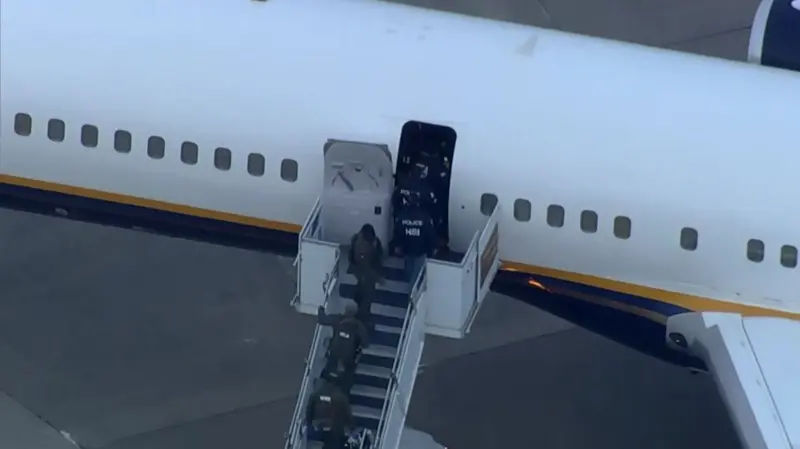
Video showed a plane landing at Stewart International Airport in New York state, followed by a heavy police convoy transporting Maduro to the Metropolitan Detention Center in Brooklyn. A Justice Department official confirmed his arrival.
Maduro, who has been indicted on charges including narco-terrorism conspiracy, is expected to make an initial appearance in Manhattan federal court on Monday. Flores also faces charges, including conspiracy to import cocaine.
Oil plans and criticism
Trump said major U.S. oil companies would move into Venezuela and overhaul its severely degraded oil infrastructure.
«We have the best oil companies in the world and they’re going to fix what’s been broken for years,» he said, referring to Venezuela’s vast reserves.
Critics said Trump’s focus on oil raised doubts about the administration’s claim that the operation was primarily a law enforcement action aimed at disrupting drug trafficking. Experts warned that rebuilding production could take years.
Power vacuum concerns
It remains unclear how Washington would exercise control over Venezuela, where Maduro’s government and military still appear to be functioning. Trump did not name a future leader once US control ends.
«The people standing right behind me,» Trump said, gesturing to Secretary of State Marco Rubio and Defence Secretary Pete Hegseth, «will be overseeing what happens next.»
Asked about deploying U.S. forces, Trump said, «We’re not afraid of boots on the ground.»
Analysts warned that Maduro’s removal could create a dangerous power vacuum in the country, which borders Colombia, Brazil and Guyana.
Venezuelan response
Venezuelan Vice President Delcy Rodriguez appeared on state television to condemn the operation.
«We demand the immediate release of President Nicolas Maduro and his wife Cilia Flores,» she said. «Maduro is the only president of Venezuela.»
A Venezuelan court later ordered Rodriguez to assume the role of interim president.
In Caracas, streets were largely calm. Soldiers patrolled some areas while small pro-Maduro groups gathered. Others expressed relief.
International backlash
Several governments criticised the U.S. move. Brazil’s President Luiz Inacio Lula da Silva said it crossed «an unacceptable line», while Mexico condemned the intervention outright.
Russia and China, both key allies of Venezuela, also criticised Washington.
«China firmly opposes such hegemonic behaviour by the U.S.,» China’s foreign ministry said, adding that it violated international law and Venezuela’s sovereignty.
Trump said a U.S. presence in Venezuela «won’t cost us a penny» because it would be funded by oil revenue, a claim that drew comparisons with the Iraq war.
Some Democrats said they were misled during briefings and demanded clarity on next steps.