Hong Kong Court Begins Trial of Former Tiananmen Vigil Leaders

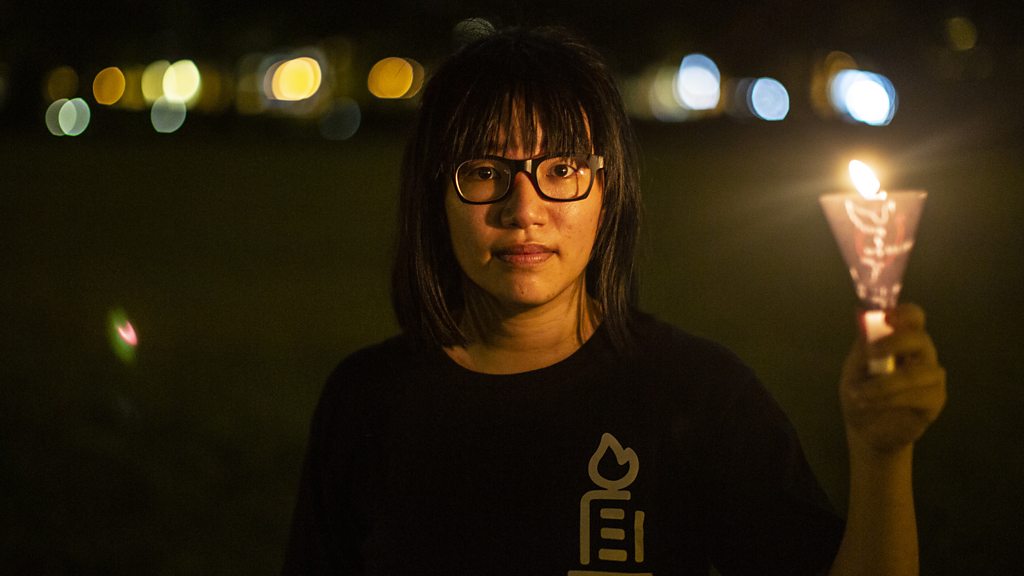
Hong Kong’s High Court began a landmark national security trial on January 22 involving three former leaders of the now disbanded Hong Kong Alliance in Support of Patriotic Democratic Movements of China. The group organised annual vigils commemorating Beijing’s 1989 crackdown on pro-democracy protesters in Tiananmen Square.
The public commemorations, once legal in Hong Kong, were widely seen as a symbol of the city’s relative freedoms compared with mainland China.
«Justice resides in the hearts of the people, and history will bear witness,» said Tang Ngok-kwan, a former senior member of the group, as he joined others queuing outside the court.
The events of June 4, 1989 are not publicly discussed in mainland China, where the date is taboo and public remembrance is banned.
The vigils in Hong Kong were blocked in 2020 under COVID-19 restrictions and have not resumed since China imposed a national security law. Several Tiananmen memorials, including the «pillar of shame», have been removed from university campuses.
Under the national security law, former alliance leaders Lee Cheuk-yan, 68, Albert Ho, 74, and Chow Hang-tung, 40, face charges of «inciting subversion of state power», which carry sentences of up to 10 years in prison. Chow and Lee pleaded not guilty, while Ho pleaded guilty.
The trial is one of the final major cases linked to the city’s pro-democracy movement. Chow, the former vice chair, has been held on remand for more than 1,500 days after being denied bail.
Prosecutors argue calls for democracy crossed into subversion
Prosecutors said the case centres on whether the alliance’s public goal of «ending one-party rule» amounted to illegally encouraging others to subvert state power. They also argued the actions could be seen as attempts to undermine China’s system of government. The alliance has previously said it sought a democratic China, not the destruction of the Chinese Communist Party.
Rights groups and some foreign governments have criticised the case as an example of the national security law being used to silence dissent.
«This case is not about national security – it is about rewriting history and punishing those who refuse to forget the victims of the Tiananmen crackdown,» said Sarah Brooks, Asia deputy director at Amnesty International.
Beijing maintains the national security law was needed to restore order after months of violent protests in 2019.
Chow, detained since September 2021, has continued to speak out and has represented herself in court.
«The state can lock up people but not their thinking, just as it can lock up facts but not alter truth,» she told Reuters in an interview.
Last November, the High Court rejected her bid to end the trial. Judges said the court would rely on evidence and legal principles, and would not allow the trial to become a tool of political repression, as Chow claimed.