Why Uzbekistan and Kazakhstan Joined the Gaza Peace Council, and What Lies Ahead for the Council

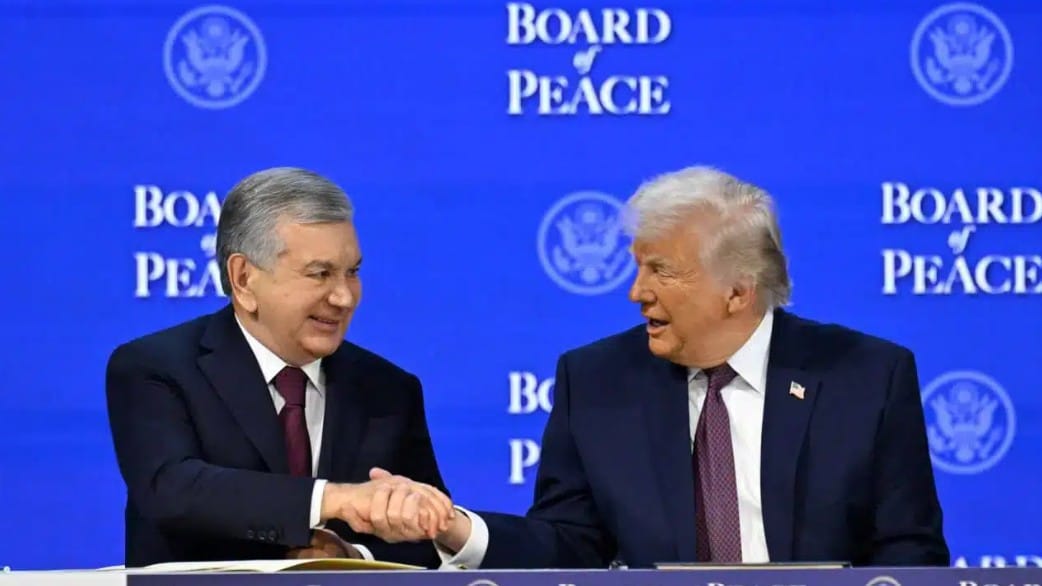
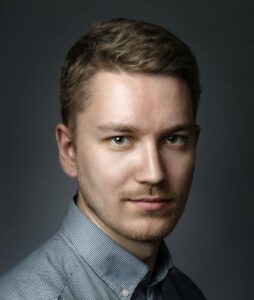
In Davos, the charter of the Gaza Peace Council was approved. The document was signed by representatives of 18 states, including Uzbekistan and Kazakhstan. The prospects of the new structure and the reasons for the participation of Central Asian states are discussed in a commentary by Stanislav Pritchin, Head of the Central Asia Section at IMEMO RAS.
The likelihood that the Gaza Peace Council will be able to achieve any practical results initially appears extremely low. By its very nature, the Council more closely resembles a personal political project of Donald Trump than a full-fledged international initiative.
Trump is the president of the United States, and in the current configuration of the Middle East conflict he will objectively prioritize Israel’s interests. This is also confirmed by the entire previous practice of attempts to resolve the Palestinian issue: numerous initiatives in the past have not led to sustainable results and in most cases promoted a pro-Israeli position. To expect that the new structure will fundamentally change the balance or become an effective settlement mechanism is, at the very least, naive.
Additional doubts are raised by the institutional design of the Council. Its charter is largely structured in such a way that the organisation is effectively under Trump’s personal control. It is the chair who determines whom to include, whom not to include, and whom to exclude from the membership.
At the same time, uncertainty remains regarding key decision-making procedures, as well as the process of paying a membership fee of one billion dollars. It is unclear who will manage these funds, through which instruments and within what oversight mechanisms. From the standpoint of standards applied to serious international organisations, such a structure appears frankly unserious and underscores the personalised nature of the initiative, oriented primarily toward Trump’s image and political ambitions.
A separate explanation is required as to why Uzbekistan and Kazakhstan were invited to the Council, and not other Central Asian states. This is partly explained by objective factors: these are the two largest countries in the region in terms of economy, politics and demographics. However, another aspect is no less important, their high level of complementarity in relations with the United States and their readiness to participate in virtually any American initiatives.
This readiness has already been demonstrated, including during the summit in Washington. This refers to openness toward American companies, access to natural resources, as well as the purchase of American goods in significant volumes. This is precisely the kind of behaviour expected by an American president focused on direct economic benefits for the United States and the American taxpayer. In this sense, Uzbekistan and Kazakhstan are perceived as partners capable of most effectively integrating into Trump’s pragmatic economic logic.
It is important to note that around 50 countries have been invited to participate in the Council overall. Among them is the Russian Federation. However, Moscow has not yet made a final decision on joining. The very expediency of participation is being examined, given that the effectiveness of the organization raises serious doubts. At the same time, contacts were taking place with Palestinian President Mahmoud Abbas.
The issue of paying the membership fee also stands separately. The Russian side is considering the possibility of using frozen funds for this purpose, which only further underscores the ambiguity of the initiative.
As a result, none of the major international players has so far given an unequivocal consent to participate. The reason is simple — there are too many questions regarding the effectiveness, transparency and real goals of the Gaza Peace Council. In its current form, this structure looks not like a mechanism for conflict resolution, but like a personalised political initiative rigidly tied to the figure of Donald Trump and therefore lacking long-term institutional sustainability.