Bahrain Testing Day Two Morning: Leclerc Leads as Reliability Questions Emerge

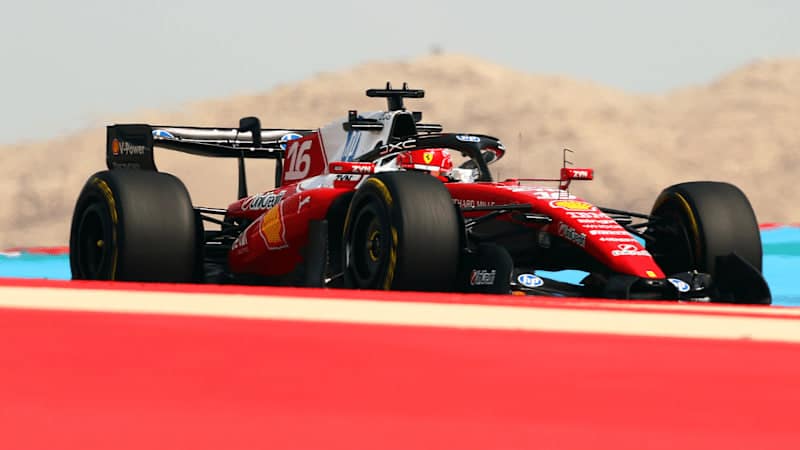
Charles Leclerc set the pace in the opening half of day two of Formula 1 pre-season testing in Bahrain, as several leading teams encountered reliability concerns under the new 2026 regulations.
The Ferrari driver, running solo for the full day, posted a best time of 1m 34.273s to finish half a second clear of reigning World Champion Lando Norris. Alpine’s Pierre Gasly was a distant third, with Oliver Bearman and Alexander Albon completing the top five.
Ferrari strong, McLaren busy
Ferrari enjoyed a smooth and productive morning, with Leclerc completing 62 laps and comfortably surpassing race distance. The Scuderia appeared confident in its programme, focusing on longer runs and energy deployment work.
McLaren also logged significant mileage. Norris completed a session-high 64 laps before a late issue left his car stranded at the end of the pit lane, forcing him to climb out. The problem curtailed his final run but is unlikely to cause major alarm at this stage.
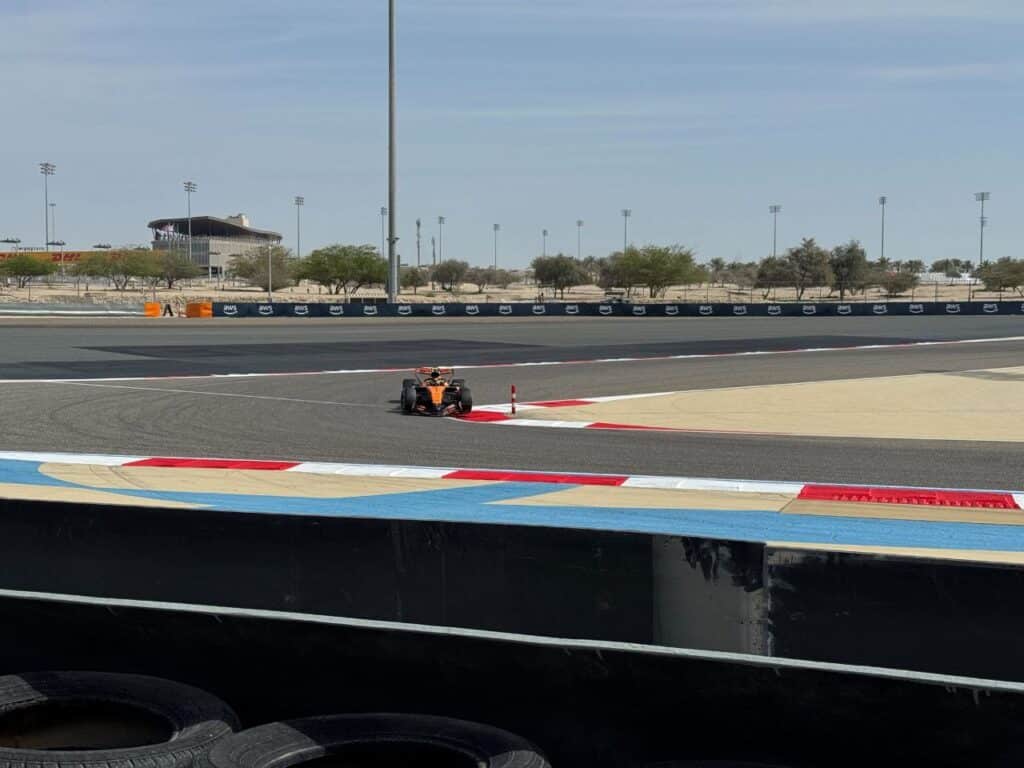
McLaren’s chief designer Rob Marshall admitted the team are still «very much exploring» the new power unit systems, with warmer Bahrain conditions presenting different challenges to those seen at the Barcelona shakedown.
Red Bull and Mercedes limited
Red Bull endured a disrupted session. Isack Hadjar failed to record meaningful mileage after the team discovered a problem on the RB22 early on. The Frenchman eventually completed a single installation lap in the final minute of the session.
Mercedes also struggled for track time. Kimi Antonelli managed just three laps following disruption on Wednesday afternoon, leaving the Silver Arrows with work to do in the afternoon session.
Cadillac stoppage and steady progress elsewhere
There was an early red flag when Sergio Perez stopped his Cadillac after just one lap. The car was quickly recovered and the Mexican returned to complete 42 laps before the break.
Williams continued their encouraging start to the test. Albon completed 62 laps and again demonstrated strong reliability as the Grove-based team look to make up for missing the Barcelona shakedown.
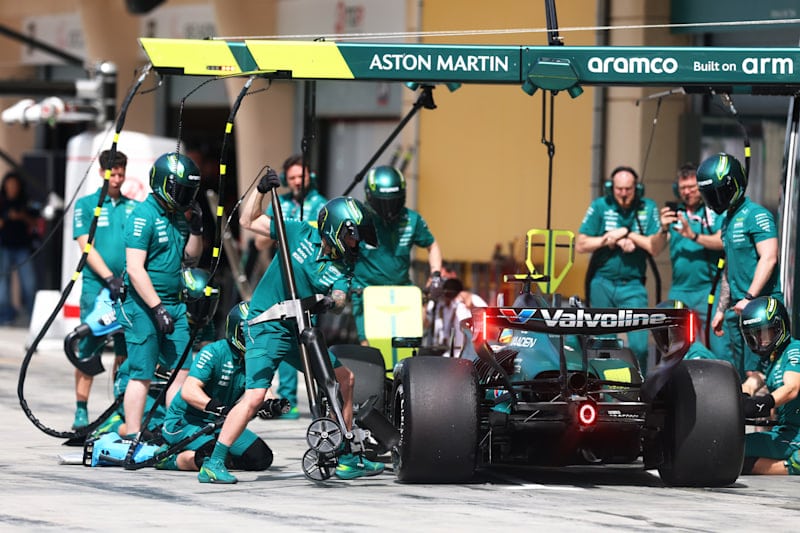
Aston Martin enjoyed a more productive morning than day one, with Fernando Alonso logging 55 laps after Lance Stroll’s limited running on Wednesday.
Gasly, running all day for Alpine, also impressed with 61 laps as the team continue adapting to their new Mercedes power unit following a difficult 2025 campaign.
Aero work and energy focus
Active aerodynamics were once again a prominent feature, with rear and front wings visibly flattening on the straights. Several teams ran large aero rakes and flow-vis paint to gather real-time airflow data, crucial in understanding the radically revised chassis and power units.
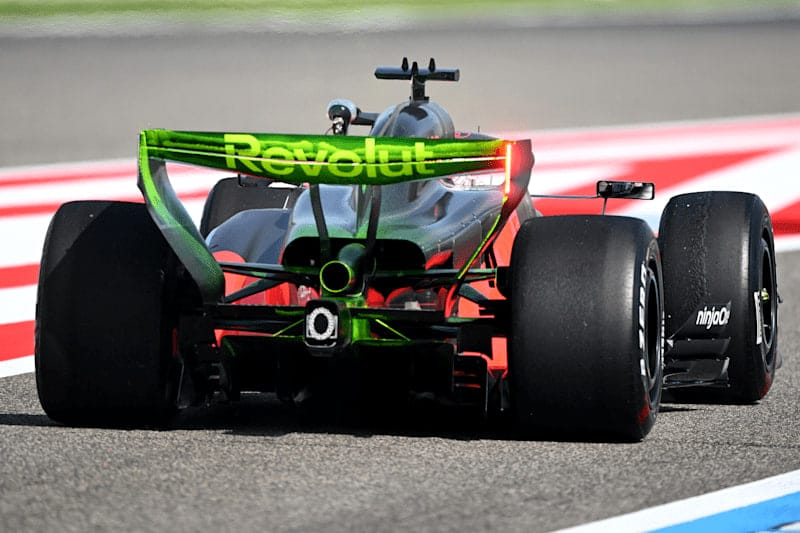
Energy management remained a key theme. Observers noted varied approaches to deployment and harvesting, particularly between Ferrari and McLaren, highlighting how battery strategy could play a decisive role once racing begins.
Social media focus on Verstappen technique
Away from the official timing sheets, much of the online discussion centred on Max Verstappen’s driving style from day one.
Reports circulating on social media claimed the Red Bull driver was using an unconventional downshifting technique, rapidly dropping multiple gears in succession in certain braking zones. Some observers suggested the approach could increase energy harvesting under the new hybrid regulations, potentially allowing improved battery charge levels over longer runs.
There has been no official confirmation from Red Bull regarding the claims, and such techniques are not unusual during testing as drivers explore different methods of optimising regeneration. Several drivers were seen experimenting with aggressive downshifts during the morning session today, though not always with the same consistency.
Engine politics and rule whispers.
Unverified reports also emerged suggesting Mercedes had raised concerns with the FIA regarding potential engine directives ahead of the season opener in Australia. There has been no official statement from either the governing body or the manufacturer.
Separately, speculation circulated that the FIA may introduce clearer methods for measuring engine parameters, including compression ratios, though again there has been no formal confirmation.
Different approaches to energy deployment
Analysis from the paddock suggested contrasting energy strategies between leading teams. Ferrari appeared to deploy heavily along the main straight before aggressively harvesting under braking, while McLaren’s approach looked more gradual across the lap before concentrating deployment later in the circuit.
Such variations underline how battery management could become a defining factor in 2026, particularly with active aerodynamics reducing drag on the straights.
Morning classification
- Charles Leclerc, Ferrari – 1m 34.273s
- Lando Norris, McLaren +0.511s
- Pierre Gasly, Alpine +2.450s
- Oliver Bearman, Haas +2.752s
- Alexander Albon, Williams +2.956s
- Nico Hulkenberg, Audi +2.993s
- Liam Lawson, Racing Bulls +3.744s
- Sergio Perez, Cadillac +4.380s
- Fernando Alonso, Aston Martin +4.687s
- Kimi Antonelli, Mercedes – no representative time
- Isack Hadjar, Red Bull – installation lap only
With driver swaps scheduled over lunch for several teams and issues still to investigate for others, the afternoon session promises further clues as Formula 1’s new era continues to unfold in the desert.