Central Asia Banks to Remain Resilient in 2026 Despite Risks, S&P


Banks across Central Asia and the Caucasus are expected to remain resilient in 2026, supported by strong profitability, solid capital buffers and continued economic growth, according to a new report by S&P Global Ratings.
The agency forecasts regional lending growth of around 15%–20%, driven largely by retail demand, while asset quality is expected to remain broadly stable amid a supportive macroeconomic environment.
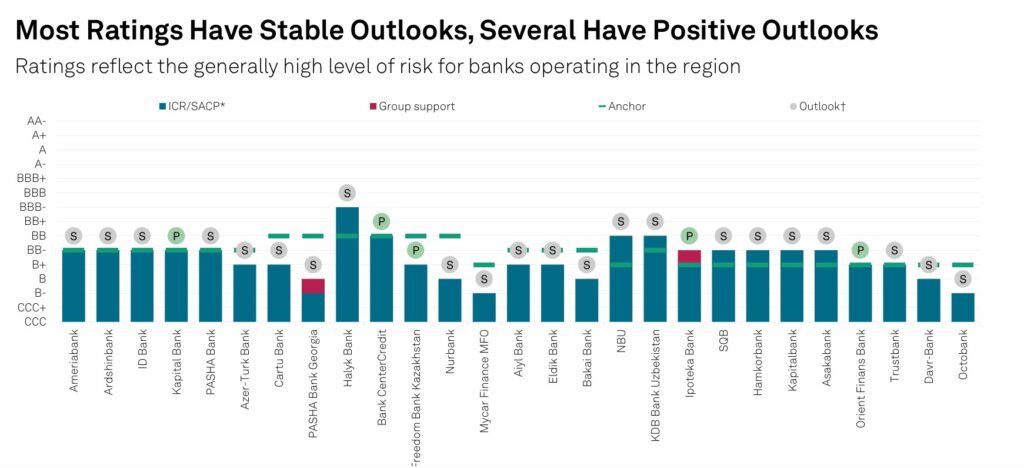
S&P said favourable economic prospects, stable funding bases and sound liquidity metrics could lead to further positive rating actions, with most banks already holding stable outlooks and some carrying positive outlooks.
However, the report highlights several risks, including geopolitical tensions, rapid retail lending growth and emerging challenges linked to digitalisation, artificial intelligence and cyber threats.
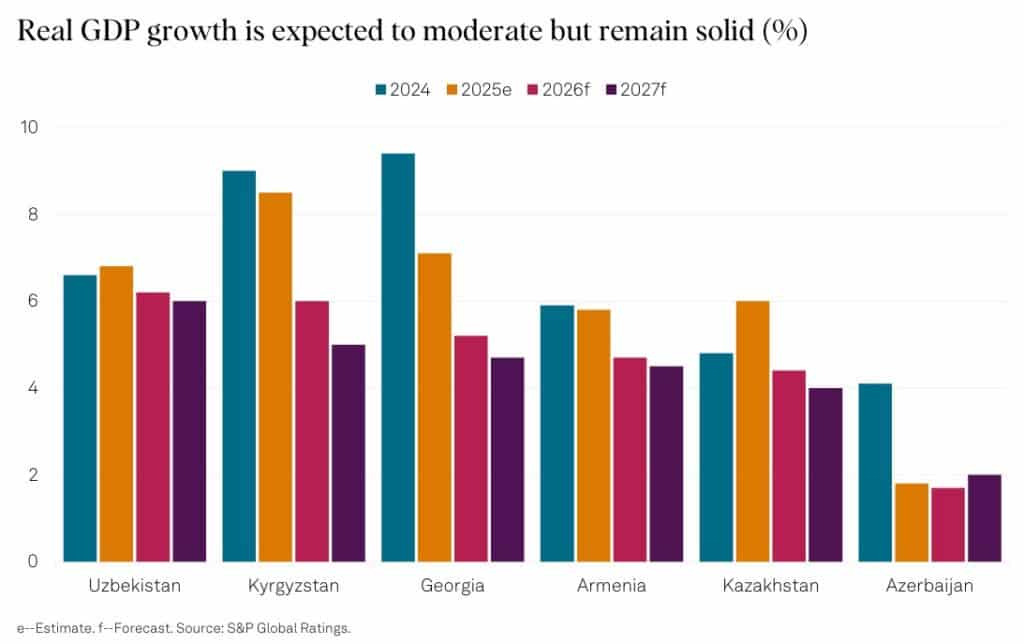
Economic growth across the region is expected to remain solid but gradually moderate compared with recent years, with Uzbekistan benefiting from strong investment and consumption, while Kazakhstan’s growth will be supported by oil output.
In Uzbekistan, S&P noted that competition is intensifying as private banks gain market share, challenging state lenders and accelerating innovation in retail and digital banking.
Overall, while regulatory frameworks are improving, S&P said governance and supervision standards in several regional banking systems still lag those of developed markets.
From economics and politics to business, technology and culture, Kursiv Uzbekistan brings you key news and in-depth analysis from Uzbekistan and around the world. To stay up to date and get the latest stories in real time, follow our Telegram channel.