Toxic Pollution From Iran Oil Fires Drifts Toward Central and South Asia

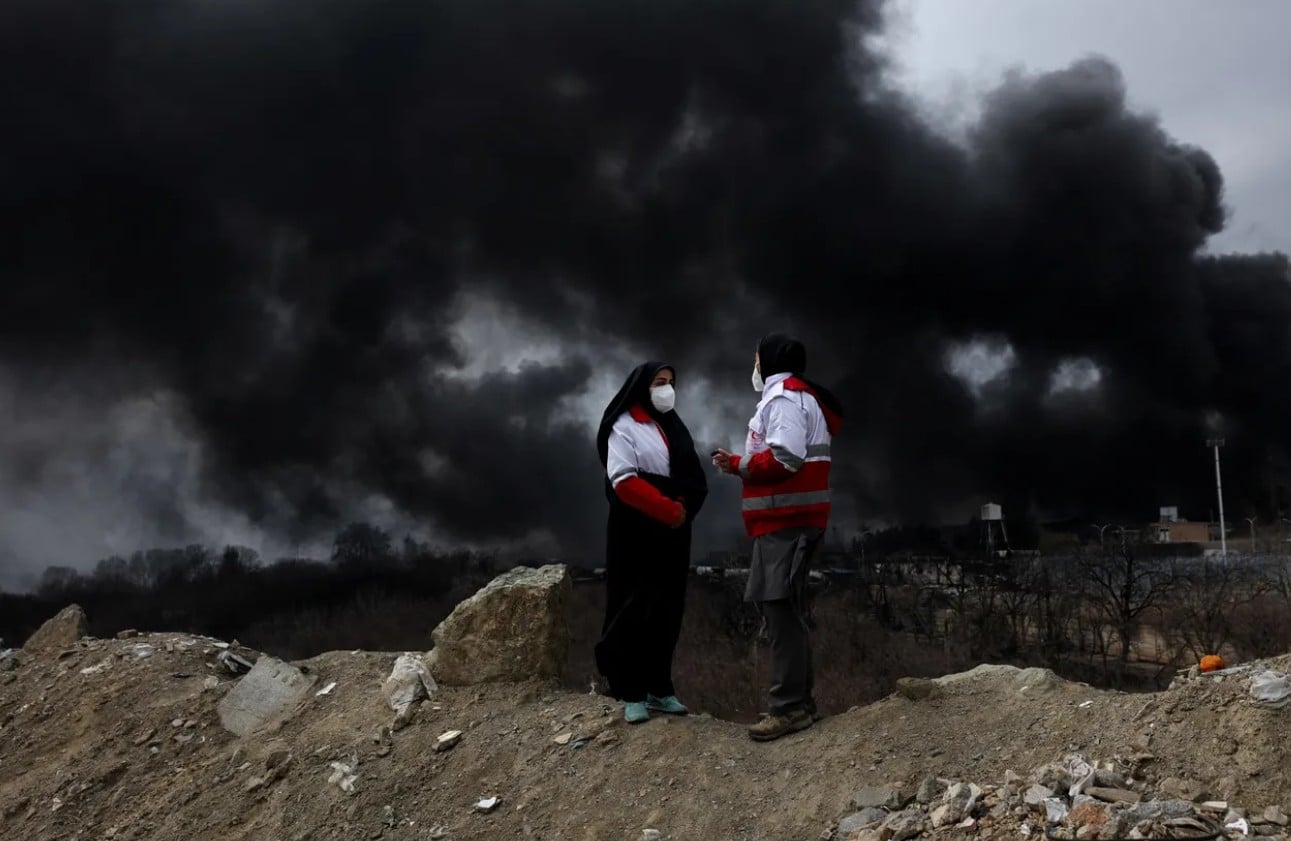
Large fires at oil depots and refineries in Tehran have released massive amounts of greenhouse gases and toxic pollutants into the atmosphere, raising concerns about air quality across parts of Central and South Asia.
According to the Conflict and Environment Observatory, the fires could pose significant short- and long-term health risks for more than nine million residents of the Iranian capital.
Authorities have already issued air quality alerts in Turkmenistan, Kazakhstan, Uzbekistan and Tajikistan, while pollution could also spread to western Afghanistan and Pakistan.
Environmental expert Mikdat Kadioglu from Istanbul Technical University warned that pollutant clouds capable of producing acid rain are currently drifting east and northeast due to prevailing winds.
He said the smoke is moving at altitudes of about 1–2 kilometres, carrying pollutants such as sulphur dioxide and nitrogen oxides, gases known to contribute to acid rain. If wind patterns change, the pollution could also reach parts of eastern Türkiye.
Several major facilities were reportedly struck overnight on March 7–8, including the Aghdasieh and Shahran oil depots, the Tehran refinery and an oil facility in Karaj. The attacks occurred during Operation Epic Fury, an ongoing military offensive that began in late February 2026.
The World Health Organization warns that burning oil infrastructure releases a toxic mix of chemicals capable of contaminating air, water and food supplies, posing heightened health risks for children and the elderly.
Meanwhile, the Iranian Red Crescent Society has urged residents to stay indoors and avoid exposure to so-called «black rain», which may form when pollutants mix with precipitation.
From economics and politics to business, technology and culture, Kursiv Uzbekistan brings you key news and in-depth analysis from Uzbekistan and around the world. To stay up to date and get the latest stories in real time, follow our Telegram channel.