Trump Threatens to Strike Iran’s Power Plants Over Hormuz Standoff

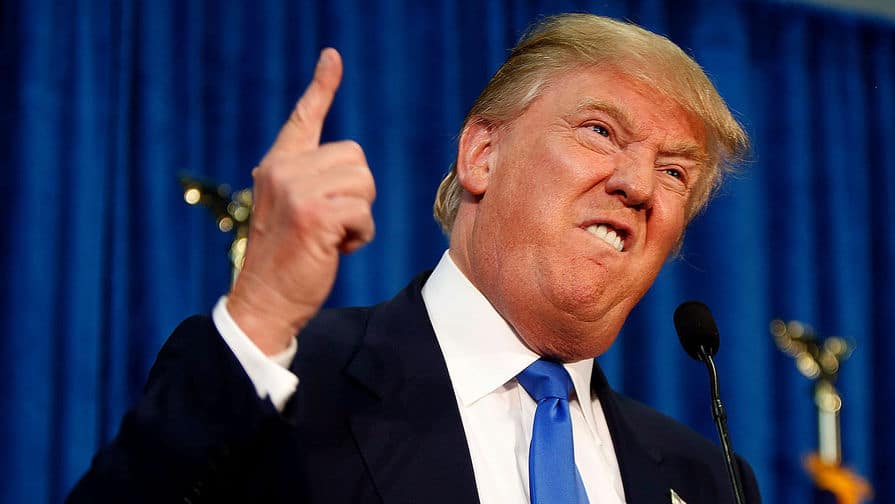
U.S. President Donald Trump has warned that Washington could «obliterate» Iran’s power plants if Tehran fails to fully reopen the Strait of Hormuz within 48 hours.
In a social media post on Saturday, Trump issued the ultimatum, signalling a potential expansion of U.S. strikes to civilian-linked infrastructure. The warning came just a day after he suggested the war could be scaled back.
The Strait of Hormuz, a key route for roughly a fifth of global oil and liquefied natural gas shipments, has seen traffic disrupted by threats of Iranian attacks. The near shutdown pushed European gas prices up by as much as 35% last week, heightening fears of a global energy shock.
Iran’s Khatam al-Anbiya military command said it would retaliate if its energy facilities were targeted, warning of strikes on U.S. energy, IT and desalination infrastructure across the region. The threat follows Iranian attacks on Qatar’s Ras Laffan Industrial City, a major gas processing hub, which caused extensive long-term damage.
Conflict widens with long-range missile use
The confrontation has entered a more dangerous phase, with Israeli officials reporting that Iran has launched long-range missiles for the first time in the conflict.
According to Israeli military chief Eyal Zamir, Iran fired ballistic missiles with a range of up to 4,000 km at a U.S.-British base on Diego Garcia in the Indian Ocean. He said the missiles could reach European capitals including Berlin, Paris and Rome.
A UK defence source said the strike occurred before London formally authorised the U.S. to use British bases for attacks on Iranian missile sites.
More than 2,000 people have been killed in the conflict so far, including 15 in Israel.
Mixed signals from Washington
Trump’s latest threat marks a shift from earlier comments about de-escalation, adding to uncertainty among U.S. allies. His administration has sent inconsistent messages about its objectives as the war enters its fourth week.
The president had previously suggested targeting Iran’s power grid but downplayed the idea, saying it could be dismantled quickly but would take decades to rebuild.
Rising energy prices and inflation concerns are also adding domestic political pressure ahead of upcoming U.S. elections. Meanwhile, NATO allies have shown reluctance to join efforts to reopen the strait, with some criticising Washington for acting without consultation.
Iranian strikes hit southern Israel
Iranian missile attacks struck the southern Israeli cities of Dimona and Arad late on Saturday, injuring dozens of people, including children. Iran’s Revolutionary Guards said the strikes targeted military and security facilities.
Israel’s military said its air defences were active but failed to intercept the missiles. The cities lie near key military sites, including Nevatim Air Base, and close to Israel’s nuclear reactor near Dimona.
Prime Minister Benjamin Netanyahu described the attacks as part of a difficult phase in the conflict, vowing that Israel would continue operations against its adversaries on all fronts.