Anvar Irchaev: Infrastructure Modernisation Is a Long-Overdue Issue

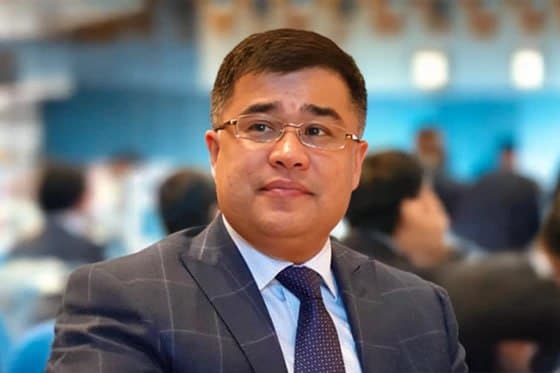
How the stock market infrastructure is changing, which instruments are being prepared for launch, and what is preventing the industry from unlocking its full potential — Kursiv Research spoke with Anvar Irchaev, Chairman of the National Association of Investment Institutions (NAII), about these issues.
— What is NAII and what role does it play in Uzbekistan’s capital market?
— NAII was created as a platform where capital market participants can speak and act together rather than individually. This is because Uzbekistan’s stock market has existed for a long time but has not fully matured for many years. There are many reasons for this: a limited number of issuers, weak liquidity, investor demand that is not always stable, and foreign participation that is still below its potential.
The association was established on January 16, 2021, at a time when the securities market and privatisation processes began to accelerate. Today, NAII has more than 25 members. And we do not have strict boundaries regarding who can join and who cannot. The criterion is simple: a company must be connected to the capital market.
— How did NAII respond to the presidential decree on capital market development and the permanent regulatory sandbox?
— We had been waiting for such a decision for a long time. It creates an opportunity to work with the regulator in a more systematic and regular way rather than on a case-by-case basis.As I see it, our role here is to collect proposals and positions from market participants, consolidate them, and participate in the preparation of secondary regulations so that the new rules genuinely meet market needs and do not create unnecessary barriers. And yes, the approach must be gradual and balanced. The market needs speed and new opportunities, but stability and trust are even more important.
— What new financial instruments are planned for implementation in the capital market, and what is NAII’s position on their introduction?
— A lot is already clear regarding foreign-currency bonds. Permission has been granted, and local issuers can issue bonds denominated in foreign currencies. And this is a logical step because funding in soums is expensive and often short-term. Let me give an example to make it clearer.
If the cost of raising funds in soums is, conditionally, 26–27%, and the soum has additionally strengthened against the dollar by about 8%, then when converted into foreign currency the cost of capital becomes even higher — conditionally above 30%. For businesses, this is a serious burden. Foreign-currency funding is usually cheaper, around 12–14%, so the instrument may attract more companies to the market that need capital. Secondly, global depositary receipts and similar instruments depend on infrastructure and international participants. If major international custodians enter the market and the technical link becomes possible, then such instruments can be activated.
As for dual listing — yes, this is potentially a major milestone.If mechanisms emerge that allow local companies to list both domestically and on foreign exchanges, this changes the market’s level, the requirements for issuers, and ultimately investor confidence.
— How critical is the modernisation of exchange infrastructure, and what can it change?
— Infrastructure modernisation is a long-overdue issue. As far as I understand, practical steps are already being taken to select and implement a new exchange system so that trading becomes faster, simpler, and more accessible. Because even if people have interest and trading applications through which they can buy securities, the potential remains limited if processes are slow and the market is narrow.
We see that recently pricing has become more transparent, liquidity is growing, and prices are moving. However, volumes could be significantly higher if the market had more quality issuers and if the infrastructure provided them with a proper entry point.
— Considering that the capitalisation of Uzbekistan’s stock market is around 20% of GDP, which suggests significant untapped potential, how does NAII assess this potential and what measures does it propose to unlock it?
The potential is undoubtedly substantial. In developed economies, stock market capitalisation can amount to 60–100% of GDP. Therefore, the room for growth is immediately apparent. But it is important to understand that potential does not realise itself. Infrastructure and educational efforts are needed, in other words, explaining to people why they need the capital market and how to use it.
— Which problems in the capital market need to be addressed first?
It is difficult to say: «This should come first.» It is like a chain. One issue cannot be solved without another. If there are issuers but no suitable infrastructure, how can trading take place? If there are many investors but no issuers, that is also an imbalance. Therefore, the approach must be comprehensive.
— How does the association contribute to building investor confidence and healthy competition in the capital market?
— At present, we are working on a Code of Ethics. The document has already been drafted, although it has not yet been agreed upon by all participants. Nevertheless, we are convinced that its implementation will create the basic conditions for healthy and fair competition among all market participants. In essence, it is a kind of «gentlemen’s agreement» that establishes common principles of conduct, mutual respect, and professional responsibility.
— Which international practices and standards would you like to see in Uzbekistan?
— In developed economies, trading has long become simple and digital. We would like to see the same system in Uzbekistan: online buying and selling without restrictions, convenient withdrawal of funds, and automated tax processes. The second thing is liquidity. People must understand that if they need money, they will be able to sell a security rather than become «stuck» holding it. And the third is transparency.
Investors often have a simple question: where can they find the numbers, where can they find analysis, in what language is it available, and how much can it be trusted? And until this issue is resolved, the market will grow more slowly than it could. Among international benchmarks, we look at models with high transparency and strong corporate governance standards, such as the experience of Singapore.