U.S. Taxes Nearly Halve Spain’s $50 Mln World Cup Winnings

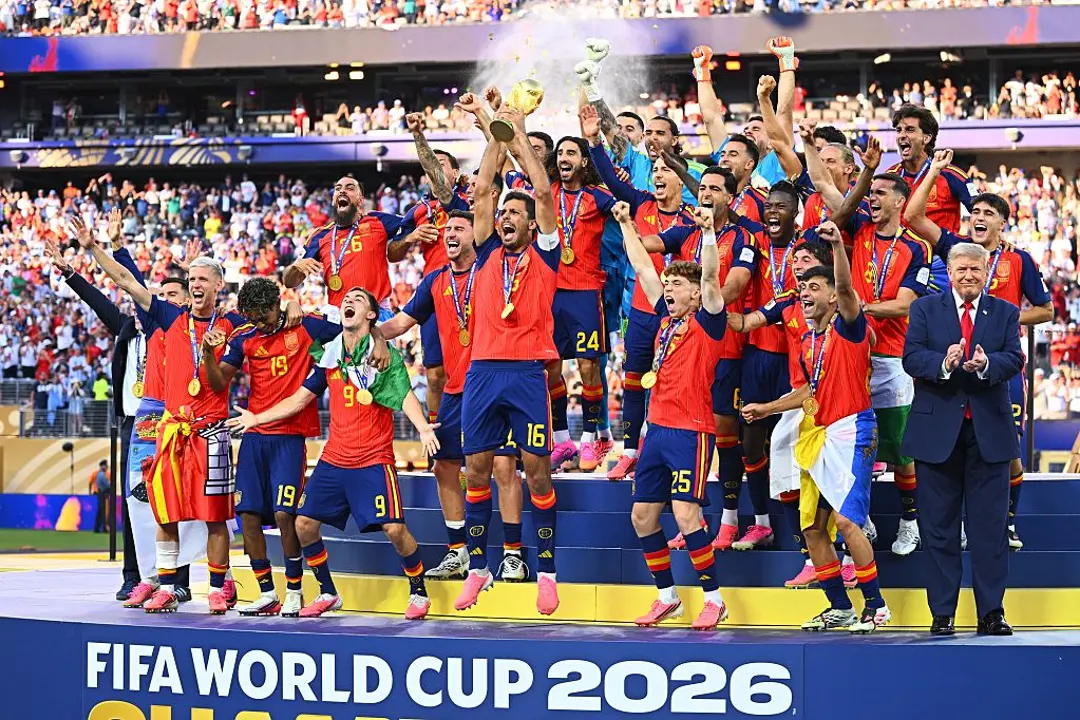
Financial news outlets have clarified the complex tax reality awaiting Spain’s victorious national football team owes the Internal Revenue Service up to 40% of their World Cup prize.
The claims stem from original reporting by MarketWatch examining the tax implications of the 2026 FIFA World Cup being co-hosted across the United States, Canada and Mexico.
Spain secured the championship title and the accompanying first-place prize of $50 mln after defeating Argentina 1-0 at MetLife Stadium in New Jersey. However, FIFA distributes these funds directly to national football federations rather than individual athletes.
Federation exemptions and overlapping tax liabilities
Earlier this year, FIFA reportedly negotiated an arrangement with the U.S. Treasury Department allowing participating national associations to apply for federal tax-exempt status under section 501(c) for their tournament earnings. This policy protects the overarching prize money awarded to the Spanish federation from federal taxation.
Despite this institutional shield, the exemption does not provide a blanket tax holiday for individuals. The Spanish federation must use its internal procedures to distribute bonuses to the squad. Once those funds are allocated, players, coaches and support staff remain fully liable for U.S. federal income taxes on money earned on American soil.
Furthermore, athletes must navigate intricate state regulations. The final match took place in New Jersey, a state that charges income tax and does not adhere to international tax treaties. This lack of treaty recognition means Spanish players will likely face unmitigated state tax deductions, commonly referred to as a «jock tax», on the compensation earned during the championship game.
Industry analysts note that international athletes frequently face overlapping tax obligations when competing in global tournaments, driven by performance-based compensation across multiple jurisdictions. While the United States maintains a tax treaty with Spain that can prevent double taxation, those benefits may disappear if the amount of money earned crosses certain thresholds. Big-time players often rely on financial experts to navigate the tax maze, but those new to the tournament might be surprised by the resulting bills.