Chinese rocket sends Uzbekistan’s Samarkand-2028 satellite into orbit

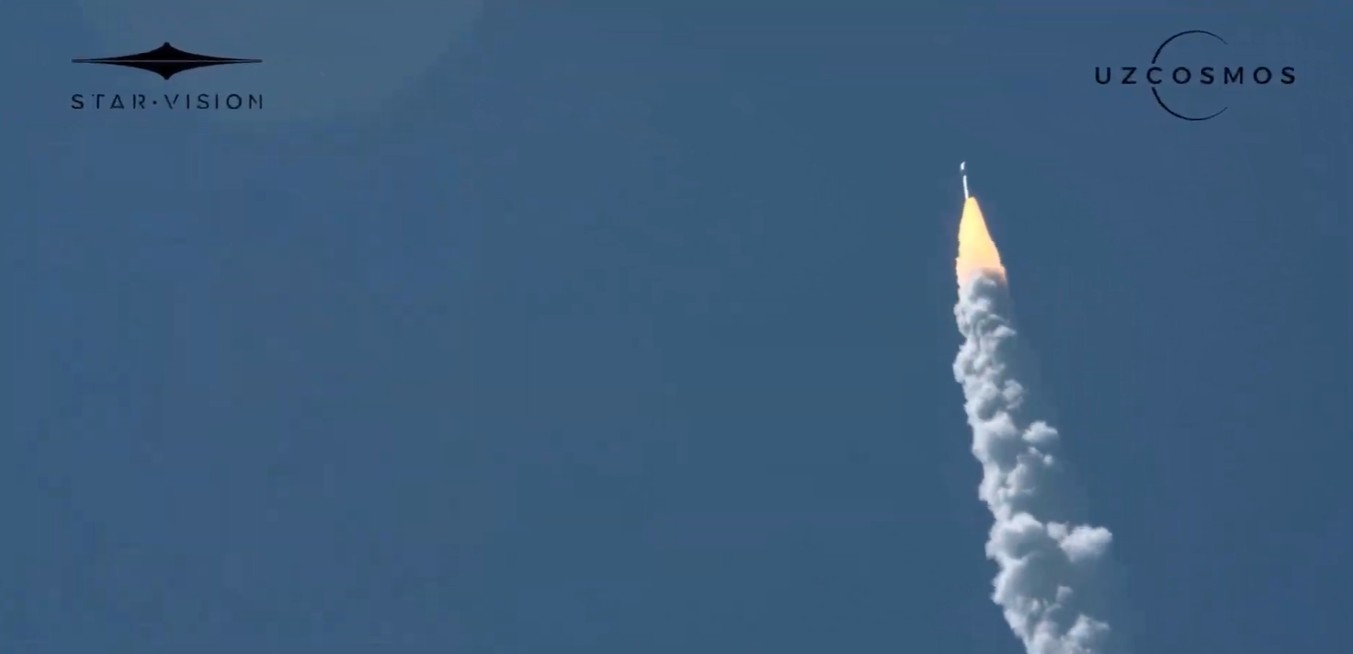
A Chinese rocket has launched the Samarkand-2028 Earth observation satellite into orbit on Wednesday. The launch took place during the scheduled morning window from China’s Haiyang, an offshore sea-launch platform in the Yellow Sea.
Chinese private aerospace manufacturer Star.Vision has carried out the launch on Wednesday morning, sending two satellites, Uzbekistan’s Samarkand-2028 and Indonesia’s Lampung 1, into space.
«The mission marks one of the largest international space projects in Uzbekistan’s history and represents a significant milestone in the country’s national space programme,» said Uzbekistan’s Ministry of Digital Technologies.
The Uzbek satellite is equipped with a hyperspectral imaging system that can collect highly detailed Earth observation data, as well as an artificial intelligence module developed by the national space agency Uzcosmos. The data will be used to aid agriculture, water-resources management, environmental protection, emergency monitoring, urban planning and other areas.
The launch gives Uzbekistan its most advanced Earth observation satellite to date and enhances its ability to independently acquire and process satellite imagery. It also reflects the growing cooperation with China in space.

What is Samarkand-2028
Unlike classic Earth observation satellites, which simply take pictures, Samarkand-2028 can record information across hundreds of light wavelengths, revealing changes that are not visible to the naked eye or to conventional optical cameras. The technology can detect crop stress before it happens, monitor water quality, track pollution and better manage natural resources.
The satellite was named after the International Astronautical Congress (IAC) which will be held in Samarkand in 2028, the first time the world’s largest annual space conference will be held in Central Asia. The mission is part of Uzbekistan’s wider push to build up its own space industry and reduce dependence on foreign satellite data.
From economics and politics to business, technology and culture, Kursiv Uzbekistan brings you key news and in-depth analysis from Uzbekistan and around the world. To stay up to date and get the latest stories in real time, follow our Telegram channel.