China powers up world’s largest tension-leg floating wind farm

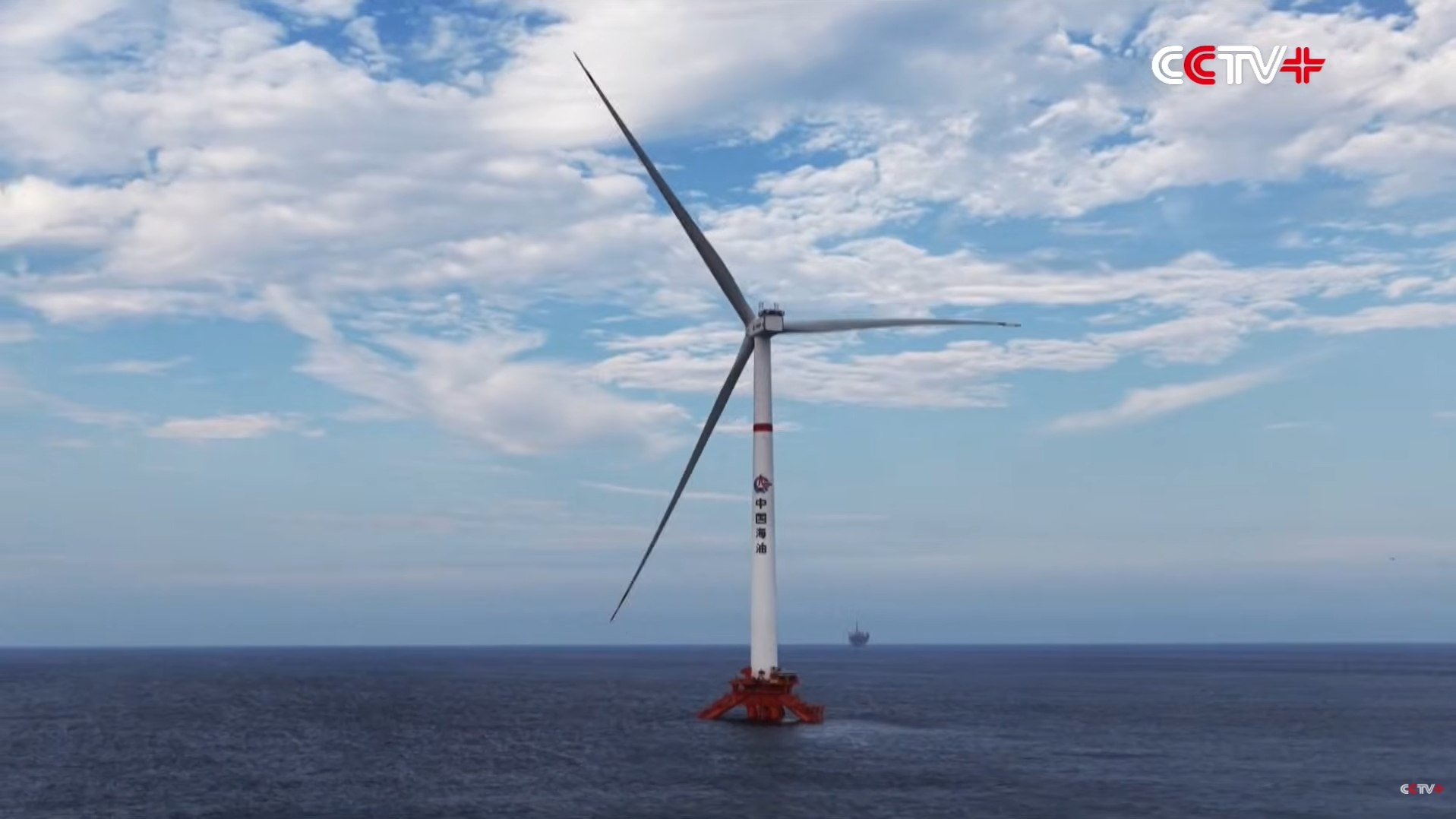
A new deep-water renewable energy project came online Thursday as China activated its inaugural tension-leg floating wind farm.
Operated by the China National Offshore Oil Corp (CNOOC), the 16-megawatt Haiyou Anlan platform currently feeds clean electricity straight into the Lufeng oilfield grid. The installation holds the global record for the largest TLP wind site by capacity while sitting at a greater depth and distance from the coast than similar projects.
Located within the Pearl River Mouth Basin, the platform is anchored 85 miles offshore and 124 miles southeast of Shenzhen in Guangdong province. The waters at the site reach 136 metres deep. Rising as high as a 110-storey skyscraper, the structure includes a robust turbine built to endure Level 17 typhoons throughout its estimated 25 years of service.
Output from the site should hit roughly 54mn kilowatt-hours of power each year. This generation capacity will cut annual fuel oil use by 15,000 cubic metres and drop carbon dioxide emissions by 35,000 tonnes.
Tackling complex offshore engineering
Rather than using standard foundations fixed directly to the ocean floor, tension-leg designs rely on floating hulls tethered to the seabed by vertical cables. This setup restricts swaying caused by rough currents. Although these systems provide better stability and use less steel per megawatt than semi-submersible units, their construction requires exacting precision.
The Haiyou Anlan weighs 7,800 tonnes and its blades sweep a space roughly the size of seven football pitches. CNOOC engineers relied on custom high-strength moorings and 3D marine condition simulators to ensure millimetre-accurate underwater assembly.
Shifting focus to eastern power demands
Xiamen University energy economics director Lin Boqiang told the Global Times that this development indicates where the offshore wind sector is heading. Pushing past shallow coastal zones lets energy firms capture the heavier and more reliable wind speeds found far out at sea.
Building these facilities remains expensive despite local progress in manufacturing large turbines. Yet Lin pointed out the strategic need to boost green energy production in eastern China. The nation currently sees its highest industrial and residential power demand along the east coast, while its main solar and wind assets sit in remote western areas. Establishing deep-water farms allows developers to route clean energy directly to these coastal populations, cutting down reliance on long-distance transmission lines crossing the country.
Beijing is concurrently expanding its wider renewable fuel industry. On Wednesday, the National Energy Administration reported that domestic annual green fuel capacity reached 8mn tonnes of oil equivalent by the close of 2025. This figure covers sustainable aviation fuel alongside green ammonia and green methanol.