Kazakhstan tells Caspian oil firms to host armed security teams

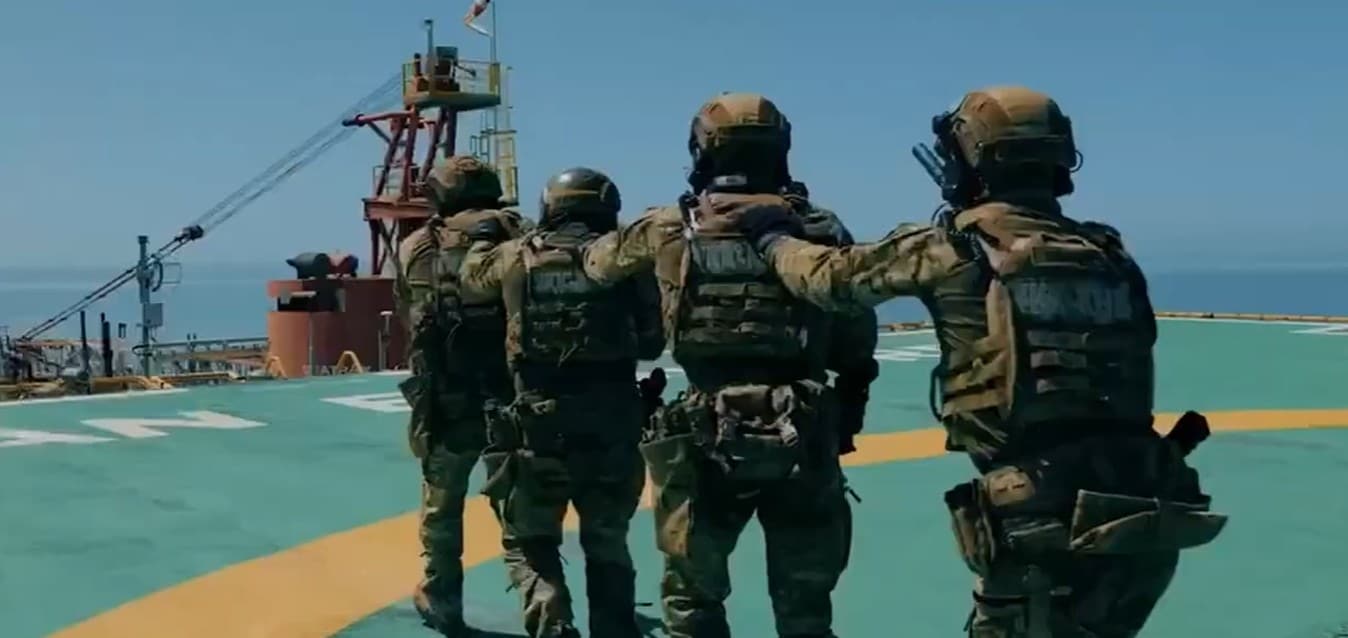
Kazakhstan’s government has mandated offshore oil and gas companies to free up space for counter-terrorism teams to deploy near their Caspian facilities. This adds a new layer of physical protection around some of the country’s most valuable energy assets.
Oil and gas companies operating in Kazakhstan’s Caspian waters will have to provide the country’s maritime anti-terrorism headquarters with a deployment site near their production facilities. A relevant order signed by Energy Minister Yerlan Akkenzhenov on 6 August takes effect on 17 October.
Such a site must accommodate at least 10 rapid response team operators, have a helipad and sit no more than 23km from an offshore production facility, according to government guidelines.
Kazakhstan’s Border Service, which reports to the National Security Committee, also known as the KNB, heads the maritime anti-terror command. It also brings together police, emergency services, the Armed Forces and the National Guard.
The ministerial order did not specify which forces would deploy near individual oil installations under the new rules. A 2025 exercise near the Kashagan oil field involved special forces teams and the KNB Border Service patrol boats.
Why protecting the Caspian matters for Kazakhstan
According to North Caspian Operating Company (NCOC), the Kashagan project is the first major offshore oil and gas development in Kazakhstan. It is one of the world’s largest offshore oil discoveries. Its sprawling production system includes artificial offshore installations such as D Island, where crude is produced and gas is reinjected before hydrocarbons are sent for processing.
- KazMunayGas said it produced 1.5 million tonnes from Kashagan in the first half of 2026, little changed from a year ago. NCOC had crossed the milestone of one billion barrels produced at Kashagan in July 2025, while Reuters puts the field’s recoverable reserves at about 13 billion barrels.
- Kazakhstan’s primary export route was repeatedly disrupted in July by drone attacks near the Black Sea terminal of Russia’s Caspian Pipeline Consortium, forcing producers to cut output when the pipeline stopped receiving crude.