USDA: Uzbekistan on track to end food insecurity by 2036


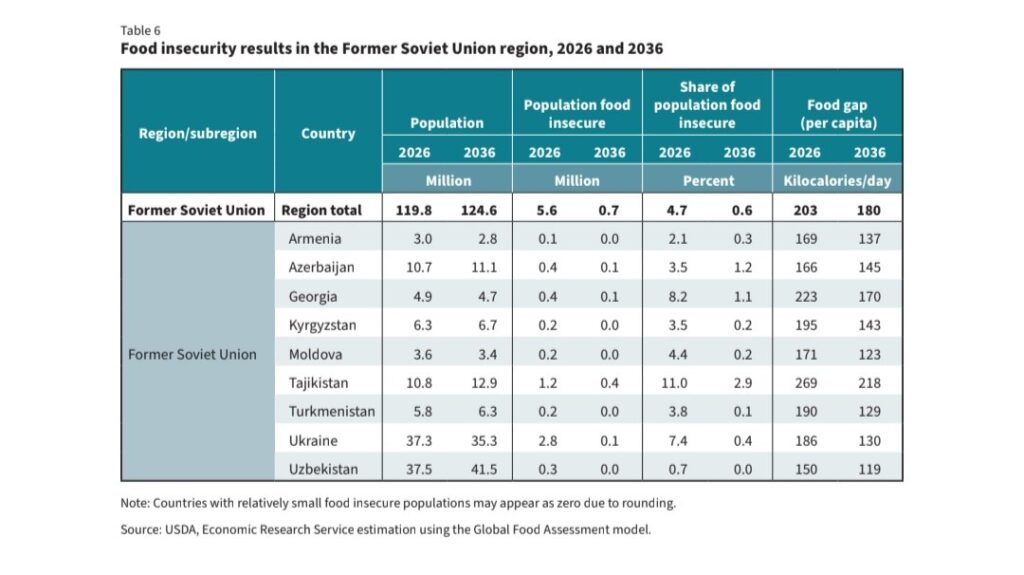
Food insecurity in Uzbekistan is on track to vanish within the next decade. According to the United States Department of Agriculture’s Global Food Assessment 2026-36, the proportion of the population unable to access adequate nutrition will drop to 0% by 2036.
This positive trajectory comes despite projected demographic expansion. Analysts expect the national population to swell from 37.5mn to 41.5mn over the same period. Rising incomes will outpace this growth, with real gross domestic product per capita forecast to climb from $3,081 in 2026 to $4,796 a decade later. This represents an average annual growth rate of 4.5%.
Uzbekistan currently boasts a strong regional position. Its food insecurity rate sits at just 0.7% this year. Regional neighbours face steeper challenges, with rates reaching 3.5% in Kyrgyzstan, 3.8% in Turkmenistan and 11% in Tajikistan. The USDA predicts the daily calorie deficit for affected individuals in Uzbekistan will decrease from 150 kilocalories to 119 kilocalories by 2036.
Shifting diets and import reliance
Greater household wealth will transform dietary habits across the post-Soviet space. The USDA estimates that 78% of the region’s total increase in food demand will stem from higher individual consumption rather than population growth. Citizens are moving away from basic caloric survival toward more expensive processed foods and varied diets.
This shifting demand creates lucrative opportunities for the domestic food industry, retail sectors and foreign suppliers. While food security is rapidly improving, Uzbekistan will not become entirely self-sufficient. The country lacks the domestic agricultural capacity to fully meet consumer demand for wheat, rice and other essential grains.
Recent trends also highlight a growing appetite for imported fruits, vegetables, vegetable oils and processed goods. Consequently, the Central Asian nation will remain a major consumer of foreign agricultural products.
Fortunately, regional supply dynamics appear stable. The former Soviet Union is expected to maintain a robust grain surplus, projected to rise from 23.5mn tonnes in 2026 to 25.6mn tonnes by 2036. Production across the region will scale faster than demand, ensuring Uzbekistan can reliably source essential imports from nearby markets.