Narendra Modi heads to Uzbekistan in search of minerals and markets

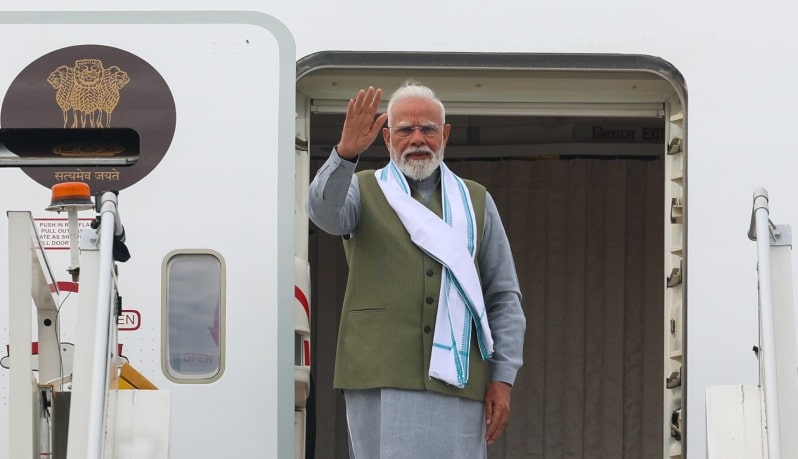
Narendra Modi is arriving in Uzbekistan this Saturday, with critical minerals emerging so far as the most consequential item on a crowded two-day agenda. Kursiv Uzbekistan examines other potential deliverables that may shape the Indian PM’s visit.
Modi will hold delegation-level talks with Uzbek President Shavkat Mirziyoyev during his state visit on August 29-30, which will be his fourth visit to Uzbekistan. The official programme, announced by India’s Ministry of External Affairs (MEA), includes trade and investment, defence, digital links, energy, education and people-to-people relations.
The pre-visit briefing also identified critical minerals, healthcare, space and technology as areas for deeper cooperation, The Times of India reported.
Modi’s visit «will reaffirm the close, multi-faceted and growing strategic partnerships between India and Uzbekistan,» MEA secretary Sibi George told the paper.
Diplomacy aside, the Modi-Mirziyoyev summit will be judged on whether the leaders name mineral projects, set trade deadlines, and improve the India-Central Asia route. These details will show if a long-standing relationship is finally gaining economic weight.
Critical minerals are one agenda item to watch, as they are central to India’s demand for reliable energy and technology supplies and Uzbekistan’s need for investors who can process its resources at home.
Read more: China and India compete for influence in Central Asia, analysis says
Why critical minerals matter
Uzbekistan says it could produce 28 kinds of critical minerals commercially. Its government plans 120 projects worth $4.2bn by 2030, with particular attention on processing tungsten and molybdenum into finished products instead of simply exporting raw material.
Uranium raises the stakes further. Uzbekistan produced about 7,000 tonnes in 2025, while identified reserves reached 139,000 tonnes, according to official figures reported by Reuters. Four deposits were earmarked for development in 2026.
India wants to build 100 gigawatts of nuclear capacity by 2047 and has recently expanded uranium arrangements with Australia and Canada. Uzbekistan could help diversify that supply chain, but uranium should be treated as strategic context rather than a confirmed outcome of Modi’s visit. Kursiv previously examined how those partnerships are placing Uzbekistan inside a global contest for secure supplies.
Trade and education ties growing, but mostly in one direction
Bilateral trade reached $1.3bn in 2025, rising by a third. Yet Uzbekistan exported only $164.6m of goods to India while buying $1.15bn, leaving an imbalance of roughly seven to one.
The deeper obstacle is geography. India and Central Asia have no direct land connection, making Iran’s Chabahar port and the wider North–South corridor central to their plans. Kursiv has reported on Uzbekistan’s efforts to use the port for trade with India.
Read more: President Mirziyoyev ratifies Uzbekistan’s accession to the BRICS New Development Bank
Indian officials consider Chabahar an important route, but its US sanctions waiver expired in April. New Delhi says the port’s status is under discussion with Washington and Tehran, leaving the trade target vulnerable to forces beyond New Delhi and Tashkent’s control.
Apart from that, Uzbekistan hosts 21,000 Indians, including 16,300 students. India hosted over 80,000 Indian visitors in 2025, and four Indian universities have local campuses.