
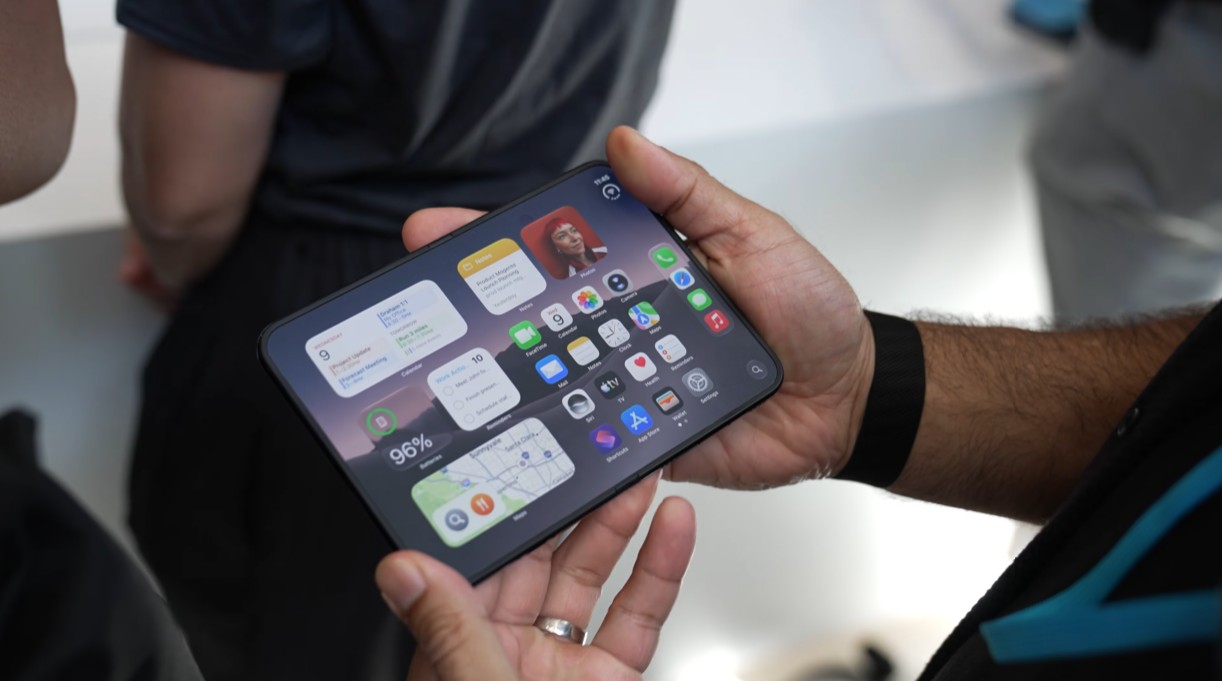
With the much-awaited release of the iPhone Duo, Apple appears to have solved the crease and software problems that dogged earlier foldables. Early testers still found plenty to question, from the missing Face ID and telephoto camera to the Duo’s weight and hefty price tag.
Apple waited seven years after Samsung’s first Galaxy Fold to release its own foldable. That patience paid off: reviewers and journalists who sampled the iPhone Duo at Apple Park generally praised its hinge, display and unusually coherent software.
Important note: These are still first impressions from controlled demonstrations. The iPhone Duo’s battery, camera and long-term durability have not been independently tested.
- The crease is there
- iOS understands the hinge
- Touch ID returns
- It is thin only after you unfold it
- Durability looks convincing
- Battery life changes with the screen
- An eSIM-only phone demands a carrier check
- The price buys two screens
- Early verdict
The crease is there — but reviewers struggled to find it
The fold in the 7.6-inch inner display is far less conspicuous than many feared. The Verge found it almost impossible to detect by touch, while Tom’s Guide could see the crease but not feel it.
HardwareZone reached a slightly different verdict: the crease was barely visible but could be felt when running a finger across the screen. The variation suggests that Apple has minimised it rather than eliminated it, and lighting and viewing angle still likely matter
iOS understands the hinge
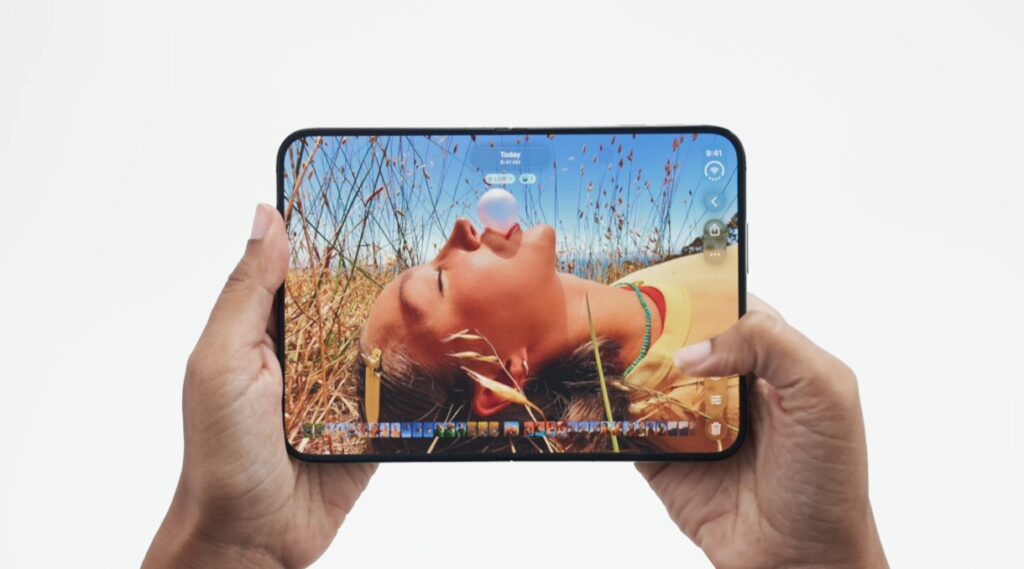
The Duo’s most convincing feature may be software rather than flexible glass. Content fades smoothly from one screen to the other as the phone opens, controls move within thumb reach, and Split View can run two apps or two Safari windows side by side.
Half-folded, the Duo can place a video on the upper panel and playback controls below. Turn it into a tent, and it becomes a self-supporting StandBy display. The early demonstrations made the transitions look natural rather than bolted on, a software-first strength also seen in our recent Pixel 11 Pro reviews.
Is it really that thin? Keep scrolling down to find out.
Face ID folds, Touch ID returns
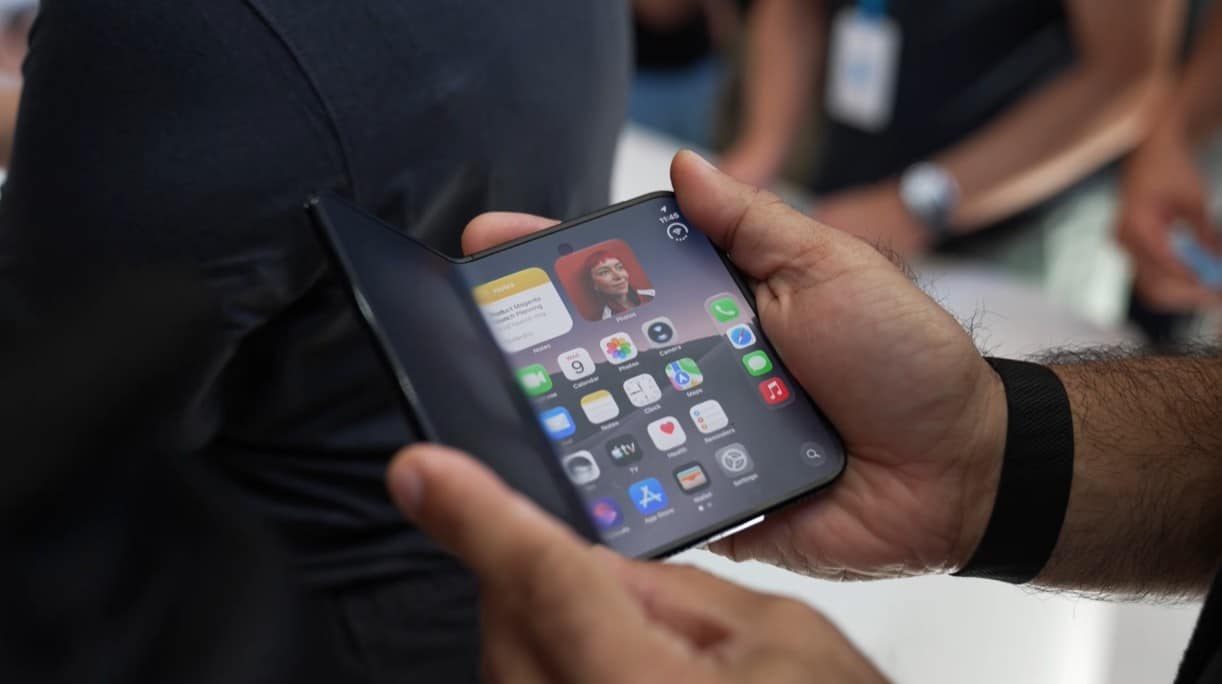
The Duo drops Face ID and moves authentication to Touch ID in the side button. That gives it one sensor that works whether the handset is open or closed, avoiding the need for separate facial-recognition hardware on both displays.
It is a sensible engineering decision but a real downgrade for anyone accustomed to unlocking an iPhone just by looking at it. Gloves may also frustrate fingerprint recognition, although Apple Watch owners can use their watch to unlock the phone.
It is thin only after you unfold it
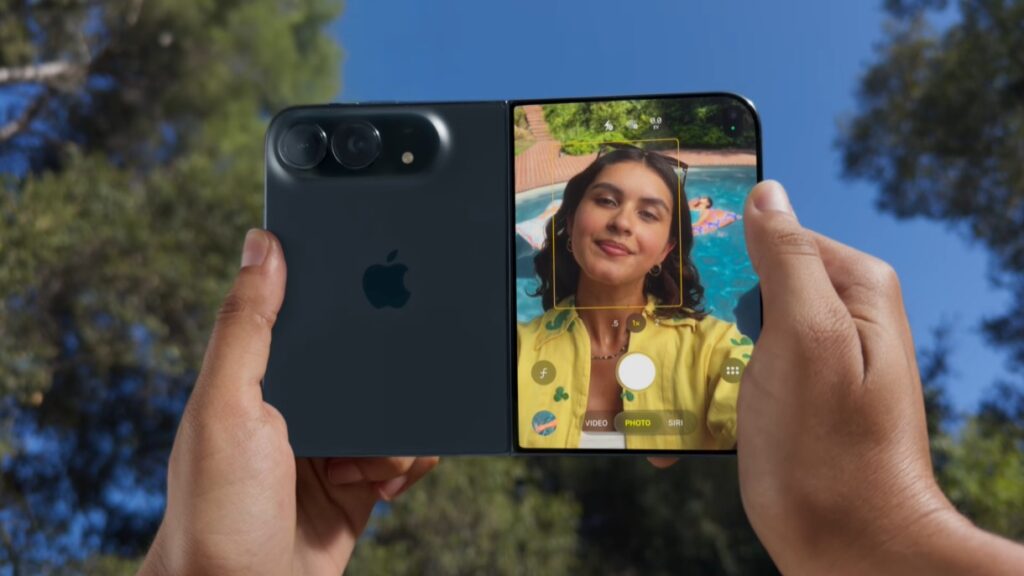
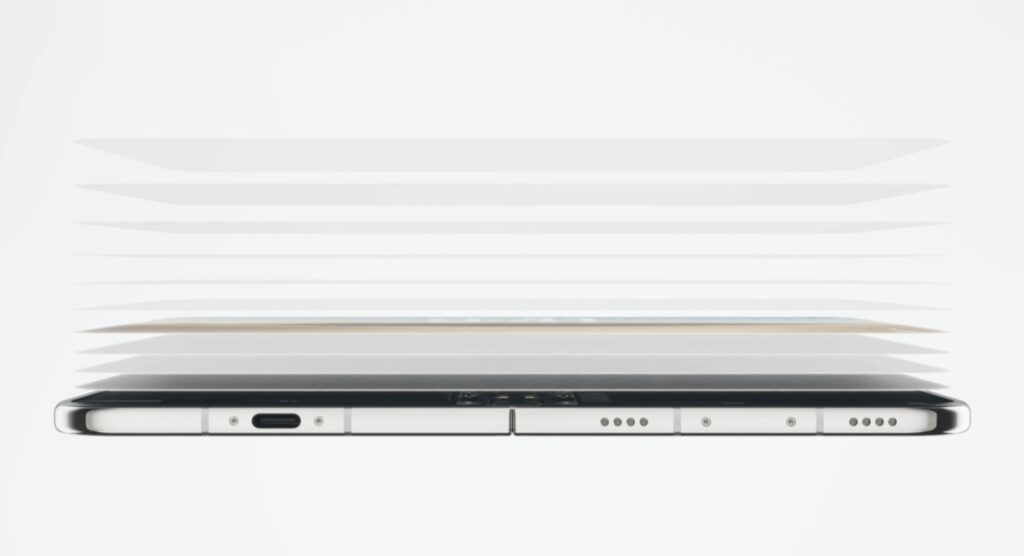
Apple calls the open Duo its thinnest iPhone at 5.2mm. Close it and the device becomes an 11.3mm sandwich — nearly as thick as the original iPhone and thicker than any Apple handset released since 2009.
The 254-gram Duo is also five grams heavier than the iPhone 18 Pro Max. Tom’s Guide found it noticeably heavier and thicker than Samsung’s Galaxy Z Fold 8, while HardwareZone said it felt chunkier and more substantial in the hand.
Durability looks convincing — on paper
Early testers praised the smooth hinge and solid feel. The grade 5 titanium frame, Ceramic Shield exterior and IP68 rating also provide the Duo stronger dust protection on paper than many foldables. That is particularly striking in a category where even apparently flexible components can prompt concern, as shown by the Galaxy Z Fold 8’s deliberately compressible screen edges.
Yet nobody has carried the Duo for months, dropped it or repeatedly exposed its inner polymer surface to grit.
Read more: Galaxy Z Fold 8’s flimsy screen works exactly as it should, Samsung insists
Battery life changes with the screen
Apple rates the Duo for up to 44 hours of video playback on its outer display but only 31 hours on the larger folding panel. Any single battery-life figure therefore hides a 13-hour difference dictated by how the phone is used.
The company says wired charging reaches 50% in about 20 minutes. Reviewers could not test either claim, and The Verge questioned how much battery the unplugged tent-mode StandBy feature might consume.
An eSIM-only phone demands a carrier check
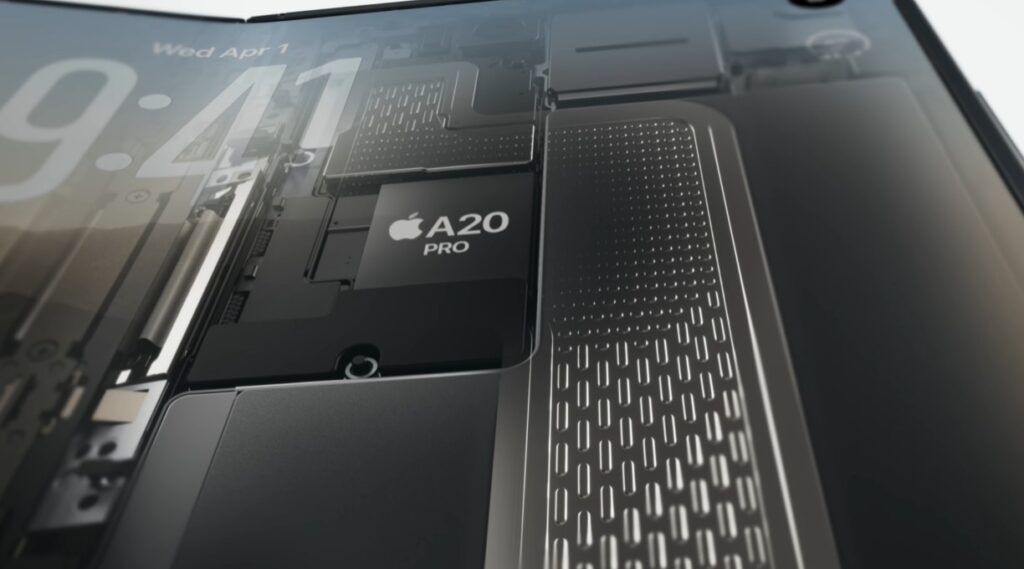
The iPhone Duo has no physical SIM tray anywhere in the world. That frees up internal space for its dual-battery system but makes local eSIM support essential, particularly for travellers and grey-market buyers.
Anyone importing the phone should confirm carrier compatibility before ordering and remember that a foreign-bought device may also require local registration.
Read more: How to bring and register a new phone in Uzbekistan
The price buys two screens and version-one risk
The iPhone Duo starts at $1,999 with 256GB of storage. Prices rise to $2,199 for 512GB, $2,599 for 1TB and $3,199 for 2TB. Pre-orders open on 16 October before sales begin on 23 October.
That puts the entry model $100 above Samsung’s Galaxy Z Fold 8 and well above Xiaomi’s $1,639 starting price in China. Apple remains cheaper than Huawei’s $2,980 Mate XT2 tri-fold, but «cheaper than a phone with three panels» is not much of a value argument.
Early verdict: built for multitaskers, not Pro photographers
The first hands-on reports suggest Apple has produced an unusually mature first-generation foldable. The hinge feels smooth, the crease is discreet, and iOS 27 appears to understand why the device opens in the first place.
The Duo makes the most sense for users who want an iPhone and small tablet in one pocket, regularly work across two apps or value hands-free video and Pencil input.
Buyers prioritising Face ID, long-range photography, a lighter body or proven durability should wait for full reviews — or spend considerably less on the iPhone 18 Pro.
