Mirziyoyev’s South Korea talks: Key takeaways with $12bn pipeline

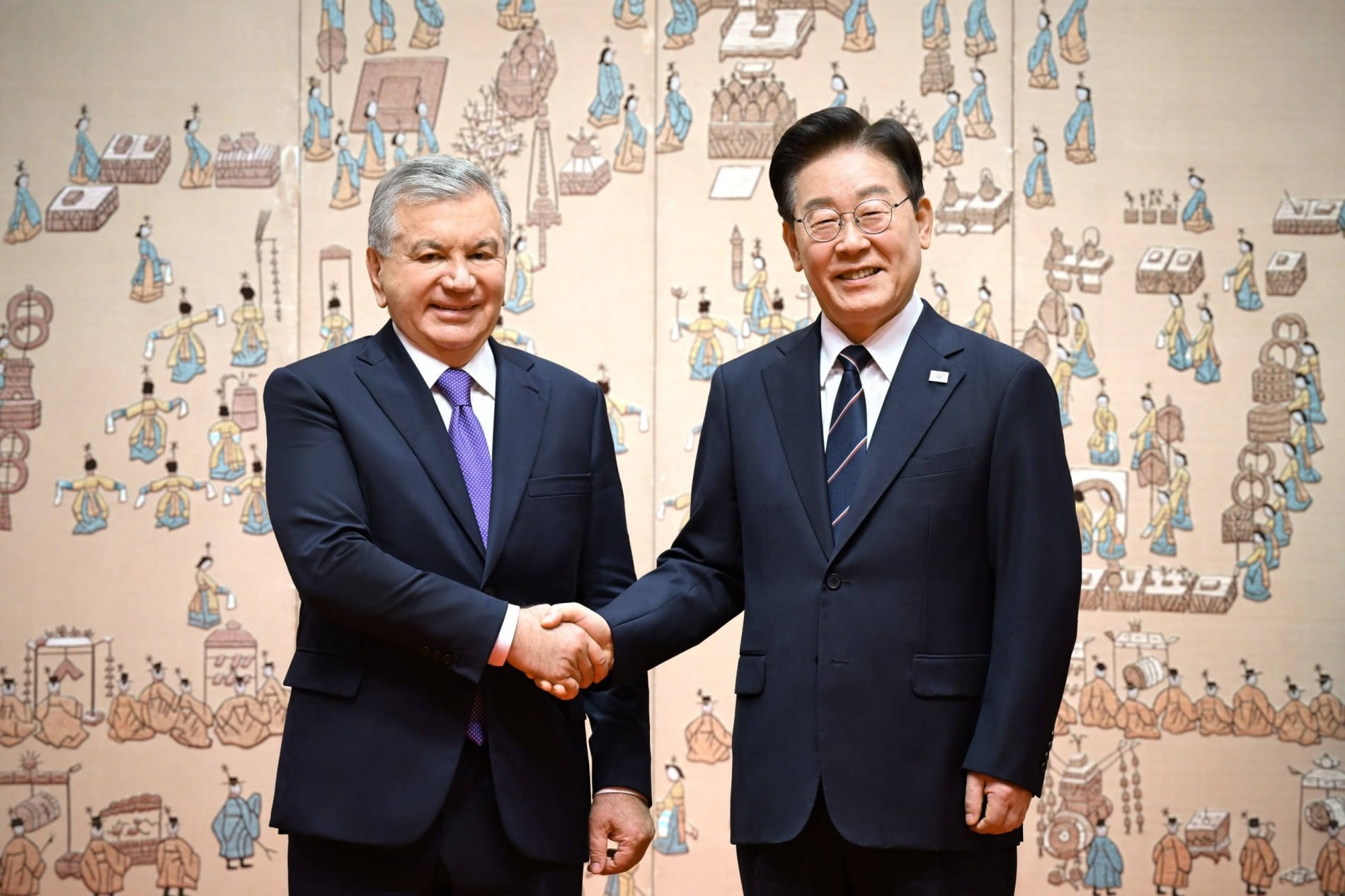
Uzbekistan and South Korea signed 13 cooperation documents during Shavkat Mirziyoyev’s talks with President Lee Jae Myung in Seoul. Yet the headline $12bn figure represents prospective projects, not confirmed Korean investment.
The package is broad, covering railways, critical minerals, defence, education, artificial intelligence and healthcare. So far, Yonhap’s report suggests that most of the documents are MoUs rather than contracts carrying firm budgets, delivery schedules or funding commitments.
The clearest outcomes are therefore institutional: a prisoner-transfer treaty, an amended grant-aid agreement, and several new frameworks that may eventually finance projects.
The distinction matters because the Uzbek presidential press service described a portfolio of projects worth about $12bn as having been «prepared», but it did not publish an itemised list of signed commercial contracts.
What was actually secured in Seoul
The confirmed results include:
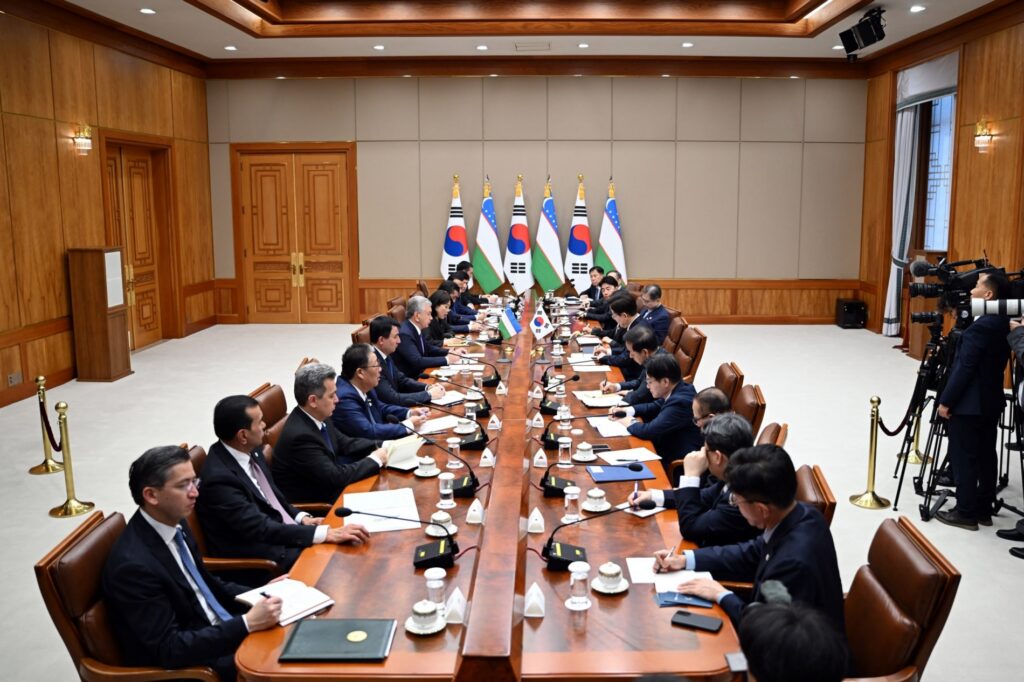
- Thirteen documents were signed. These include intergovernmental agreements, memoranda and at least one defence-industry contract. The number is confirmed by the Korean side.
- A prisoner-transfer treaty was signed. This creates a legal route for citizens convicted in one country to serve their sentences in the other. Entry into force may still depend on domestic ratification procedures.
- The countries amended their grant-aid framework. A protocol was signed to update the basic agreement governing South Korean non-repayable assistance to Uzbekistan.
- A defence-industry cooperation contract was concluded. Yonhap confirmed the signing, but neither side disclosed the supplier, equipment, value or delivery timetable.
- Korea Eximbank and Uzbekistan’s investment ministry adopted a project-development framework. The memorandum is intended to identify projects and examine commercial or project financing.
- Korean will become an official subject at Uzbek state-run academic Olympiads. This is one of the few decisions with an immediate and clearly defined practical effect.
- The countries designated 2027 as a year of culture and mutual exchanges. They also agreed that the next Uzbek-Korean interregional forum would be held in Samarkand.
Read more: Central Asia has minerals. What can South Korea offer in return?
Eight more trains remain a proposal
One of the most eye-catching documents concerns the possible acquisition of eight additional high-speed trainsets.
For now, the practical details are limited:
- The two sides signed an MOU, not a purchase contract.
- No manufacturer, price, financing package or delivery date was announced.
- The Korean side said the scope of cooperation could be expanded after a feasibility study.
- The proposal is separate from Uzbekistan’s earlier contract with Hyundai Rotem for six high-speed trains, backed by Korea Eximbank financing.
The new memorandum therefore signals an intention to enlarge Uzbekistan’s high-speed fleet, but it should not yet be reported as a confirmed order for eight trains.
Read more: Feasibility study launched for Tashkent–Samarkand high-speed railway
The $12bn figure needs an asterisk
Uzbekistan said prospective projects worth approximately $12bn had been prepared around the visit. Neither the presidential statement nor Yonhap’s report confirms that South Korean companies or banks committed this amount.
What is known:
- Korea Eximbank will help identify projects in six priority areas: critical minerals, data centres, smart cities, an industrial zone for Korean companies, pharmaceuticals and consumer sectors including food, beauty and content.
- The sides signed additional memoranda covering manufacturing AI, medical-product regulation, agriculture, tourism, intellectual property and digital forest restoration.
- A memorandum also covers the proposed creation of Uzbekistan’s national genome and biobank centre.
What is not yet confirmed:
- How much of the $12bn pipeline has secured financing
- Which projects have binding contracts
- How much represents new investment rather than previously discussed initiatives
- When construction or procurement will begin
Read more: South Korea to help build $150m medical cluster in Tashkent