UN learned what world fears most. It makes climate feel less urgent


The United Nations’ 2026 Global Risk Report surveyed 1,300 people working in government, business, academia, international organisations and civil society, who were asked to assess 28 threats facing the world.
An all-out war has made the biggest jump in the survey, climbing 16 places since 2024. «Large-scale war and geopolitical tensions are now among the top five global risks in six of the seven regions, compared with just one region each in 2024,» the report noted.
Weapons of mass destruction have also entered the top ten most important risks in Central and Southern Asia, Sub-Saharan Africa, and Oceania.
Respondents in Eastern and Southeastern Asia ranked the global financial crisis, AI and frontier technologies, and the concentration of power through technology among the ten most important risks. Europe and North America also had AI and frontier technologies among the top ten.
Read more: OpenAI drains five Olympic pools to solve century-old maths problem
War scare is getting bigger
Some 36% saw widespread consequences from a major war arriving within one year, rising to 76% within seven years.
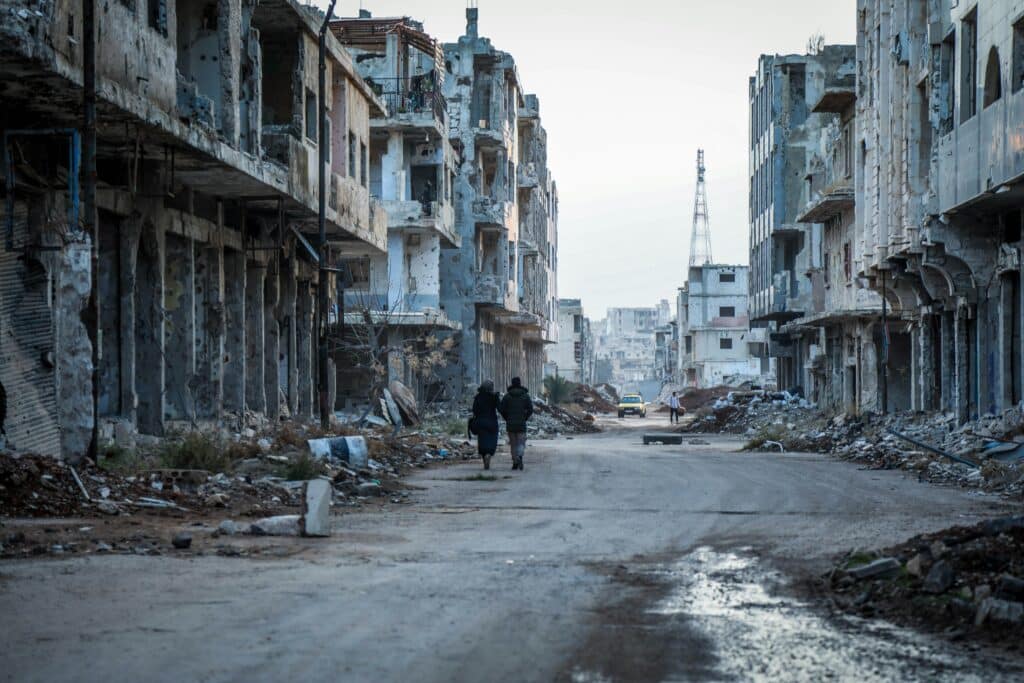
Only war was included among the top six threats across all four dimensions: importance, imminence, connections to other risks, and institutional unpreparedness. The UN-authored summary said respondents thought the international system was least prepared for technological dangers, including AI.
Read also: American envoys touch down in Moscow with a new Ukraine peace plan
Climate still tops the importance ranking
The rapid rise of the war fears did not mean that every measure has resolved or displaced the climate threat.
«While other risks moved to the forefront, respondents put less emphasis on environmental risks in 2026,» the report reads.
Still, the risks of climate change inaction, natural hazards and natural resource shortages are perceived as among the most important.
Biodiversity decline and large-scale pollution recorded the largest declines since 2024. Both risks moved down sharply, suggesting that respondents now expect them to materialise much later than they did in 2024.