
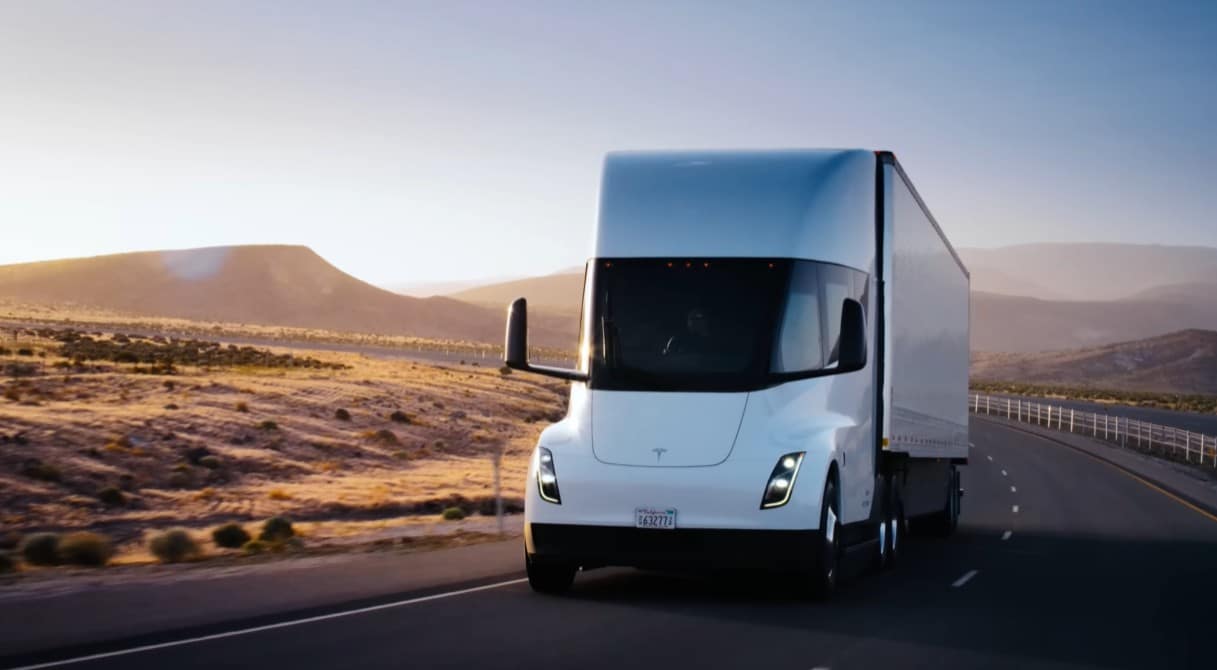
Tesla’s electric Semi promises a different working life for truck drivers. A close-up inspection reveals some welcome changes — and questions a short demonstration ride cannot answer.
The company first unveiled its Semi in 2017 and began selling the trucks in small quantities to early adopters, including anchor client PepsiCo. in 2022. On Thursday, Tesla finally opened its first factory for high-volume production of the heavy-duty electric truck in Nevada.
Chief executive Elon Musk uploaded a video in which he described the Semi as a «breakthrough product for heavy shipping.»
«It’s almost like a sports car in truck form,» Musk said.
Semi is here
— Tesla Semi (@tesla_semi) September 25, 2026
Today, we're launching high volume production pic.twitter.com/QQjYDmcPsf
But understanding the truck takes more than a factory photograph.
In a YouTube walkaround and passenger ride, truck enthusiast Bruce Wilson examines a demonstration Semi at California’s ACT Expo. He gets underneath it, explores the cab and rides along — although Tesla does not let him drive.
Read more: Tesla’s cheaper Model Y push explained
That enormous cab does not contain a bedroom
From outside, Wilson initially thinks the tall bodywork conceals a sleeper compartment. Walking around the back reveals open space behind the cab instead.
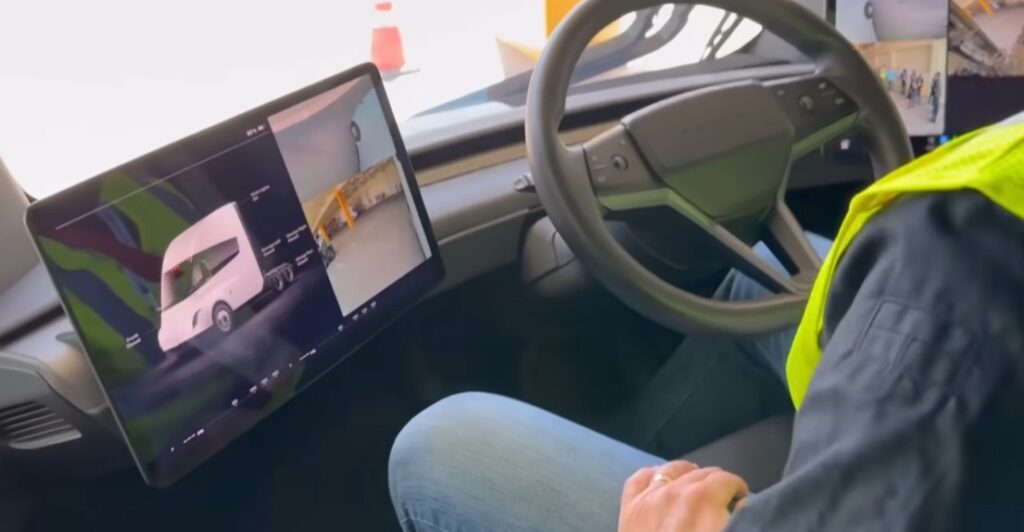
Inside, the priorities are different: a central driving position, standing room, doors on both sides and space for a cooler. Wilson praises the visibility and camera displays.
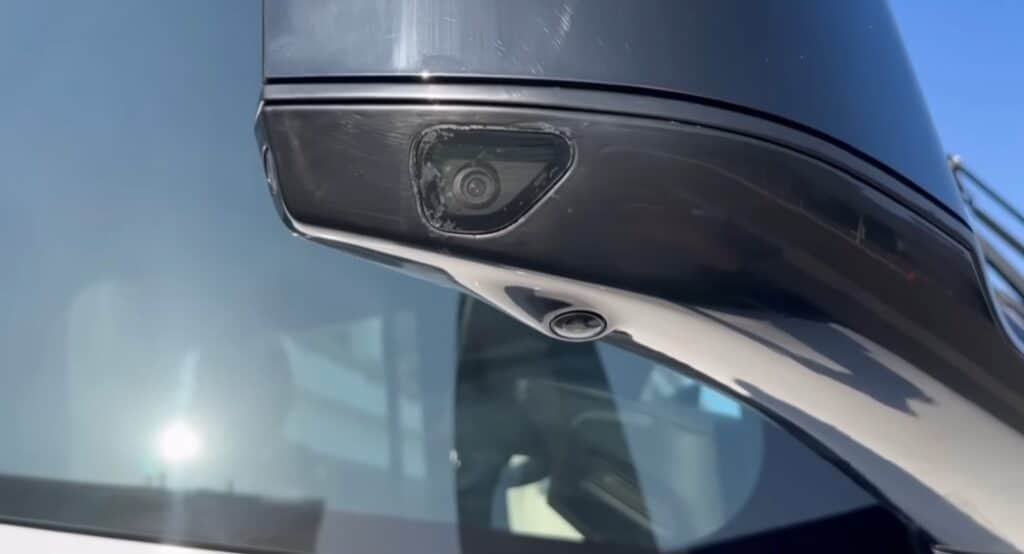
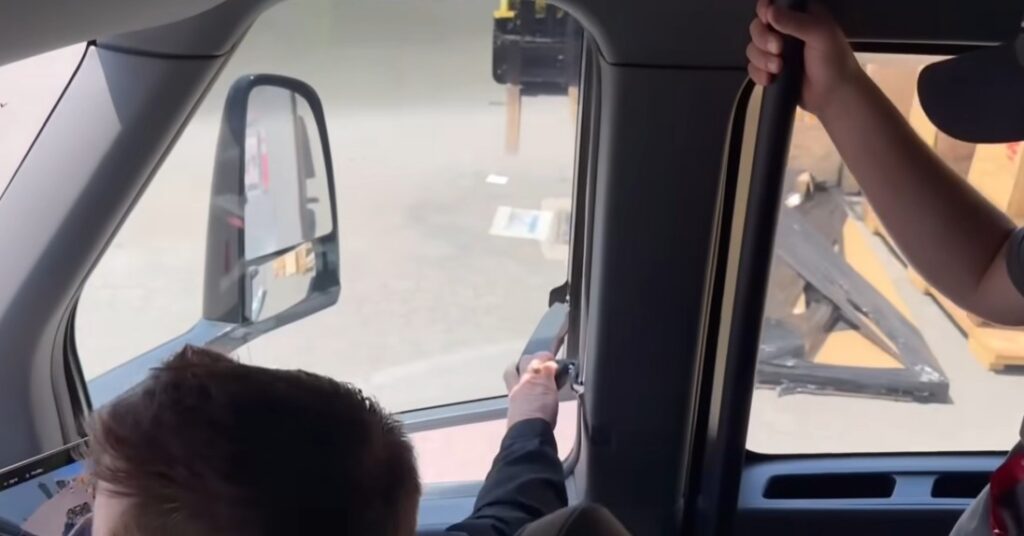
The side windows pop open rather than wind down. The demonstrator points out that paperwork can be passed through either side — a small detail with practical value at depot gates.
Smooth and quiet, but under limited conditions
Wilson spots independent front suspension during his inspection and repeatedly remarks on the smooth ride. The cab is quiet enough for him to hear the power-steering pump and air compressor.
Those are promising impressions, although he acknowledges the limits: this is no motorway run at 70mph, and he wants a future test with a loaded trailer.
The driver-facing camera also needs careful interpretation. When Wilson asks about monitoring a driver’s attention, the demonstrator describes that as an eventual capability. The exchange does not establish that the system was active on this truck.
Side story: Tesla robotaxi runs over bollards ahead of Cybercab launch
The expensive questions remain unanswered
The video provides no measured loaded range, charging session or operating-cost comparison. Wilson asks about the truck’s weight without obtaining a figure, leaving the payload question unresolved in this review.
He also notices large structural fasteners that would need cutting off for removal. That is a useful maintenance observation, but no evidence on its own that repairs would be unusually frequent or expensive.
Read more: Tesla awards Musk a multibillion-dollar stock package
Wilson’s ride offers an encouraging first impression of comfort but stops short of settling the business case.