Why Cornell sex assault case spreads online and what evidence surfaced

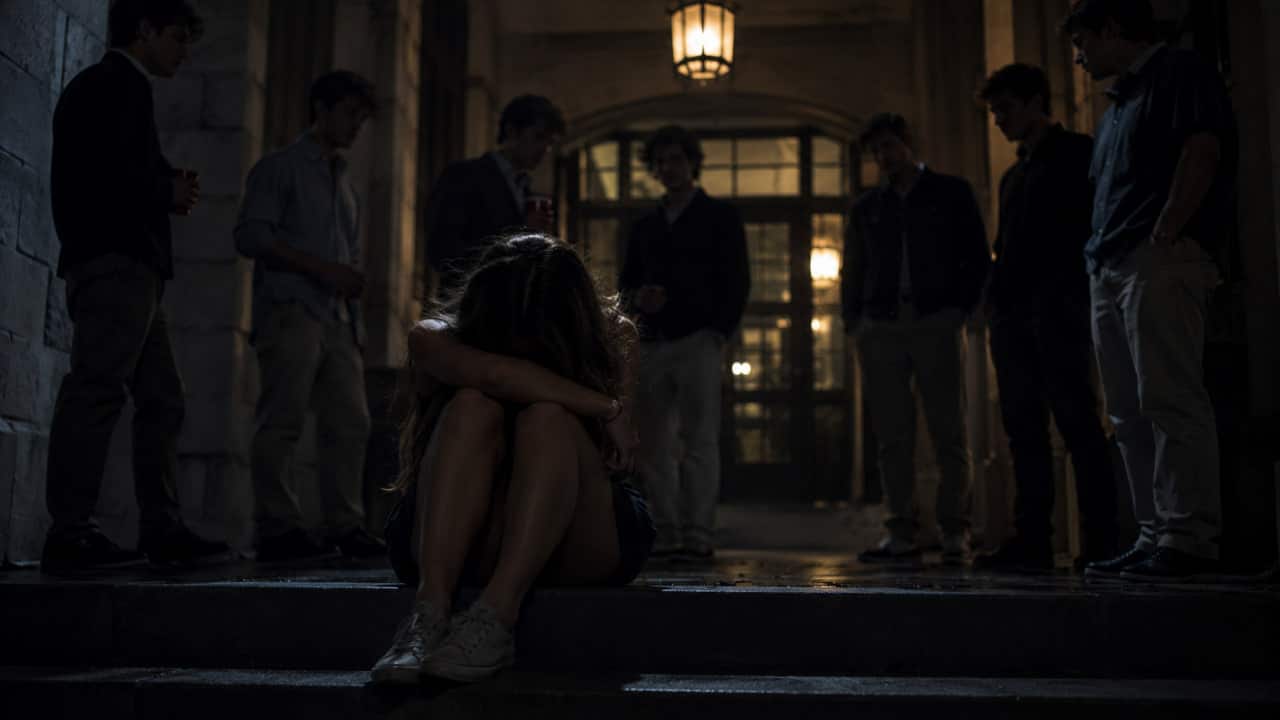
Seven men accused of sexually assaulting a former Cornell University student have been embroiled in several scandals, including campus confrontations, social media investigations, and new records that cast doubt on how Cornell and local authorities handled the complaint.
Matthew Ingalls, Johnathan Newell, Winston Lee, Gillio Lopes, Diego Sarabia, Scott Norris and Scott Kretzschmar are named as defendants in a civil lawsuit filed by a former student identified as Jane Doe. She alleges that members of Cornell’s Chi Phi fraternity sexually assaulted her after she became heavily intoxicated at the fraternity house in October 2024.
The court has not established the allegations, and no member of the group has been convicted of a crime. Lawyers for several of the men have denied allegations against their clients.
- Cornell students confront the case in public
- Winston Lee becomes focus of online investigation
- What about the other people in the Snapchat group?
- The wrong Matthew Ingalls was dragged into the case
- New accounts describe Jane Doe’s behaviour afterwards
- Cornell changes its Title IX leadership
- Where the legal case stands
Cornell students confront the case in public
The reaction is particularly visible on campus. Student Assembly President Eeshaan Chaudhuri has said Cornell needs to examine both its original response and the culture surrounding the fraternity. The university’s own 2025 survey found that 35% of undergraduate women reported experiencing sexual assault during their time at Cornell.
A video circulating online this week also appears to show a Cornell student confronting Gillio Lopes on campus about the allegations. Lopes declines to engage at length while the student criticises him and the fraternity’s group chat.
His lawyer, Tara Davis, subsequently described the confrontation as dangerous and has argued publicly that Lopes is being judged before the legal process is complete. Davis says Lopes acknowledges a sexual encounter with Jane Doe but maintains it was consensual and disputes other allegations in the lawsuit.
That episode shows the case’s transition from court to campus. While students, alumni, and commentators have called for university transparency, the Cornell Daily Sun prominently published the seven defendants’ names. Hundreds of alumni have threatened to withhold donations until Cornell provides more case details.
At the same time, the backlash has produced a second debate over online vigilantism.
Winston Lee becomes focus of online investigation
Much of that attention has centred on Winston Lee, who is also identified in some records as Lee Jun Hyung.
Korean social media users have attempted to reconstruct Lee’s family tree and have claimed that he is a grandson of Lee Hong-koo, South Korea’s prime minister from 1994 to 1995, who died in May. Users have compared photographs and footage from the former prime minister’s funeral with images of Winston Lee.
No one has independently verified the link. Lee Hong-koo’s family has confirmed some of the names in the online theory, but they have not confirmed Winston Lee.
Winston Lee’s alleged father is Barton Lee, managing director and head of Asia at EIG, and his mother is Hwang Ji-young, president of the Korean Women’s Association in Hong Kong, according to posts. The claim that they are Lee’s parents cannot be independently verified.
The online investigation has combined corporate biographies, Korean community organisations, funeral footage, and social media accounts into a proposed family tree that Lee and his family have not confirmed.
What about the other people in the Snapchat group?
Another strand of the online discussion concerns a Chi Phi Snapchat group referenced in the lawsuit. The complaint alleges that a message was sent to fraternity members during the night in question. Reporting indicates that the group had dozens of members.
Lists purporting to identify roughly 50 other members have since appeared online. There is not enough evidence to treat those lists as a verified record of who was in the group at the relevant time.
One online Cornell Seven archive has itself had to revise a fraternity roster after acknowledging that an earlier version misidentified people. It uses an archived December 2023 Chi Phi membership page and warns that inclusion does not prove a person was a member in October 2024 or connected to the allegations.
The wrong Matthew Ingalls was dragged into the case
The dangers of online identification have already become tangible.
On September 26, a process server arrived at the home of Victoria Ingalls with the 101-page lawsuit. Her son is also called Matthew Ingalls, but he is a 23-year-old active-duty Marine Corps sergeant who never attended Cornell. The address of the wrong man had been entered in connection with service of the case.
After the error, relatives said their personal information spread online and the family received threatening and abusive messages. A lawyer at the firm representing Jane Doe said it was working to correct the mistake and arrange service on the Matthew Ingalls who is actually named in the Cornell case.
New accounts describe Jane Doe’s behaviour afterwards
Records reported this week have also provided more context about the days immediately after the alleged incident.
One flatmate told Cornell’s investigation that Jane Doe returned home the next morning in shock without describing what happened as rape or assault. Her roommates said her understanding of the nite changed as she tried to reconstruct it.
One flatmate thought Jane Doe wanted consensual encounters. Reporters found evidence that she spoke with some of the men after the night. She later told police that most of what happened was not consensual and that she believed she had been raped.
Cornell changes its Title IX leadership
Questions have also emerged online about Lauren Branchini, who was Cornell’s Title IX coordinator during the university’s handling of sexual misconduct cases.
Her name is no longer listed as Cornell’s current Title IX coordinator, but university records indicate that the position was a role change rather than her removal from Cornell’s civil rights office. Branchini, who had served as coordinator since 2021, has moved into the position of Hearing Chair for cases involving Cornell Policy 6.4. Samantha Freeburn has taken over as Title IX coordinator.
Where the legal case stands
The criminal side has now moved beyond Tompkins County prosecutors. On October 1, New York Governor Kathy Hochul appointed Attorney General Letitia James as special prosecutor, saying newly released information had undermined her confidence in the local district attorney’s ability to handle the investigation. James now has authority to investigate and, if the evidence warrants it, pursue prosecution and present the matter to a grand jury.
After District Attorney Matthew Van Houten reopened the criminal investigation, the decision was made. His office declined prosecution in 2024 after interpreting Jane Doe’s police statement. More complete records released this week raise questions about whether prosecutors were given a summary of her Cornell police statement that omitted key details.
Meanwhile, Jane Doe’s civil case is before the New York Supreme Court. It accuses Cornell, Chi Phi, the seven men, and others of negligence, sexual assault, and battery. Cornell says its extensive internal investigation led to expulsions, suspensions, and the closure of the Chi Phi chapter.