MKBHD reviews Xiaomi 18 Fold: a lighter, better iPhone Duo?

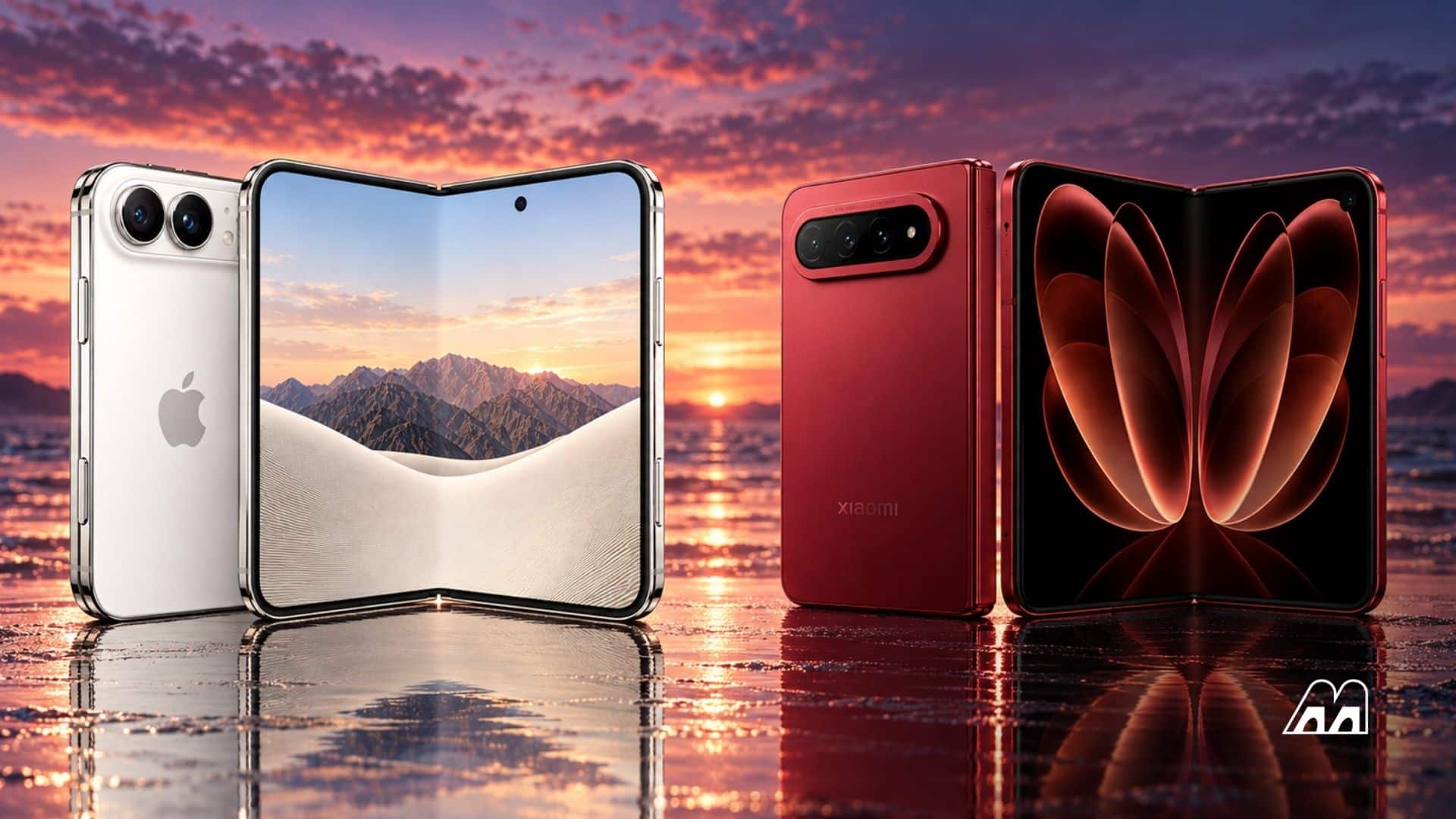
Prominent YouTube tech reviewer MKBHD examining the newly revealed Xiaomi 18 Fold alongside Apple’s iPhone Duo has highlighted how the Chinese manufacturer pre-empted Apple’s foldable debut despite sharing near-identical dimensions.
Officially unveiled on September 6, two days before Apple’s keynote, Xiaomi’s handset mirrors the iPhone Duo down to the millimetre, adopting the identical aspect ratio for both screens and matching its curved D-shaped profile.
The synchronised timing reflects industrial supply chain leakage rather than direct design theft. While Apple enforces strict secrecy during internal research and development, physical specifications inevitably surface once orders for custom display panels, hinge mechanisms and chassis dimensions reach third-party Asian component suppliers.
With shorter production turnaround times, agile competitors can rapidly assemble competing hardware ahead of Apple’s predictable autumn launch window, repeating a tactic seen when Samsung teased its ultra-thin Galaxy S25 Edge ahead of the iPhone Air.
Hardware gains in weight and battery
Despite the structural similarities, the Xiaomi 18 Fold establishes distinct hardware leads over the iPhone Duo. At 224 grams, the device is 30 grams lighter than Apple’s 254-gram offering, which ranks as the heaviest iPhone produced to date. The reduced mass significantly eases hand fatigue during prolonged single-handed use.
Xiaomi also secures an endurance advantage by integrating a 6,000 mAh silicon-carbon battery capable of 67-watt wired and 50-watt wireless charging. Conversely, Apple relies on conventional battery technology with an estimated capacity near 5,000 mAh and slower charging speeds to power its 7.5-inch inner display.
Xiaomi extends its hardware lead to photography, incorporating a 200-megapixel primary sensor, an ultra-wide shooter and a dedicated 50-megapixel 3.5x telephoto camera inside a raised camera bar that doubles as an ergonomic finger rest. The iPhone Duo omits a telephoto camera entirely, utilising a dual-lens array backed by a noticeably smaller 48-megapixel sensor.
Display trade-offs and multitasking
Apple retains clear advantages in aesthetic finishing and crease management. The iPhone Duo conceals its internal selfie camera beneath the screen and features superior crease reduction alongside an anti-reflective coating. Xiaomi settles for a standard corner punch-hole lens, which delivers sharper self-portraits but interrupts the visual continuity of the foldable panel.
In software, Apple delivers polished transition animations that illuminate the cover display mid-fold to maintain visual continuity. However, Xiaomi’s Android interface offers far greater flexibility for productivity. While the iPhone Duo restricts users to running two applications side by side, Xiaomi supports triple-window layouts, floating app bubbles and windowed overlays.
Xiaomi also incorporates a practical safeguard that automatically disables the rear screen during viewfinder selfies, preventing accidental palm inputs that currently affect the iPhone Duo.