Who is Francis Halzen, 2026 Nobel Prize laureate in physics?

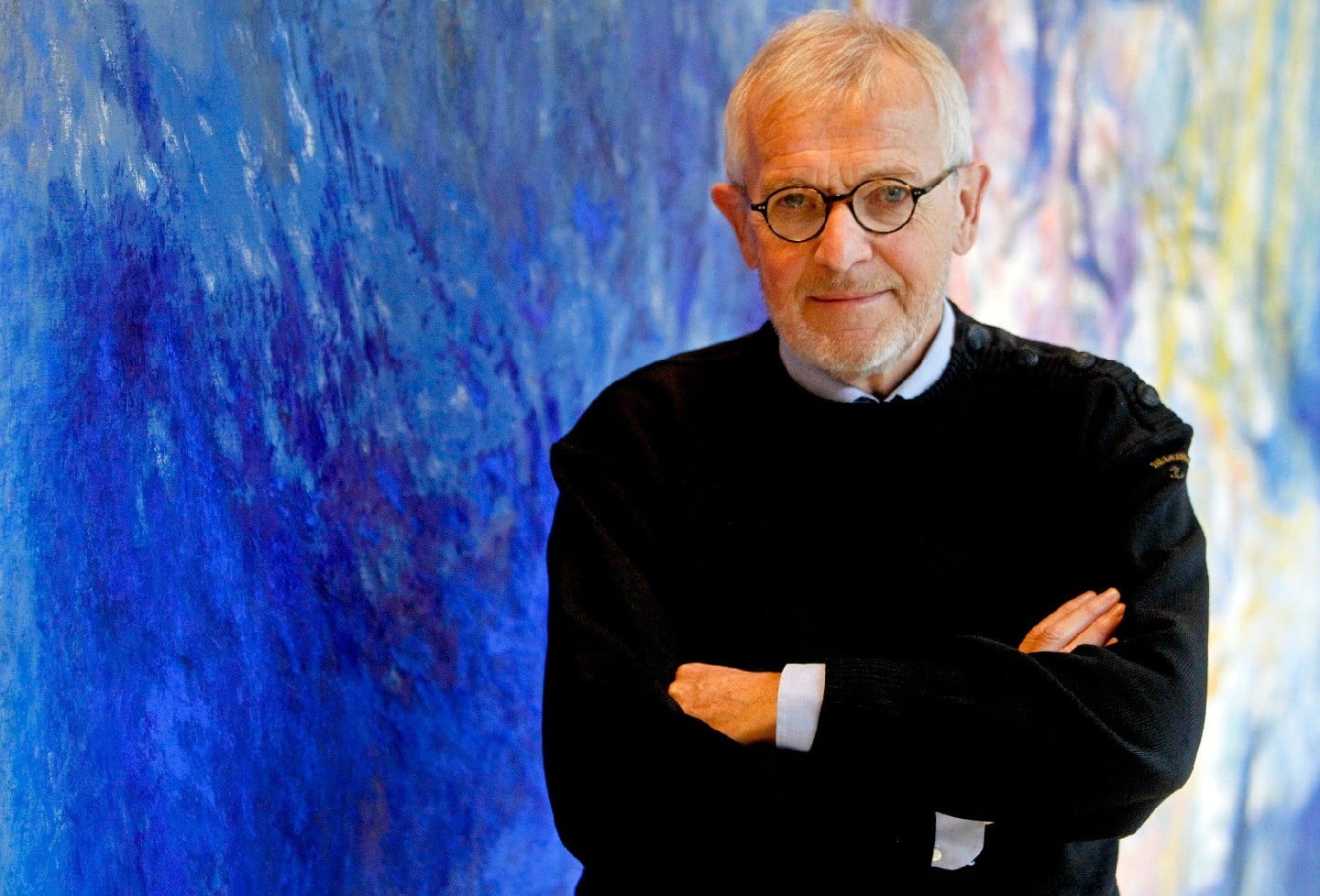
The Royal Swedish Academy of Sciences has on 6 October awarded the 2026 Nobel Prize in Physics to Francis Halzen for his pioneering work with the IceCube Neutrino Observatory.
The University of Wisconsin-Madison professor earned the award for discovering high-energy astrophysical neutrinos. Halzen will receive a prize amount of 12 million Swedish kronor ($1.2 million).
Born in 1944 in Tienen, Belgium, Halzen earned his doctorate from KU Leuven before embarking on a career that would ultimately transform astronomy.
BREAKING NEWS The Royal Swedish Academy of Sciences has decided to award the 2026 #NobelPrize in Physics to Francis Halzen «for decisive contributions to the IceCube Neutrino Observatory and the discovery of high-energy neutrinos of astrophysical origin.» https://t.co/UcPBWk0RiK
— The Nobel Prize (@NobelPrize) October 6, 2026
Halzen’s previous accomplishments
Before securing the Nobel Prize, Halzen earned many accolades for his experimental achievements. The international scientific community has consistently recognised his ability to connect abstract theoretical particle physics with large-scale experimental implementations.
Recognising his contributions, the United States National Academy of Sciences elected him as a member in 2024.
IceCube Principal Investigator and @UWMadison Prof. Francis Halzen has been awarded the 2026 Nobel Prize in Physics "for decisive contributions to the IceCube Neutrino Observatory and the discovery of high-energy neutrinos of astrophysical origin.” 🎉🏅 #NobelPrizeInPhysics2026 https://t.co/nyfVYJto5M
— IceCube Neutrino Observatory (@uw_icecube) October 6, 2026
Beyond his extensive catalogue of technical papers and ongoing academic leadership, Halzen maintains a strong commitment to accessible science communication. His essay «Antarctic Dreams» was selected for The Best American Science Writing 2000, showcasing his ability to convey complex astronomical concepts to broader audiences without relying on dense academic jargon.
Catching invisible messengers
To understand Halzen’s breakthrough, it helps to know what a neutrino actually is. Space is filled with natural particle accelerators that shoot out energy far more powerful than anything we can create on Earth. These violent cosmic engines produce particles called neutrinos.
In space, neutrinos are not stopped or deflected like most particles. They fly through the universe, planets, and even humans like ghostly messengers. They give scientists a direct path to the universe’s most extreme events because they travel straight from their source.
They are hard to catch because they pass through everything. Francis Halzen solved this puzzle in 1988 by suggesting tracking them with thick, unpolluted South Pole ice. In the ice, a rare neutrino hits an atomic nucleus, creating a tiny flash of light.
Building a giant ice trap
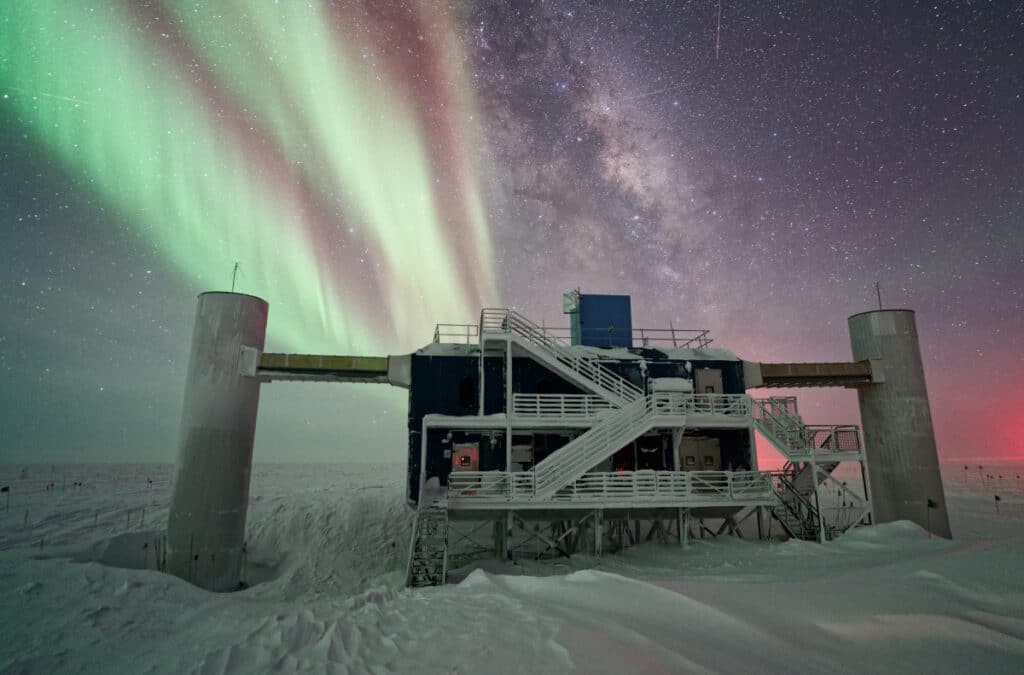
Realising this vision took a lot of work. The 2011 IceCube Neutrino Observatory traps an entire cubic kilometre of Antarctic ice. The glacier’s darkness, lack of outside interference, and earthquake-free geology make it ideal.
Light sensors await faint flashes inside this frozen block. Halzen’s team discovered high-energy neutrinos from beyond our solar system shortly after construction. With this milestone, scientists could track the sources of these mysterious particles.
Mark Pearce, chair of the Nobel Committee for Physics, praised the scientist’s relentless dedication.
«Francis Halzen has led an international team of researchers and engineers who have provided us with a fantastic instrument,» Pearce said. «His tenacity and scientific vision has paved the way for a new kind of astronomy».
BREAKING NEWS The Royal Swedish Academy of Sciences has decided to award the 2026 #NobelPrize in Physics to Francis Halzen «for decisive contributions to the IceCube Neutrino Observatory and the discovery of high-energy neutrinos of astrophysical origin.» https://t.co/UcPBWk0RiK
— The Nobel Prize (@NobelPrize) October 6, 2026
By capturing these elusive particles, researchers can now study the violent settings where high-energy neutrinos are created, potentially uncovering cosmic phenomena that have remained hidden until now.