How molecules pick a side: What Henri B. Kagan and Kenso Soai got their chemistry Nobel for?

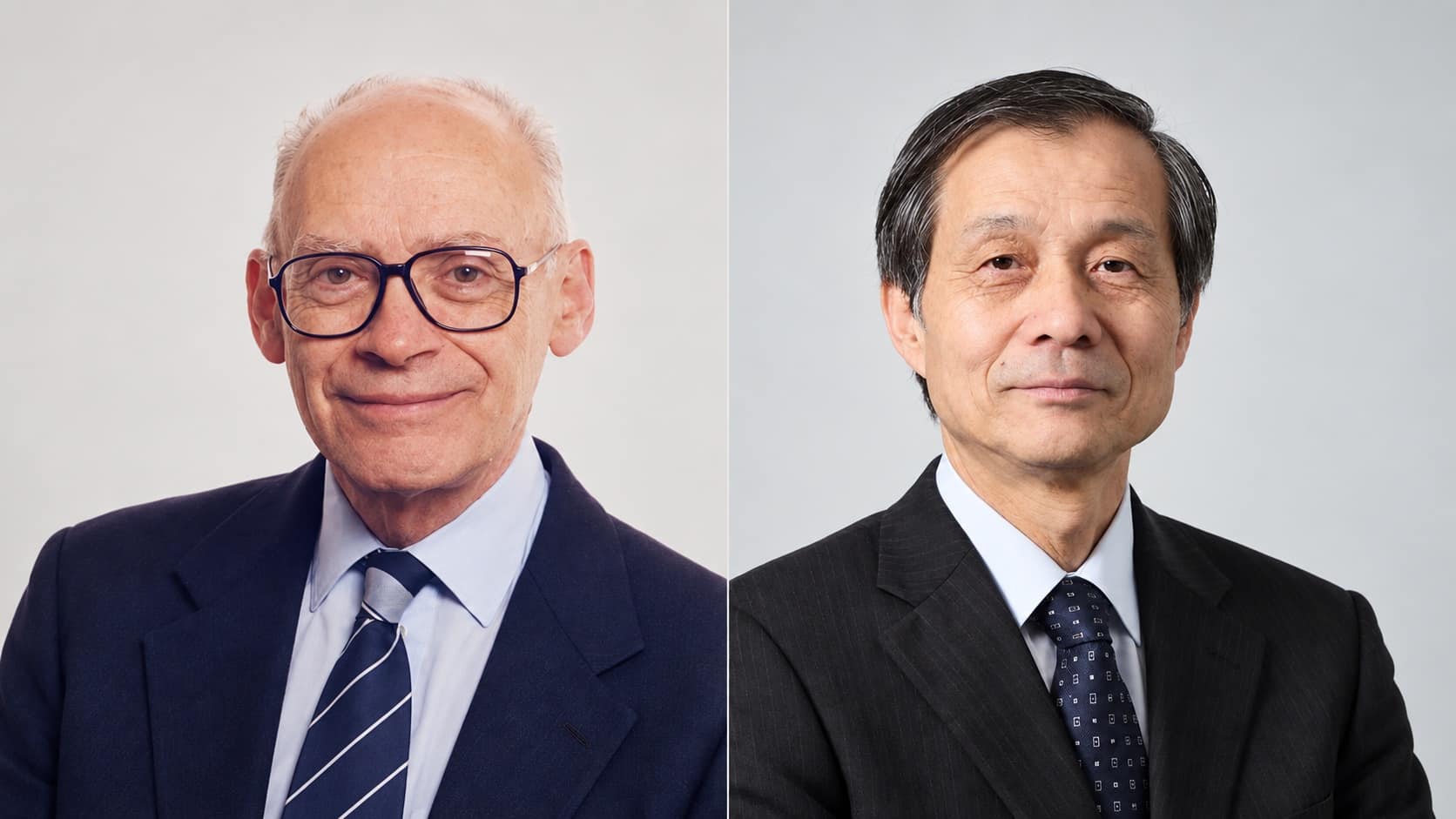
France’s Henri B. Kagan and Japan’s Kenso Soai have won the 2026 Nobel Prize in Chemistry for discoveries that explain how chemical reactions can favour one of two mirror-image molecules. Their work connects the practical business of making chemicals with a more profound question: why does life favour one molecular ‘hand’ over the other?
In simple terms, they showed how a small preference for one molecular version can become much stronger — and how the molecules produced can help make more of their own kind.
For Kagan, the award comes 25 years after his exclusion from another chemistry Nobel provoked protests in France. For Soai, it recognises research that gave scientists an experimental way to explore one of the puzzles surrounding the origins of life.
BREAKING NEWS The Royal Swedish Academy of Sciences has decided to award the 2026 #NobelPrize in Chemistry to Henri B. Kagan and Kenso Soai «for the discovery of non-linear effects and autocatalysis in asymmetric organic synthesis.» https://t.co/nH090ql1Xc
— The Nobel Prize (@NobelPrize) October 7, 2026
Ask this article:
Who is Henri B. Kagan?
Born in 1930, Kagan is a French chemist associated with Paris-Sud University in Orsay and a member of the French Academy of Sciences since 1991. His research helped establish methods for steering reactions toward a single molecular mirror image.
His influence was already clear decades before this award. In his 2001 Nobel lecture, Japanese chemist Ryoji Noyori credited Kagan’s development of a catalyst component called DIOP in 1971 as a major breakthrough in asymmetric hydrogenation, a method for adding hydrogen selectively to molecules.
Kagan was not a winner that year. Nature reported that French scientists were appalled by the decision and that Roger-Gérard Schwartzenberg, the research minister, intervened. Twenty-five years later, his 2026 recognition ends that controversy.
Thanks to the discoveries that are being recognised by the #NobelPrize in Chemistry 2026, chemists have gained fundamental new tools for use in their daily work but, above all, these discoveries have contributed to solving one of chemistry’s greatest mysteries: how homochirality – like that found in all living beings – can be created. The Soai reaction – developed by 2026 laureate Kenso Soai – has awakened new enthusiasm in chemists who want to understand the life’s origins. Around the world, researchers are now trying to repeat Soai’s achievement, but with the aim of producing homochiral amino acids and sugars. The non-linear effects that fellow laureate Henri B. Kagan discovered have become an important tool for chemists when they design new reactions. The fact that a reaction is non-linear provides chemists with information about how it occurs. This information can be used to optimise the reaction, so they can obtain the purest possible enantiomers of the product. This is vital for every company that manufactures substances that are intended to interact with living beings, such as pharmaceuticals, flavours, scents and agricultural chemicals. In some cases, it is also important in the production of new materials.
— The Nobel Prize (@NobelPrize) October 7, 2026
Who is Kenso Soai?
Soai, born in 1950, is a professor emeritus at Tokyo University of Science. He earned his doctorate at the University of Tokyo in 1979, worked at the University of North Carolina at Chapel Hill and established his research group in Tokyo in 1981.
His defining discovery appeared in Nature in 1995. Starting with a small imbalance between two mirror-image forms, his team showed that an autocatalytic reaction could increase this imbalance as it produced more molecules. The process became known as the Soai reaction.
The discovery offered a laboratory model for how a slight molecular advantage could grow into overwhelming dominance. Soai received the Japan Academy Prize in 2025 for this work and his investigations into the origins of molecular handedness.
Read more: Who is Francis Halzen, 2026 Nobel Prize laureate in physics?
Why does their work matter?
Controlling molecular handedness is important in chemical manufacturing, including the production of medicines. Kagan’s work helped chemists understand how catalysts could favour the desired version of a molecule rather than produce a less useful mixture.
Soai’s experiments address a more fundamental question. If early chemistry produced both mirror-image forms, what could have pushed the building blocks of life towards one side?
Read more: Mokyr, Aghion and Howitt win 2025 Nobel Prize in Economic Sciences
His reaction demonstrates a mechanism capable of magnifying a tiny initial difference. It provides a way to investigate that question, although it does not establish that the same reaction occurred on the early Earth or explain the origin of life in full.