Food, power, routes to Europe: What Central Asia wants from (and for) CIS

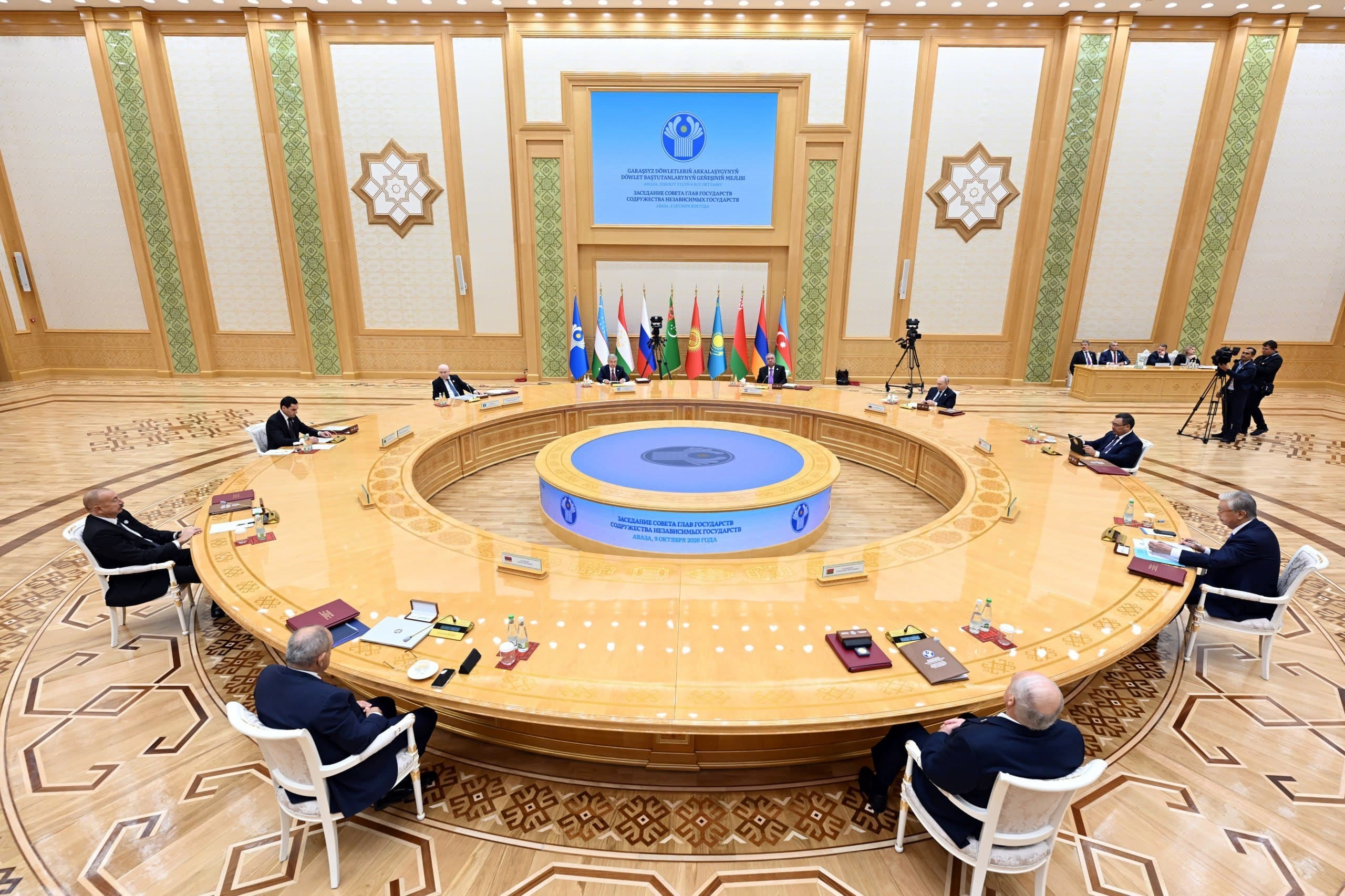
At the Commonwealth of Independent States (CIS) summit in Turkmenistan, Central Asian leaders have pressed for advance warning of food export restrictions, better coordination of electricity supplies and shorter freight routes to Europe.
The regional leaders’ talking points brought practical economic concerns to the forefront of discussions within the CIS, a grouping of former Soviet republics such as Armenia, Azerbaijan, Belarus, Kazakhstan, Kyrgyzstan, Moldova (withdrawing in April 2027), Russia, Tajikistan, and Uzbekistan.
Uzbekistan’s President Shavkat Mirziyoyev called for consultations before governments restricted food and fertiliser exports. Kazakhstan’s President, Kassym-Jomart Tokayev, highlighted a highway that will shorten the road journey between China and Europe by about 1,000 kilometres.
Turkmenistan offered its Caspian infrastructure to strengthen links between Central Asian and European markets in a separate meeting the day before.
Read more: Is Uzbekistan a middle power? Whatever the answer, its leverage starts to count, FT says
Kursiv Uzbekistan picked up the most notable tidbits from Friday’s summit meeting:
- Uzbekistan: Fewer surprises over food and electricity
- Kazakhstan: Reaching Europe and getting through borders
- Turkmenistan: From the Caspian and through the Caucasus
- Kyrgyzstan and Tajikistan: Merging UN peacebuilding with environment
Uzbekistan: Fewer surprises over food and electricity
Mirziyoyev’s proposal targeted the knock-on effects of export restrictions: a decision taken to protect supplies in one country can unexpectedly disrupt markets elsewhere.
- He requested advance notice and consultation before government restrictions. Decisions would be more predictable, but governments could still limit exports, the president asserted.
- Mirziyoyev suggested a long-term assessment of seasonal energy shortages and surpluses, network investment needs, and hydroelectric, thermal, and renewable generation collaboration.
- He also proposed a shared network for special economic zones and industrial parks.
Read more: Uzbekistan sets a $30 billion trade target with Russia
Kazakhstan: Reaching Europe and getting through borders
Tokayev pointed to the construction of the more than 1,500km Aral–Caspian highway, begun in August. Once completed, he said, it would shorten the China–Europe road route by roughly 1,000km.
His wider argument was that roads alone are insufficient. Kazakhstan has introduced electronic transport permits with Uzbekistan and Kyrgyzstan and launched its first cross-border unmanned freight operation with Russia in May.
Turkmenistan: From the Caspian and through the Caucasus
At the October 8 meeting of Central Asian leaders and Azerbaijan, Turkmen President Serdar Berdymukhamedov promoted a corridor running through the Caspian Sea and South Caucasus to Europe.
He offered Turkmenistan’s infrastructure and proposed regular foreign ministers’ consultations among the six countries.
Kyrgyzstan and Tajikistan: Merging UN peacebuilding with environment
The smaller states also sought international attention. Kyrgyzstan’s Sadyr Japarov invited leaders to a global mountain summit in October 2027, while Tajikistan’s Emomali Rahmon outlined plans for a June 2027 peacebuilding conference involving the UN and other partners.
Read more: What the US Russia sanctions bill could mean for Central Asia
The economic proposals leave specific questions to follow: whether governments agree to give advance notice of export curbs, fund electricity connections and simplify border procedures. Those decisions would determine what the summits change for businesses and consumers.