Why India is facing consecutive protests as voter list crisis deepens

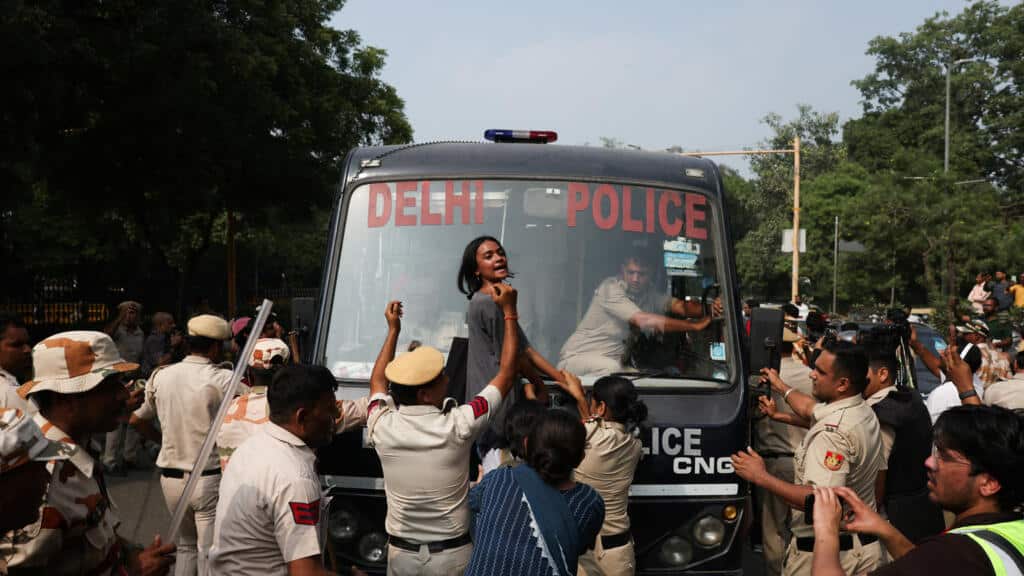
India is facing consecutive demonstrations over allegations of electoral manipulation, youth unemployment and government accountability, with protesters repeatedly taking to the streets of New Delhi.
On October 12, authorities closed several metro stations and restricted traffic as opposition parties prepared to march towards the Supreme Court. The demonstration followed days of unrest over a controversial revision of electoral rolls, which critics say could deprive eligible citizens of their voting rights.
🇮🇳 INDIA’S capital has been effectively LOCKED DOWN to prevent thousands of young people from protesting against the country’s election chief. More than 2,000 people have been DETAINED IN DELHI, including Cockroach youth movement founder Abhijeet Dipke. Police and paramilitary forces sealed off protest sites, shut metro stations and suspended mobile internet in parts of the city. And behind all this is a controversy involving roughly 130 million voter-list entries removed during a nationwide verification exercise. Opposition parties accuse election authorities of manipulating voter rolls to benefit Prime Minister Narendra Modi’s BJP. The Election Commission and BJP deny wrongdoing, saying the removals were part of efforts to clean up electoral records. But the protests have now become about more than voter lists. Police have detained opposition politicians, journalists and young demonstrators, while movement leaders insist they will continue until Chief Election Commissioner Gyanesh Kumar resigns. One protester being escorted away told Reuters: «This is violating the rights of the people and the country will not tolerate this anymore.» The allegations of electoral manipulation remain disputed. The scale of the crackdown, however, is already raising serious questions about how India is handling public dissent over its elections. Source: Reuters / Writer: Oliver
— Mario Nawfal (@MarioNawfal) October 10, 2026
The latest protests have brought together opposition politicians, student activists and civil society groups, although their demands extend beyond the electoral dispute.
Why are Indians protesting?
At the centre of the controversy is India’s Special Intensive Revision (SIR), a programme designed to remove duplicate registrations, deceased voters and people who have relocated from electoral lists.
Opposition parties argue that the verification process risks excluding legitimate voters, particularly minorities and people who cannot easily produce the required documents.
Critics have accused the Election Commission of conducting the exercise in a way that could benefit Prime Minister Narendra Modi‘s ruling Bharatiya Janata Party (BJP). Both the commission and the BJP reject allegations of political interference.
Indian police seal the capital’s roads, shut off the internet and restrict transport to deter protesters demanding accountability over a controversial revision to voter rolls. https://t.co/ZvkKg4afO0
— The Independent (@Independent) October 11, 2026
Protesters are demanding greater transparency, changes to the verification process and the resignation of Chief Election Commissioner Gyanesh Kumar.
Congress leader Rahul Gandhi has backed the demonstrations, accusing the authorities of undermining voting rights.
How students became involved
The unrest also reflects wider frustration among young Indians over unemployment, education and government accountability.
Student activists have joined demonstrations against the electoral revision, while other youth-led campaigns have raised concerns about examination irregularities and limited employment opportunities.
India’s police have detained dozens of protesters, including ‘Cockroach’ party leaders and journalists, as crowds attempted to gather for a planned mass anti-government demonstration in New Delhi. https://t.co/26hzyi7Ycy
— Al Jazeera English (@AJEnglish) October 10, 2026
Among the prominent figures is 29-year-old doctoral student Neha Bora, who has emerged as one of the faces of the demonstrations. Her involvement reflects the growing participation of young activists in protests over democratic rights.
The movement has also attracted attention through social media, where organisers have mobilised supporters and criticised police restrictions.