Hosting Trump and Putin in China, Xi speaks to a wider world

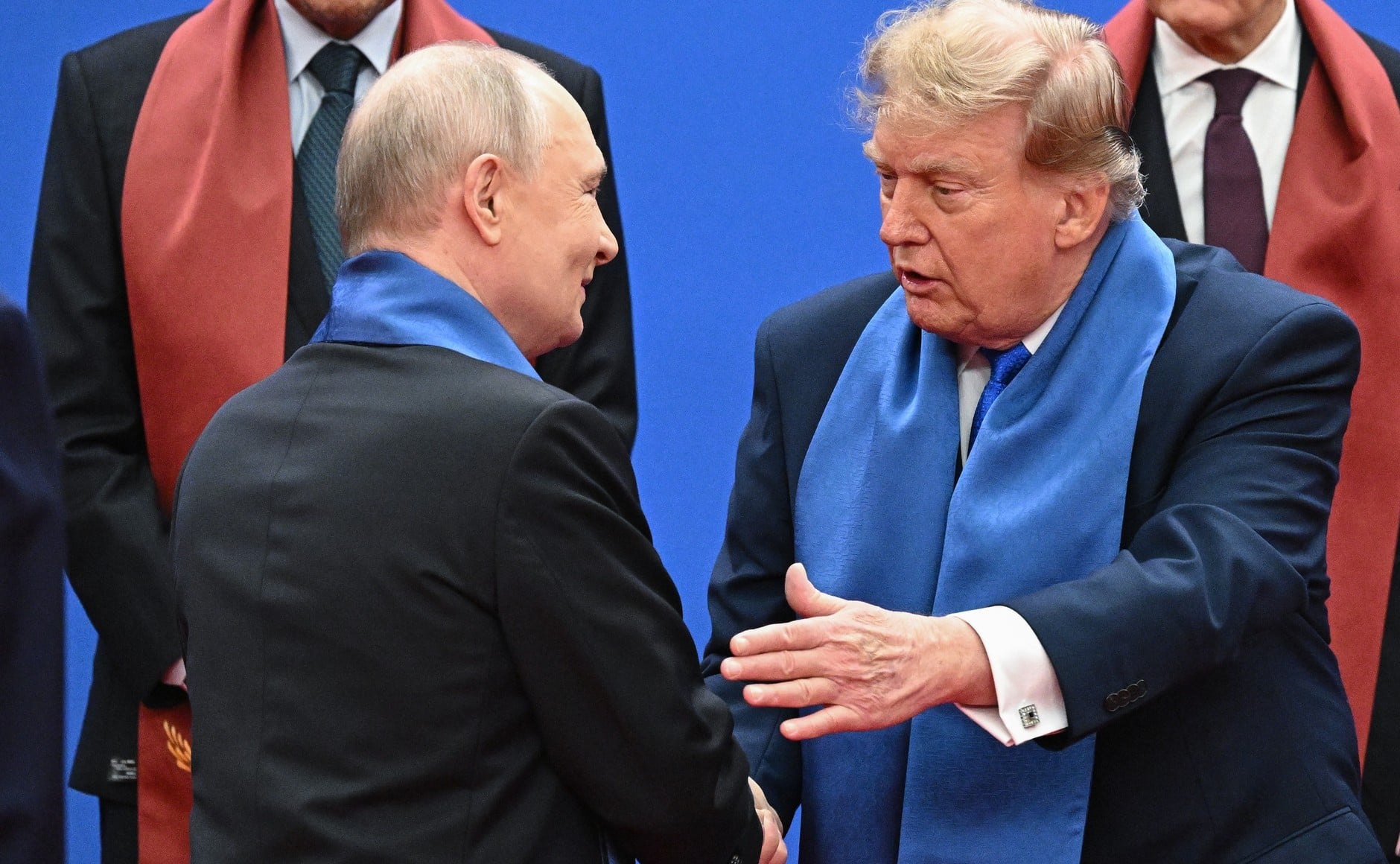
Hosting Donald Trump and Vladimir Putin in Shenzhen gives Xi Jinping a chance to strengthen China’s standing as a global mediator by bringing the two leaders together. Central Asia helps explain why that may be enough for China: in our region, it is getting its way through direct ties with the five capitals, giving Beijing little reason to seek a Yalta-like bargain with Washington and Moscow.
The first face-to-face trilateral meeting between Donald Trump, Vladimir Putin and Xi Jinping will be taking place on 19 November during the Asia-Pacific Economic Cooperation (APEC) summit in Shenzhen.
Following its pattern of keeping the diplomatic screen wide, Beijing has framed it as a discussion of world peace and strategic stability among major powers.
US officials initially pointed to nuclear arms control and Iran, saying they did not expect Russia’s war in Ukraine to feature on the meeting’s agenda. For its part, Moscow is hoping for a joint statement, with Putin’s aide Yuri Ushakov saying Russia had sent its proposals to China and that work on a common text was under way.
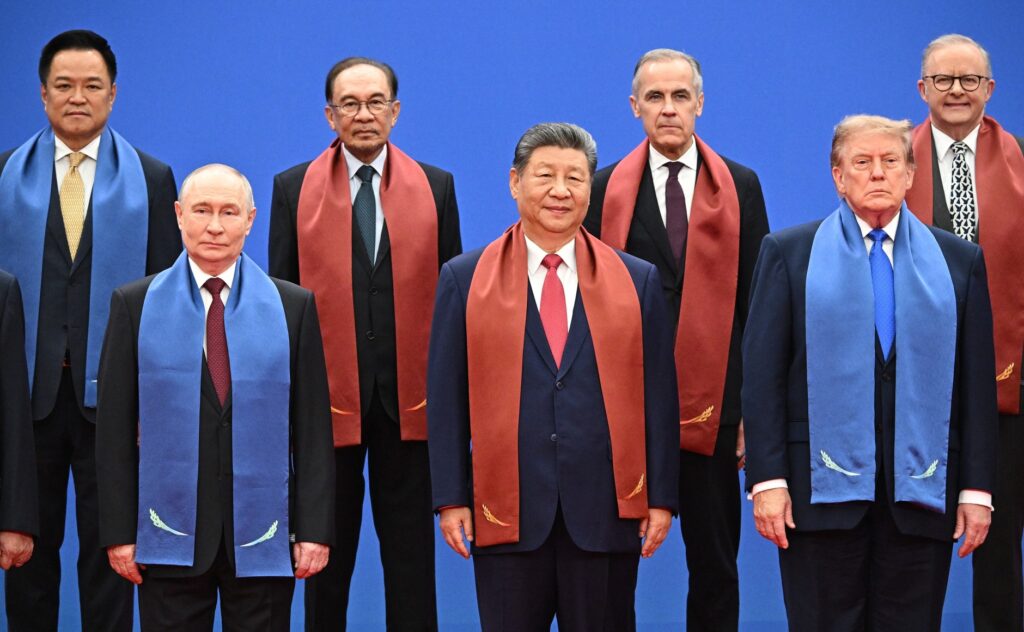
While the trilateral summit is expected to be short on deliverables, it will be chock-full of symbolism — the kind of symbolism that could speak volumes about the China that the world and Central Asia will see in the coming years.
The backstory: China confirms Xi-Putin-Trump summit in Shenzhen
What Xi gets from hosting Trump and Putin
Beijing confirming the meeting just three days ahead was unusually late for a diplomatic system that prizes preparation and control, Aleksei Chigadaev, a Sinologist and associate fellow at the New Eurasian Strategies Centre (NEST), told Kursiv Uzbekistan.
He reads the delay as a sign of Beijing’s reluctance, and what struck him the most was how quickly China found a public rationale once it made the decision.
On Monday, Foreign Ministry spokesperson Mao Ning invoked the three powers’ wartime cooperation, their role in founding the United Nations and their permanent seats on the UN Security Council. Those positions, the diplomat remarked, gave China, Russia and the US a shared responsibility to address global challenges.
Beijing had found a way to make hosting a meeting sound like part of its duties as a major power, but it had been slow to embrace this responsibility, Chigadaev commented.
‘China can present itself as the only adult in the room,’ he noted, adding that Russia’s assertive foreign policy and Trump’s unpredictable use of tariffs and economic sanctions leave an opening for Beijing to project itself as a power that speaks for both China and the wider Global South.
‘I think Beijing is trying to get something out of a meeting it never particularly wanted: the status of a responsible global mediator.’
Moscow’s reach in Central Asia
In Central Asia, Chigadaev says, Moscow may still want an exclusive sphere of influence, but its financial resources and political leverage increasingly fall short of that ambition. He observes a shift in the choices of the Central Asian elites.
English and Chinese are becoming increasingly important, and they are holding more of their money, investments, and property outside Russia.
Read more: Russia wants NATO out of Central Asia in Ukraine peace talks
Beijing, in Chigadaev’s view, is expanding its economic and political presence without seeking Moscow’s permission. In Uzbekistan alone, trade with China reached $15.17bn in the first nine months of 2026, against $10.47bn with Russia. China has built that lead alongside a still substantial Russian trading relationship.
The Russian commentariat often describes an informal division of labour in Central Asia, with China handling trade and investment while Russia takes the lead in politics and security.
‘To me, this increasingly looks like wishful thinking. China is becoming a political and security actor in its own right,’ Chigadaev opined.
Back in 2025, Xi signed a friendship and cooperation treaty with all five Central Asian states and called for deeper cooperation on law enforcement and regional security.
Kazakhstan, Kyrgyzstan, Tajikistan, Turkmenistan and Uzbekistan are actively diversifying their ties, Chigadaev said. They have room to pursue different partners for their different needs, and competition among China, Russia, the US, Europe and Japan expands those options.
To treat the region as «a prize or bargaining chip to be divided among great powers» misses what its governments are already doing.
‘The five Central Asian states have their own interests and considerable room for manoeuvre,’ the expert stated.
Who gets to process Central Asia’s minerals?
The contest for critical minerals is another example of why Washington, Beijing and Moscow are worlds apart from any measurable deliverables.
Russia and the Central Asian states themselves are increasingly competing for American investment in both mining and domestic processing, Chigadaev reminded.
In the meantime, China is already a major beneficiary of the region’s economic arrangements and has little incentive to help Russia restore its exclusive influence or give Washington a greater role at its expense.
«I don’t see much room for a grand bargain here,» Chigadaev concluded. The three powers want different things, and the states that hold the minerals have priorities of their own.
