NASA’s Mars crisis snowballs as two spacecraft suffer from glitches

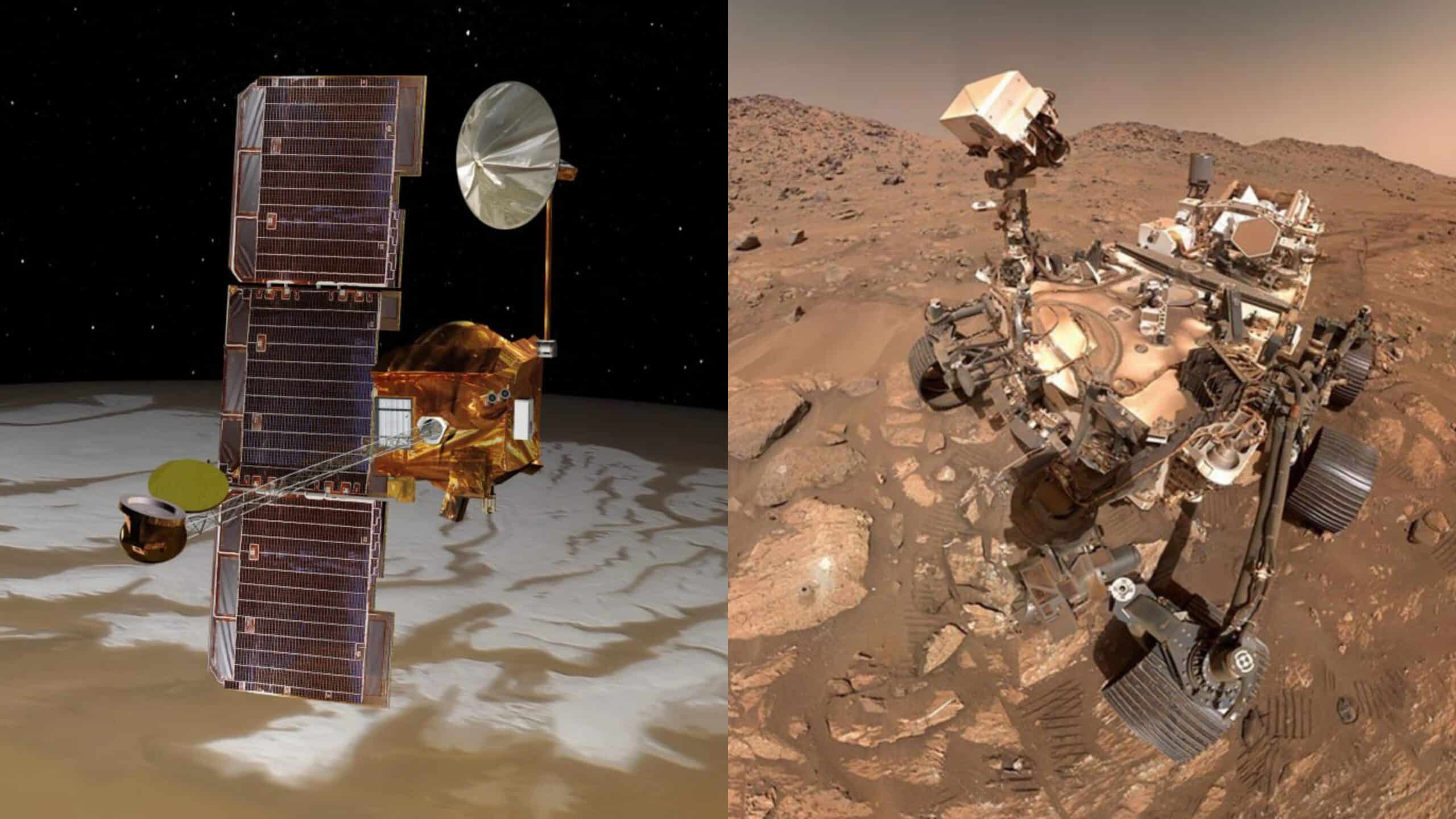
NASA has temporarily halted scientific work on two of its Mars missions after separate technical problems affected the Perseverance rover and the Mars Odyssey orbiter.
Perseverance, which has been exploring the Martian surface since 2021, is experiencing problems with both radios normally used to transmit scientific data through satellites orbiting Mars.
Meanwhile, the 25-year-old Odyssey spacecraft has lost a reaction wheel used to control its orientation. Engineers are attempting to restore the equipment before the orbiter exhausts its remaining fuel reserves.
NASA hopes both missions can resume scientific operations before the end of November, although neither recovery is guaranteed.
Why has NASA stopped Perseverance’s work?
Living up to its name: the Perseverance rover keeps on keeping on, finding new things in the Martian landscape. See the latest updates: https://t.co/bOsKIJndFW https://t.co/8ed9Un1Ual
— NASA Mars (@NASAMars) August 28, 2025
The rover’s problems began on 30 October, when its primary UHF radio stopped sending regular electronic signals to the onboard computer.
After approximately 100 seconds without a signal, the rover automatically switched to a backup radio and entered safe mode, shutting down non-essential systems to prevent further problems.
However, engineers subsequently discovered that the backup transmitter was operating at roughly half its expected power.
Perseverance remains stable and can still communicate directly with Earth through NASA’s Deep Space Network. However, this alternative connection is considerably slower than using orbiting satellites to relay data.
The interruption comes shortly after Perseverance set a new off-world driving record in October, having travelled more than 45 kilometres across Mars since its landing.
Could NASA lose its oldest Mars orbiter?
What would Mars look like from a future orbiting astronaut’s POV? The Odyssey orbiter captured its first images of the Red Planet’s curving horizon and layers of atmosphere, similar to the @Space_Station’s view of Earth. More on these new images: https://t.co/X24B5YaM0N https://t.co/NSlUyXjmqJ
— NASA Mars (@NASAMars) November 28, 2023
The situation involving Mars Odyssey presents a different challenge.
Between 4 and 6 November, the spacecraft entered safe mode after one of its reaction wheels stopped spinning. These wheels help the orbiter turn and maintain its orientation, allowing its solar panels to face the Sun and its instruments to point towards their targets.
NASA estimates that Odyssey has enough hydrazine fuel to maintain its orientation using thrusters alone for just one to two months.
Engineers have managed to move the faulty wheel during testing, raising hopes that it may be recoverable. Scientific instruments nevertheless remain switched off while the investigation continues.
Launched in April 2001, Odyssey was designed for a mission lasting just over two and a half years. It has now spent more than 25 years orbiting Mars, longer than any other spacecraft.
NASA is aiming to restore Odyssey’s scientific and communications functions during the final week of November.
