Elon Musk’s one million SpaceX satellites could spoil night sky forever

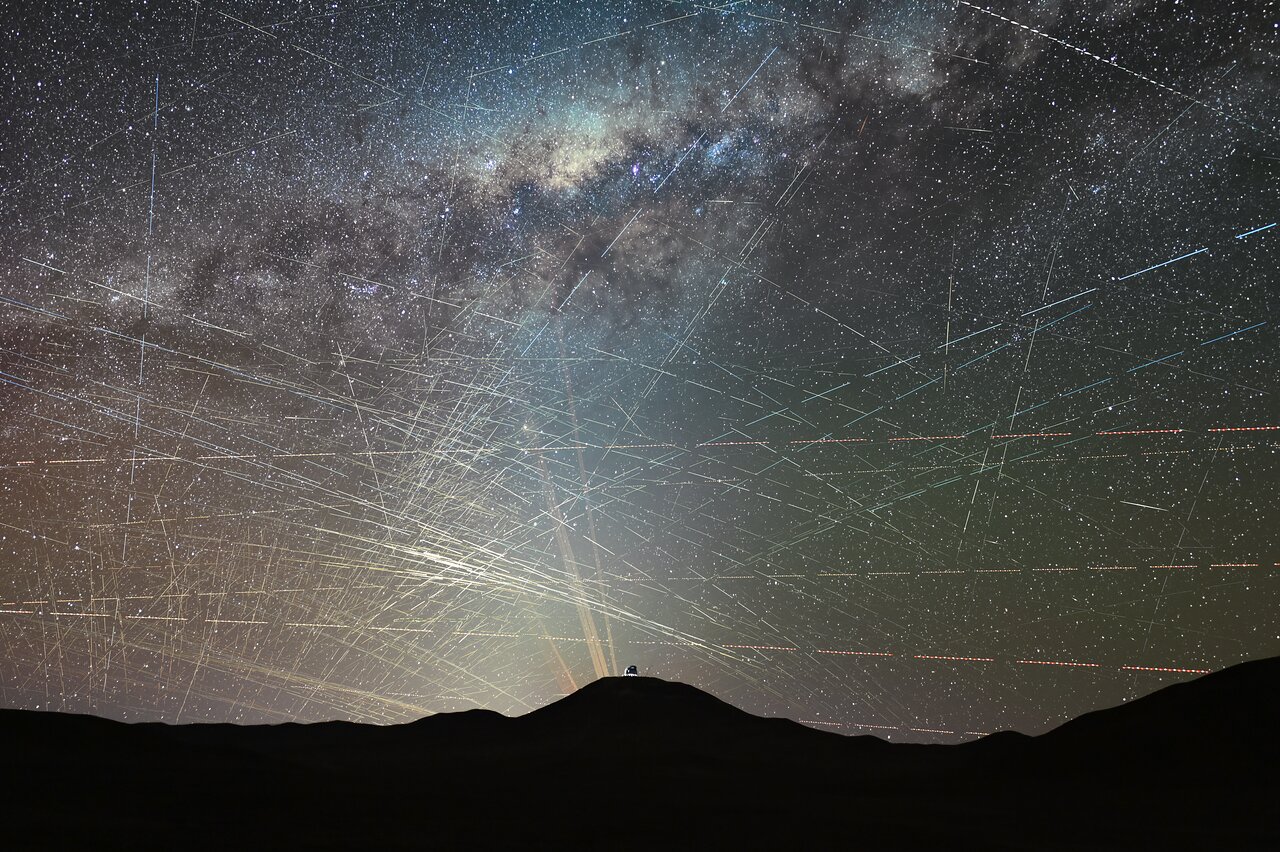
Astronomers have warned that Elon Musk’s ambitions to move artificial intelligence infrastructure into space could come at the expense of humanity’s view of the universe.
The European Southern Observatory (ESO) voiced its concerns a day after US regulators authorised SpaceX to deploy up to one million satellites.
Andreas Kaufer, director general of the ESO, warned that the project could have profound consequences for astronomical research and «fundamentally alter the night sky for everyone on the planet».
The observatory called for international oversight of space projects whose consequences extend beyond the borders of the countries authorising them.
The American Astronomical Society (AAS) also said it was «disheartened and dismayed» by the decision, warning that satellite interference could undermine decades of investment in astronomical research.
While satellite manufacturers have been working to reduce the brightness of individual spacecraft, the ESO argues that the sheer scale of Musk’s project could render existing mitigation techniques insufficient.
Could SpaceX satellites outnumber stars in the night sky?
Astronomers Samantha Lawler, Aaron Boley and Hanno Rein published simulations of the proposed constellation in March, using the observed brightness of existing Starlink satellites as a reference.
Their calculations suggest that artificial satellites could outnumber stars visible to the naked eye across much of the world for substantial periods of the night and year.
The human eye can distinguish fewer than 4,500 stars under ideal conditions. By contrast, the researchers’ simulations predict that tens of thousands of SpaceX satellites could be visible simultaneously under certain conditions.
Astrophotographers could also find it increasingly difficult to capture uninterrupted long-exposure images of the Milky Way, galaxies and nebulae. Satellites reflecting sunlight leave bright streaks across photographs, potentially obscuring faint celestial objects.
For professional astronomers, the consequences could extend to research into potentially hazardous asteroids and the search for Earth-like planets beyond the solar system.
What does Elon Musk want to put into orbit?
SpaceX’s project, called Starmind, is designed to provide computing power for AI through orbital data centres.
Under the authorisation granted by the Federal Communications Commission (FCC), SpaceX must begin deployment by November 2033, place 100,000 satellites into orbit by November 2035 and reach 500,000 by November 2038, according to Reuters.
