Delhi Shuts Schools and Halts Construction as Toxic Smog Blankets the Capital

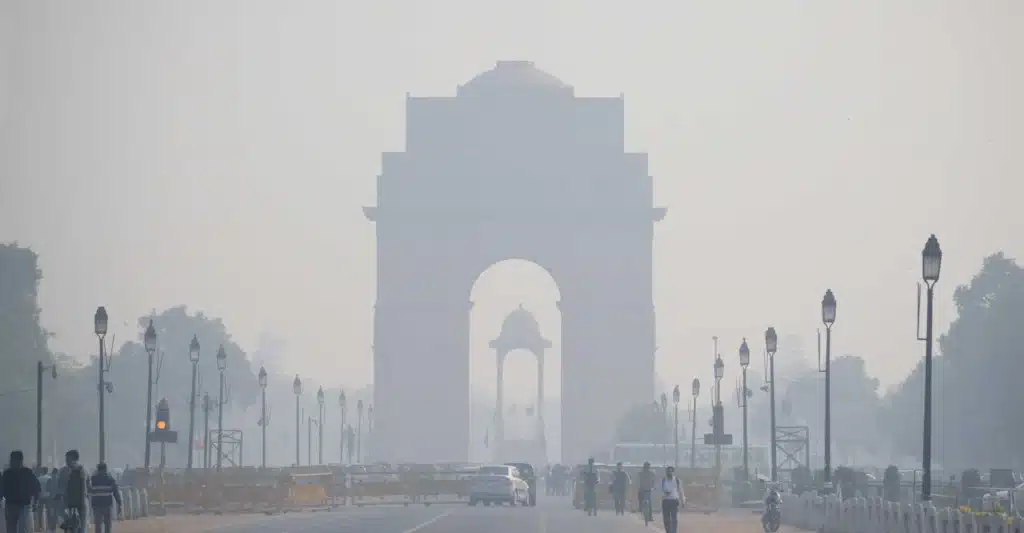
Schools in Delhi and nearby areas have shifted to online learning and construction work has been suspended as the Indian capital battles dangerously polluted air. A thick toxic haze covered the city on Monday morning, reducing visibility and disrupting flights and train services.
The air quality index in Delhi surged to levels more than 30 times higher than those recommended by the World Health Organization. Such exposure, driven largely by fine PM2.5 particles, poses serious health risks, particularly to children and older people.
Why air quality has worsened
Air pollution is a persistent winter problem in Delhi and its suburbs. It is linked to a combination of industrial emissions, vehicle exhaust, falling temperatures, low wind speeds and the seasonal burning of crop stubble in neighbouring states.
Government data from the Safar air quality app showed the average AQI in the city early on Monday at 471, a level classified as «severe». Under India’s scale, any reading above 400 falls into the most dangerous category, although official systems cap values at 500 despite higher readings often being recorded by independent monitors.
Emergency measures and health warnings
The sharp deterioration followed a brief period of improvement last week, when air quality fluctuated between «poor» and «very poor». On Sunday, the Commission for Air Quality Management activated the highest stage of its graded response action plan, tightening restrictions across the capital.
Under the new measures, older diesel trucks are barred from entering the city, all construction activity has been stopped, and schools have been instructed to adopt hybrid teaching, with younger pupils required to attend classes online. India’s Supreme Court also advised virtual hearings for legal proceedings.
Officials said the latest spike in pollution was caused by high moisture levels and shifting wind patterns, which trapped pollutants and intensified smog. Residents have been urged to stay indoors, especially children and those with heart or respiratory conditions, and to wear masks if venturing outside.
Health experts warn that prolonged exposure to such severe air quality can trigger respiratory illnesses even in otherwise healthy people. Between 2022 and 2024, more than 200,000 cases of acute respiratory disease were reported at six state-run hospitals in Delhi, highlighting the growing toll of the city’s pollution crisis.
A similar problem has been observed in Tashkent, the capital of Uzbekistan, prompting the government to establish a new committee to fight the pollution.