Right-wing candidate Jose Antonio Kast wins Chilean presidency

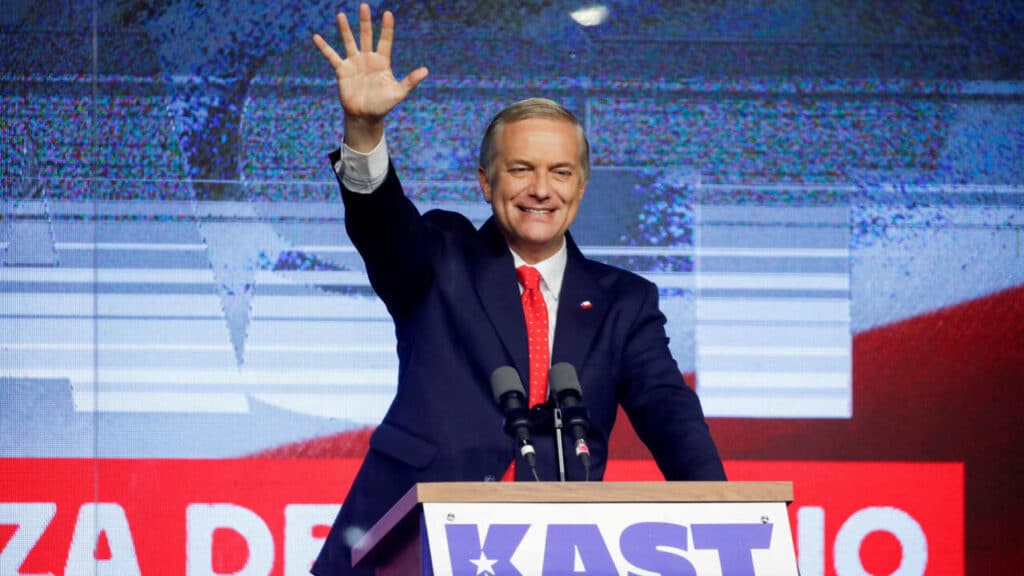
Jose Antonio Kast won Chile’s presidential election on Sunday with 58% of the vote, defeating leftist candidate Jeannette Jara, who received 42% and promptly conceded. The victory marks the country’s most pronounced shift to the right since the end of the military dictatorship in 1990.
A veteran right-wing hardliner, Kast has spent decades advocating border walls, military deployment in high-crime areas, and the deportation of undocumented migrants. In a victory speech at the Republican Party headquarters in Santiago’s Las Condes district, he promised «real change,» emphasising security as the foundation of freedom and democracy.
Family history fuels controversy
Kast’s background has drawn scrutiny. His brother served as a minister under Augusto Pinochet’s US-backed military dictatorship, and his father was a member of the Nazi party. Pinochet’s 17-year rule was marked by brutal human rights abuses, forced disappearances, and radical free-market reforms. Kast’s far-right credentials have raised concerns among some voters that his presidency could mark a return to Chile’s authoritarian past.
Campaign focused on crime and immigration
Kast’s win reflects voter anxiety over crime and migration. While Chile remains one of Latin America’s safest nations, violent crime has risen as organised groups exploit porous northern borders and increased migration from countries such as Venezuela.
His proposals include creating a US-style immigration enforcement force and cutting public spending. At rallies, he warned undocumented migrants to leave before his inauguration on March 11, 2026 if they wished to return legally.
Economic and political challenges ahead
Chile, the world’s largest copper producer and a major lithium exporter, saw a boost in its stock market and peso on expectations of deregulation and free-market policies. Kast’s more radical proposals, however, may face resistance from a divided Congress. The Senate is evenly split, and the lower house swing vote belongs to the populist People’s Party. Analysts warn he will need to appeal to voters beyond his base to pass legislation.
Kast, a Catholic father of nine, has long opposed abortion, even in cases of rape, and has criticised environmental protection measures. Any legal changes would require broad congressional support, while most Chileans favour current abortion laws.
Voter sentiment and election dynamics
President Gabriel Boric, who could not run again, had suffered low approval ratings, and some analysts suggest Jeannette Jara was perceived as a «continuity vote,» harming her campaign. Voters described the choice as picking the «least-worst» option, reflecting the extremes of both candidates. Francisco Otero, a Kast supporter, said the continuation of the previous government seemed «much worse.»
After the election, Jara stated, «democracy has spoken loud and clear» and wished Kast success «for the good of Chile.» Some voters, however, fear a return to far-right policies. Ricardo Herrera, who lived through Pinochet’s rule, called it «brutal,» while others doubted Kast could deliver on his pledges, such as deporting 360,000 migrants.
Part of a broader regional trend
Kast’s victory continues a rightward trend in Latin America, following recent elections in Argentina, Ecuador, Costa Rica, and El Salvador. This was the first presidential election in Chile with mandatory voting and automatic registration, prompting some to vote strategically rather than enthusiastically.
Despite controversy, Kast’s triumph reflects widespread voter desire for change, with his inauguration scheduled for March 11, 2026.