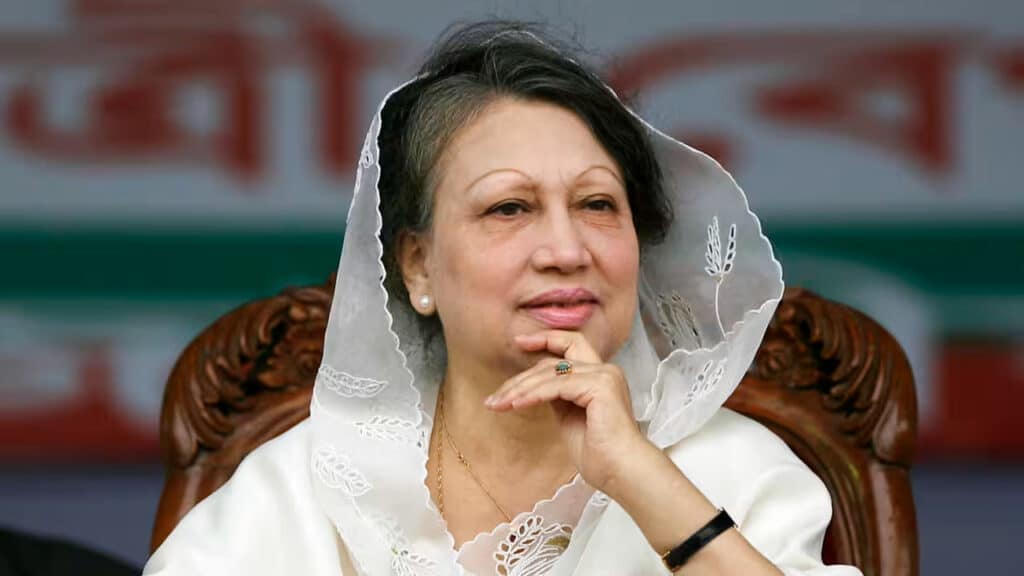
Khaleda Zia, Bangladesh’s first woman prime minister and a major political figure, has died at 80 after a long illness, her party said.
Zia led the Bangladesh Nationalist Party (BNP) to victory in 1991 and became the country’s first female head of government. She was placed on life support in her final days, with doctors citing her age and frail health as limits to treatment.
The BNP had planned for Zia to contest elections expected in February, the first since the ousting of her longtime rival Sheikh Hasina. For decades, Bangladesh’s politics were defined by the rivalry between the two leaders.
Zia first entered politics after the assassination of her husband, former president Ziaur Rahman, in 1981. She rose to prominence for her refusal to participate in disputed elections under military rule and became a symbol of opposition in a male-dominated political landscape.
Her first term as prime minister advanced women’s education and restored parliamentary democracy. Later terms drew criticism over elections and corruption allegations, which she denied.
Zia’s son Tarique Rahman is expected to lead the BNP if the party returns to power. Interim BNP leader Muhammad Yunus called her a «symbol of the democratic movement,» while India’s Prime Minister Narendra Modi paid tribute to her legacy.
Zia spent her last month in hospital receiving treatment for kidney, heart and lung problems. The BNP said her family was by her side and asked supporters to pray for her soul.
Kursiv also reports that Bahram Beyzai, one of Iran’s most influential filmmakers and playwrights, has died aged 87 in the United States.