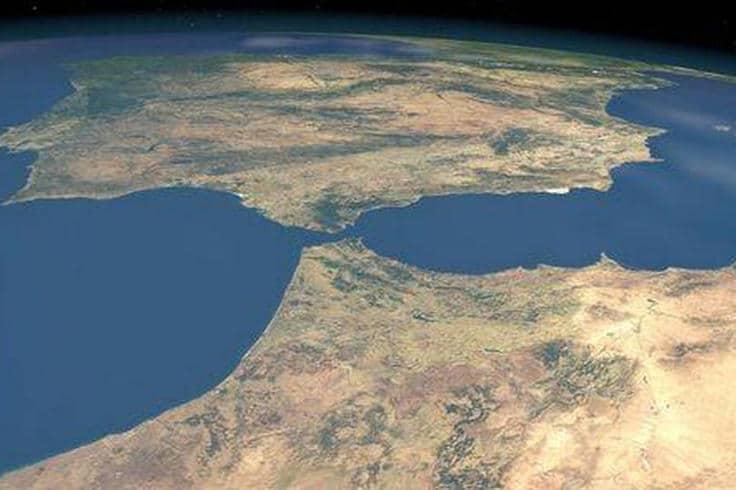
The proposed rail tunnel would run beneath the Strait of Gibraltar, connecting southern Spain with northern Morocco. A study commissioned by the Spanish government and carried out by German engineering firm Herrenknecht found that drilling such a tunnel is achievable using current technology.
Following the report, Spanish consultancy Ineco has been tasked with preparing a detailed blueprint by the end of next year, raising hopes that government approval could be granted as early as 2027. The project is overseen by SECEGSA and its Moroccan counterpart SNED.
The tunnel would stretch around 26 miles, with nearly 17 miles running underwater, linking Punta Paloma in Cadiz with Cape Malabata near Tangier. Estimated to cost about €8.5bn, it would consist of two rail tunnels carrying passengers and freight, with a journey time of roughly 30 minutes.
Engineers face major challenges, including deep-sea construction, complex geology and seismic risks along the boundary of the African and Eurasian tectonic plates. If approved, preliminary works could begin around 2030, with main construction potentially taking place between 2035 and 2040.
First proposed in the 1970s, the Gibraltar tunnel has repeatedly stalled. The latest findings, however, mark the most concrete step yet toward a permanent rail link between Europe and Africa.
Kursiv Uzbkeistan also reports that Meta will acquire Manus, a Singapore-based AI startup founded in China, as the company accelerates its push to integrate advanced AI across its services.