
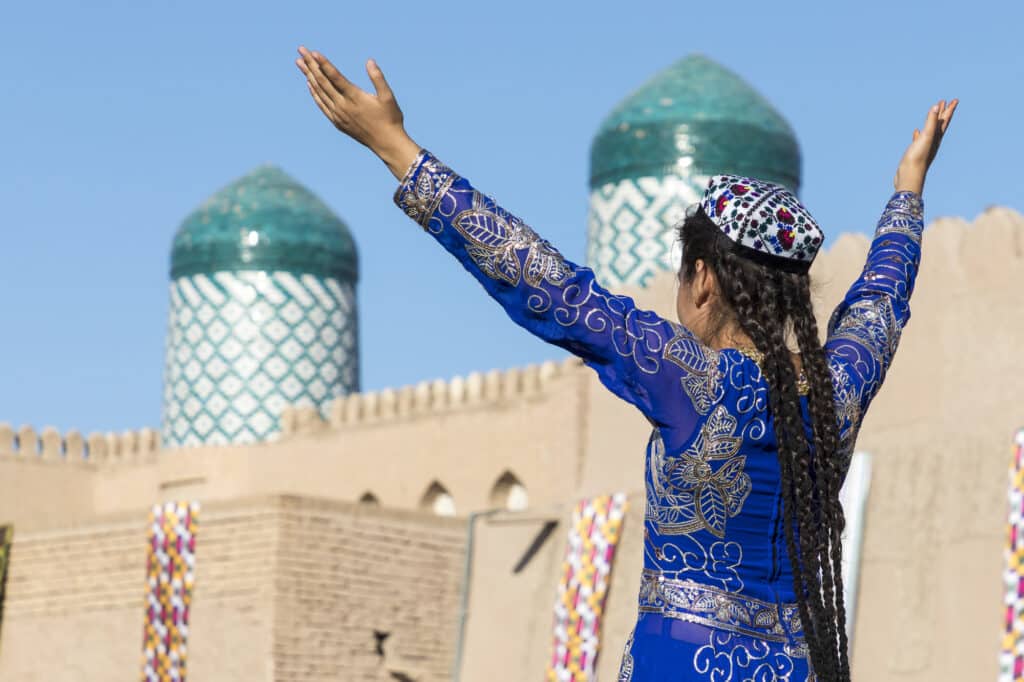
Uzbekistan’s foreign policy in 2025 looked less like classic «summit diplomacy» and more like a steady campaign to be present in other countries through culture, tourism promotion, technology partnerships and education links. This was not only about image. It was also a practical effort to build trust with investors, expand exports, attract visitors, connect the diaspora and position Uzbekistan as a serious partner in a competitive global economy.
Below are the clearest patterns from 2025, based solely on publicly verifiable events and official or primary sources.
London became a flagship stage for cultural diplomacy and business promotion
Culture as a door-opener
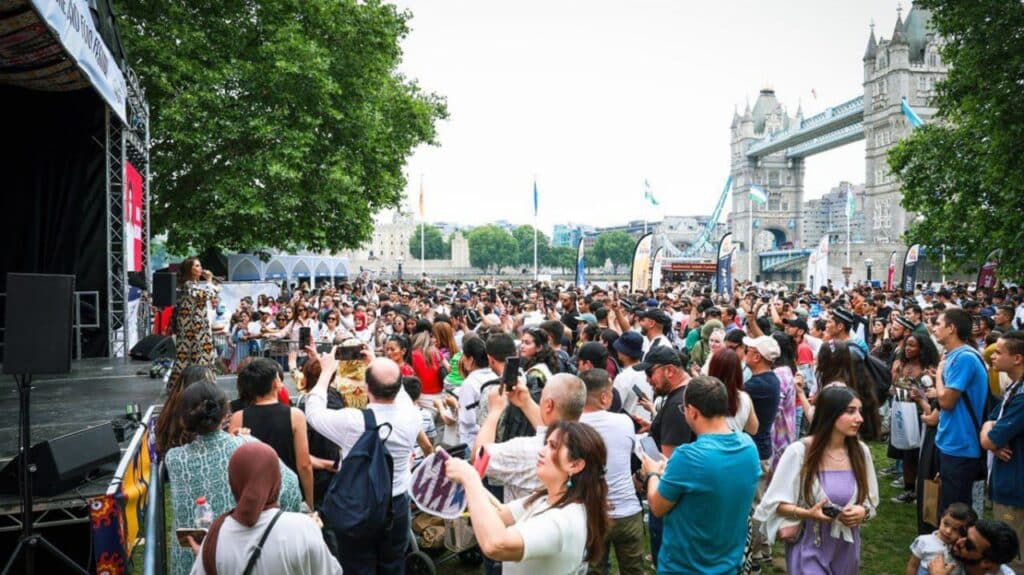
London again hosted major public-facing events that framed Uzbekistan as a welcoming, distinctive destination with a strong identity. A large Uzbekistan tourism, culture and national cuisine festival took place in London on 21–22 June 2025, designed to showcase crafts, music and food and to convert cultural curiosity into travel interest.
Alongside community-led promotion, official structures also played a role. Several events were held at the Embassy of Uzbekistan in London to present the tourism potential and strengthen professional networks in travel and hospitality.
Tourism as economic diplomacy
The Uzbekistan–UK Tourism Forum, hosted at the embassy in June, was a clear example of how cultural visibility is being paired with business outcomes: not just performances and food, but direct discussions with the UK travel market and partners.
Later in the year, another embassy event focused on presenting Uzbekistan’s tourism potential, signalling that this was not a one-off campaign but a repeatable diplomatic tool.
Tech and services exports: “outsourcing diplomacy“
A second UK track ran in parallel: positioning Uzbekistan as a credible IT and business services hub. IT Park-linked delegations used London visits to meet major international firms and promote Uzbekistan’s outsourcing proposition, with embassy-backed conferences and networking formats explicitly built to convert interest into contracts and long-term partnerships.
This matters for foreign policy because it widens Uzbekistan’s international “stakeholders». When global companies begin to recruit in Uzbekistan, open delivery centres or sign multi-year service deals, they become informal advocates for stability, connectivity and predictable regulation.
Diaspora and education links
A notable diplomatic emphasis in late 2025 was direct work with compatriots and students abroad. An official delegation met Uzbek professionals and students at the embassy in London, including members of the Uzbek Students Union in the UK, reinforcing diaspora engagement as a structured policy area rather than purely consular work.
The U.S.: culture and education were the most visible bridges
High-profile cultural staging
In Washington, Uzbek culture was presented at a respected national venue: the Kennedy Center’s Millennium Stage hosted an Uzbek Cultural Show in February 2025, featuring Uzbek performers and a programme designed for broad public audiences.
These events do something diplomacy cannot always do directly: they create emotional familiarity. They also help diaspora communities feel seen and connected, which feeds back into education choices, tourism flows and business ties.
Community-facing heritage promotion
In New York, an «Uzbekistan Heritage Day» event promoted national culture and heritage and highlighted cultural diplomacy as an ongoing external policy instrument, especially for engaging younger diaspora audiences.
Education and talent development through global partnerships
Uzbekistan’s technology diplomacy in the U.S. also leaned into education and skills. An official delegation discussed cooperation with the ICPC Foundation (International Collegiate Programming Contest) in the United States, focusing on digital education, talent development and global academic collaboration.
This is an important sign of direction: Uzbekistan is not only trying to «sell» itself as a labour market, but it is also trying to embed itself in international talent systems and standards.
Business promotion: IT sector on an American platform
Uzbekistan’s IT sector was showcased at the Central Asian Business Expo in the US, with meetings held with American companies and diaspora members, and presentations on investment and operating mechanisms such as visas and «zero risk» initiatives.
Multilateral diplomacy: Samarkand as a platform, not just a symbol
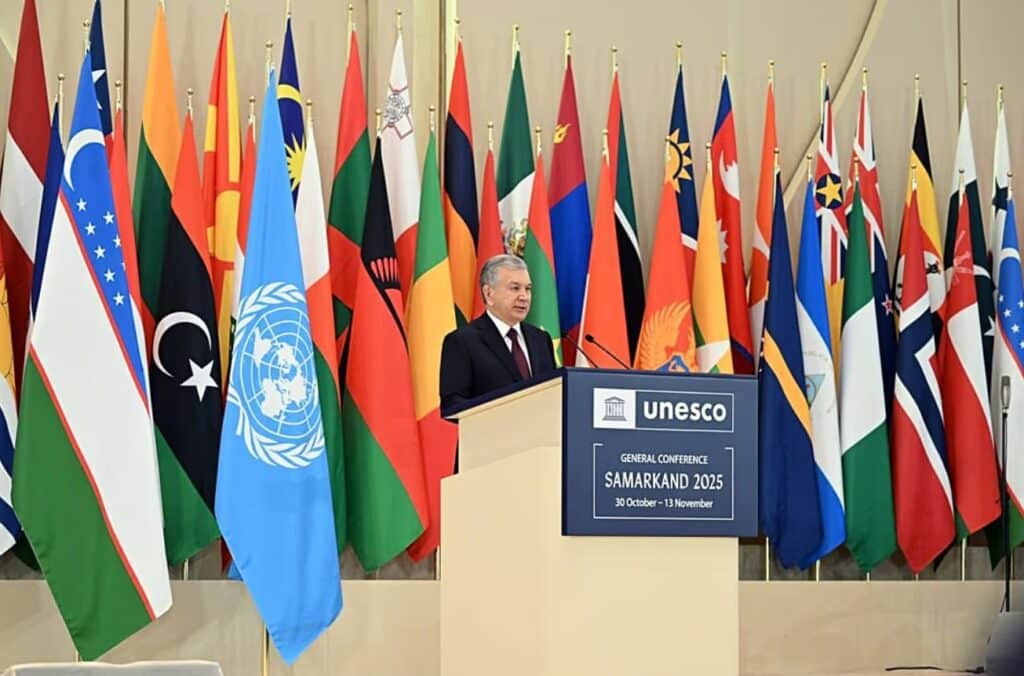
While you asked mainly about overseas cultural and business-related events, 2025 also saw Uzbekistan use global forums hosted at home to strengthen its external political standing.
The EU–Central Asia summit in Samarkand (3–4 April 2025) was widely treated as a landmark moment in the region’s diplomacy with the European Union, placing Uzbekistan at the centre of a new phase of EU–Central Asia engagement.
Separately, Uzbekistan hosted the UN Public Service Forum in Samarkand in June 2025, a significant international gathering that brought global public administration discussions to the country and enhanced its profile as a convening venue.
Even when events take place inside Uzbekistan, they still shape external politics because they change how other governments, investors and institutions «rank» the country as a partner.
Europe vs Asia, and the Silk Road narrative
Alongside its active presence in London and Washington, Uzbekistan in 2025 consistently expanded its external engagement across continental Europe, East Asia and the Middle East. What stands out is that most of these activities were not isolated one-off events. They were framed around a shared historical and cultural storyline: Uzbekistan as the heart of the Silk Road, combined with very practical messages about tourism, trade, education and modern connectivity.
Germany: culture, trade and skills
Germany remained one of Uzbekistan’s most structured partners in Europe in 2025. In Berlin, several official tourism presentations were held with the support of the Uzbek embassy, aimed at German travel operators and cultural institutions. These events explicitly linked modern Uzbekistan to its Silk Road heritage, presenting cities such as Samarkand, Bukhara and Khiva as historic hubs of exchange that are now accessible, stable and open to European travellers.
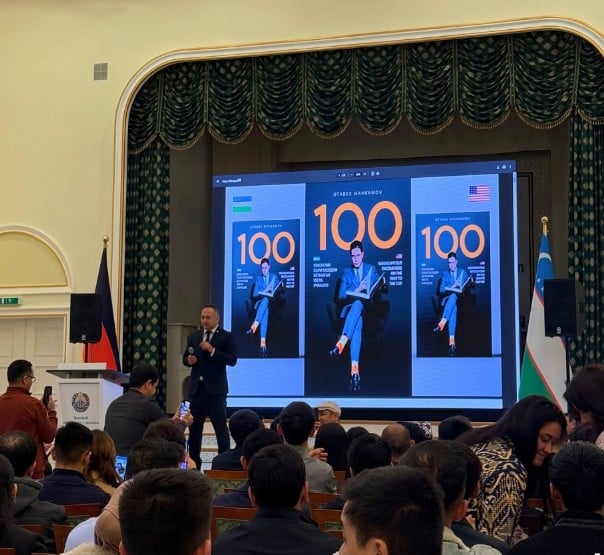
The event began with the presentation of Otabek Mahkamov’s book «100 Serendipitous Encounters on the Way to the Top», followed by a meaningful discussion. Photo: Uzsu.germany Instagram
A key event was the opening of Uzbekistan’s first official Trade and Exhibition House in Berlin, which gave Uzbek producers a permanent physical presence in Germany. This was not cultural diplomacy in a narrow sense, but it built on cultural familiarity to support exports, especially textiles, food products and handicrafts rooted in Silk Road traditions.
Germany also hosted business forums, including one in Stuttgart, where Uzbek officials and companies presented investment projects and industrial cooperation opportunities. In parallel, discussions in Saxony and other regions focused on vocational training and labour cooperation, signalling that Uzbekistan’s external policy increasingly includes skills mobility and education, not just trade volumes.
France: heritage, youth and intellectual legacy
In France, Uzbekistan’s 2025 diplomacy leaned heavily into heritage and intellectual history, a natural fit given France’s strong interest in culture and scholarship. Navruz celebrations at the Uzbek embassy in Paris attracted diplomats, cultural figures and members of the Uzbek diaspora. These events emphasised continuity between ancient Silk Road traditions and contemporary Uzbek society.
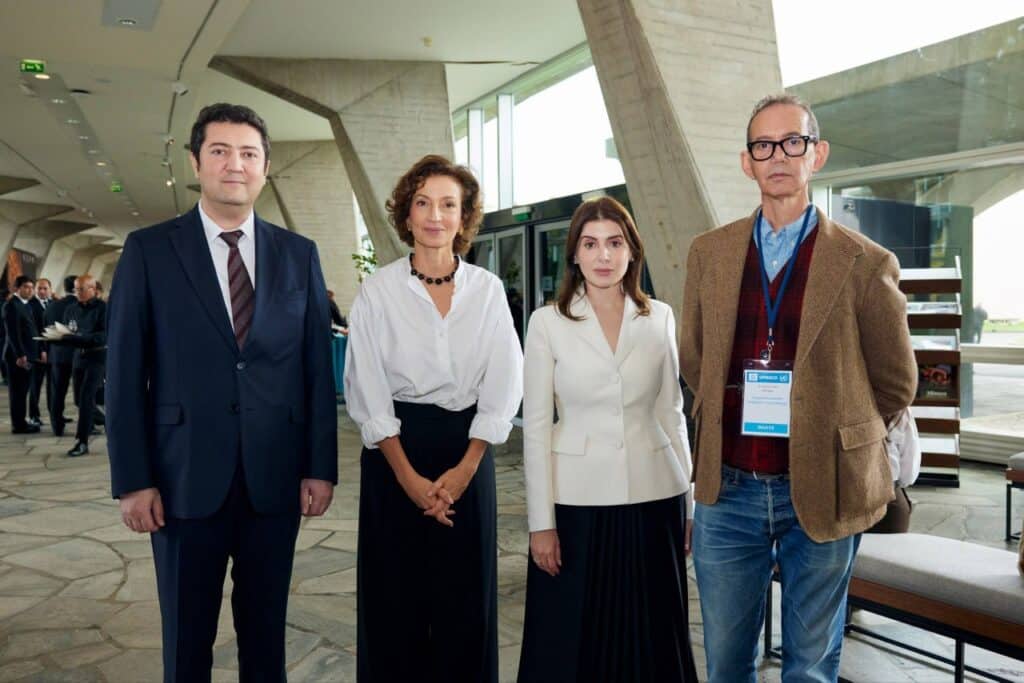
A particularly symbolic moment was the Navruz celebration in Gretz-Armainvilliers, where a monument to Abu Rayhan Biruni, one of Central Asia’s greatest scholars, had previously been unveiled. This linked Uzbekistan’s modern foreign policy to its historical role as a centre of science and learning along the Silk Road.
France also saw targeted engagement with young people. A «Youth Day of Uzbekistan» event brought together Uzbek students and young professionals, reinforcing the idea that cultural diplomacy today is as much about future elites and networks as it is about history.
Spain: tourism and cultural excellence
In Spain, Uzbekistan focused on tourism promotion and high culture. In Madrid, presentations of Uzbekistan’s tourism potential combined business-style briefings with cultural elements such as traditional tea ceremonies. These events again framed Uzbekistan as a Silk Road destination where European, Persian and Asian influences meet.
Cultural prestige also played a role. Performances by internationally recognised Uzbek pianist Behzod Abduraimov in Spain helped reinforce the image of Uzbekistan as a country producing world-class artists, not only historical monuments.
East Asia: language, festivals and long-term interest
In South Korea and Japan, Uzbekistan’s outreach blended diaspora engagement, language promotion and tourism diplomacy.
In South Korea, Uzbek culture and tourism were presented at large public festivals in cities such as Gwangju and Busan, reaching audiences well beyond diplomatic circles. Navruz celebrations in Seoul and participation in youth diversity festivals highlighted Uzbekistan as a multicultural Silk Road nation with deep historical ties to East Asia.
In Japan, cultural diplomacy took a more academic form. An «Uzbek Language Day» was held at Tokyo University of Foreign Studies, strengthening educational links and reinforcing Uzbekistan’s intellectual presence abroad. Culinary presentations at the Uzbek embassy in Tokyo complemented this, using national cuisine as a soft but effective diplomatic tool.
The Middle East: culture meets commerce
In the United Arab Emirates, Uzbekistan’s presence in 2025 reflected a balance between art, trade and logistics. Exhibitions of Uzbek artists in Dubai introduced Gulf audiences to contemporary Uzbek visual culture, while Uzbek companies participated in major trade fairs such as Big 5 Global, promoting construction materials and industrial products.
Here, the Silk Road narrative was particularly relevant: Uzbekistan positioned itself as a natural bridge between East and West, historically and commercially, resonating with the UAE’s own role as a global hub.
Why the Silk Road still matters in 2025
Across Germany, France, Spain, East Asia and the Middle East, one message appeared repeatedly in 2025: Uzbekistan is not inventing a new identity, it is reactivating an old one.
The Silk Road is no longer presented only as a historical route, but as a framework for modern diplomacy:
- in tourism, it explains why Uzbekistan’s cities matter globally
- in culture, it legitimises Uzbekistan’s role as a crossroads of civilisations
- in business, it supports the idea of Uzbekistan as a connector between markets
- in education, it underlines a long tradition of scholarship and exchange
Taken together, these activities show that Uzbekistan’s external policy in 2025 was not only about visibility, but about embedding itself into cultural, economic and educational ecosystems across multiple regions. The Silk Road, once a network of caravans and ideas, is being repurposed as a diplomatic narrative suited to the realities of the 21st century.
The storyline of 2025: a shift from visibility to repeatable influence
If 2025 had one external-policy theme, it was repeatability. Uzbekistan’s outreach did not rely on a single headline event. Instead, it used a pattern:
- Culture to generate attention (festivals, concerts, heritage events);
- Tourism to convert interest into visits and revenue (forums, embassy presentations);
- Business events to lock in partnerships (outsourcing conferences, sector promotion);
- Education and skills partnerships to build long-term credibility (ICPC discussions);
- Diaspora engagement to strengthen networks abroad.
This mix is also politically useful: it is low-risk, practical and less vulnerable to geopolitical mood swings than purely security-driven diplomacy. It builds relationships in many directions at once: with institutions, businesses, civil society audiences and diaspora communities.
What this suggests for 2026
Based on what is verifiable from 2025, Uzbekistan is likely to double down on three areas:
- Tourism diplomacy through London and other gateway cities (because it is measurable and scalable);
- Technology diplomacy as export policy (IT services as a fast path to foreign revenue and reputation);
- Education-linked diplomacy (global standards, competitions, partnerships that validate the talent pipeline).
Read more about the country with Kursiv Uzbekistan: Uzbekistan’s Tourism Boom: New Routes, Festivals and Global Visitors
