Nicolas Maduro Pleads Not Guilty in U.S. Court

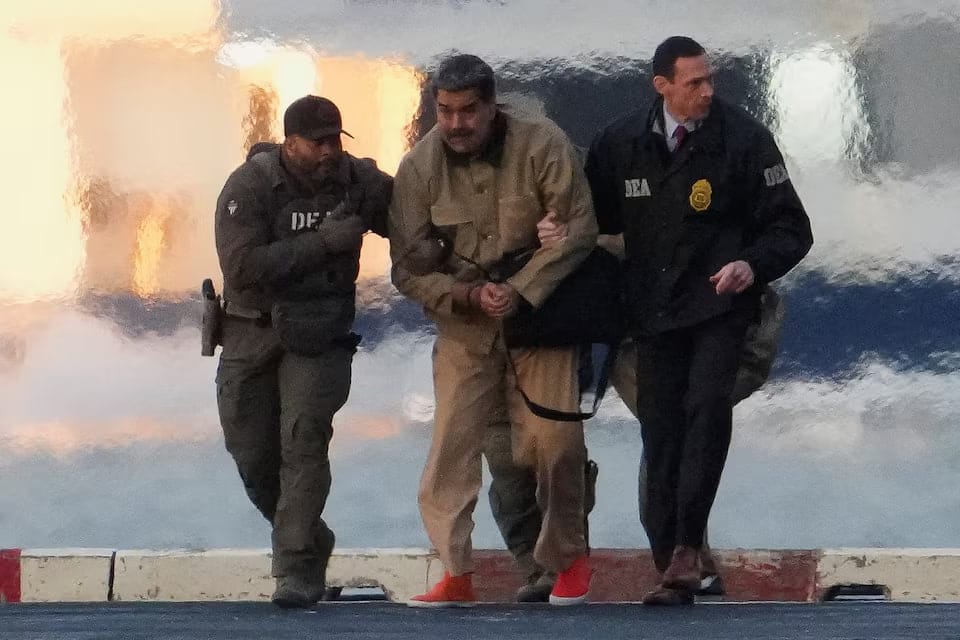
Ousted Venezuelan President Nicolas Maduro pleaded not guilty on Monday to U.S. narcotics charges, hours after his capture by American forces sent shockwaves through Caracas and beyond.
Speaking through an interpreter in a Manhattan federal court, the 63-year-old said he was innocent and insisted he remained Venezuela’s president before a judge cut him short. His wife Cilia Flores also entered a not guilty plea. The next hearing was scheduled for March 17. Supporters and opponents of Maduro gathered outside the courthouse during the brief proceedings.
Maduro, who said he had been kidnapped, listened to the charges through headphones as the judge outlined the case. U.S. prosecutors accuse him of leading an international cocaine trafficking network and have charged him with narco-terrorism, conspiracy to import cocaine and illegal possession of weapons. Maduro has repeatedly rejected the accusations, saying they are aimed at seizing control of Venezuela’s oil resources. His lawyer said the case would involve extensive legal challenges over what he described as a military abduction.
Interim president sworn in
Later on Monday in Caracas, Vice President Delcy Rodriguez was sworn in as interim president. While voicing support for Maduro, she gave no indication she would confront Washington over his detention.
U.S. officials have suggested Rodriguez is best placed to head a temporary administration, arguing opposition figures lack the authority to stabilise the country. The White House said President Donald Trump and his advisers were making practical decisions to align Venezuela with U.S. interests.
Despite expectations among anti-Maduro activists, Trump has largely sidelined the opposition and indicated Rodriguez could work with Washington. U.S. officials said they remain in close contact with figures still running the government and maintain leverage over Caracas.
Senior officials from Maduro’s long-ruling administration remain in place, balancing defiant rhetoric with signs of possible cooperation. Trump said the United States was not at war with Venezuela but with drug traffickers and dismissed the idea of rapid elections as unrealistic, saying the country must be stabilised first.
Legal and political fallout
The United States has viewed Maduro as illegitimate since disputed elections in 2018. However, legal experts have questioned the legality of seizing a sitting head of state, with critics calling it a rejection of international norms. U.S. officials have defended the move as lawful.
The U.N. Security Council debated the implications of the operation, which drew condemnation from Russia, China and several left-leaning governments. Uncertainty also surrounds Venezuela’s governance after Trump said the United States was effectively in charge and imposed a full oil embargo.
Top U.S. officials briefed congressional leaders on the operation on Monday evening. Democratic Senate leader Chuck Schumer said the plan raised more questions than answers and warned it could open the door to similar actions elsewhere.
Trump has openly expressed interest in Venezuela’s oil sector, saying U.S. companies would return and rebuild infrastructure. He said Washington could subsidise the effort, which he claimed could be completed within 18 months. U.S. media reported executives from major oil firms were due to meet the energy secretary later this week.