
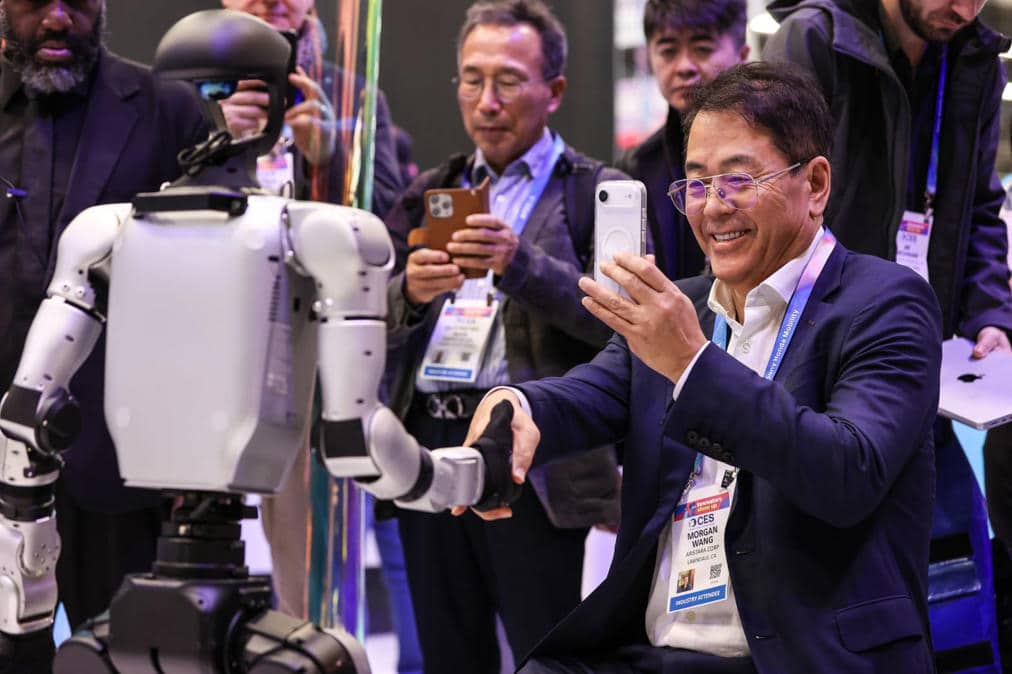
Despite growing fears of an artificial intelligence bubble, companies at Consumer Electronics Show 2026 in Las Vegas are pressing ahead, showcasing AI applications focused firmly on real-world use rather than chatbots and image generators.
Tech giants including Samsung, LG and Bosch demonstrated AI systems designed for everyday tasks, from washing machines that automatically select programmes to humanoid robots that fold laundry and smart hobs that cook food with precision.
Mobility was also in focus, with Nvidia chief Jensen Huang outlining plans to use AI to help power future robotaxi fleets. Industrial applications featured heavily, as Siemens showcased virtual factory «digital twins» that allow engineers to simulate and optimise production before facilities are built.
One of the surprise hits came from Lego, which unveiled a new Smart Brick packed with sensors and sound technology, while notably avoiding the AI label altogether.
Meanwhile, smart glasses emerged as a crowded battleground, inspired by Meta’s Ray-Ban models, even as interest in the once-hyped metaverse, championed by Mark Zuckerberg, appeared to have faded almost entirely from the show floor.
CES 2026 suggests that while AI hype may be cooling, its practical integration into homes, factories and transport is only accelerating.
Kursiv Uzbekistan reports that LG Electronics has introduced CLOiD, a humanoid, AI-powered home robot designed to handle everyday household chores