China’s “Artificial Sun” Achieves Record Plasma Density in Fusion Breakthrough

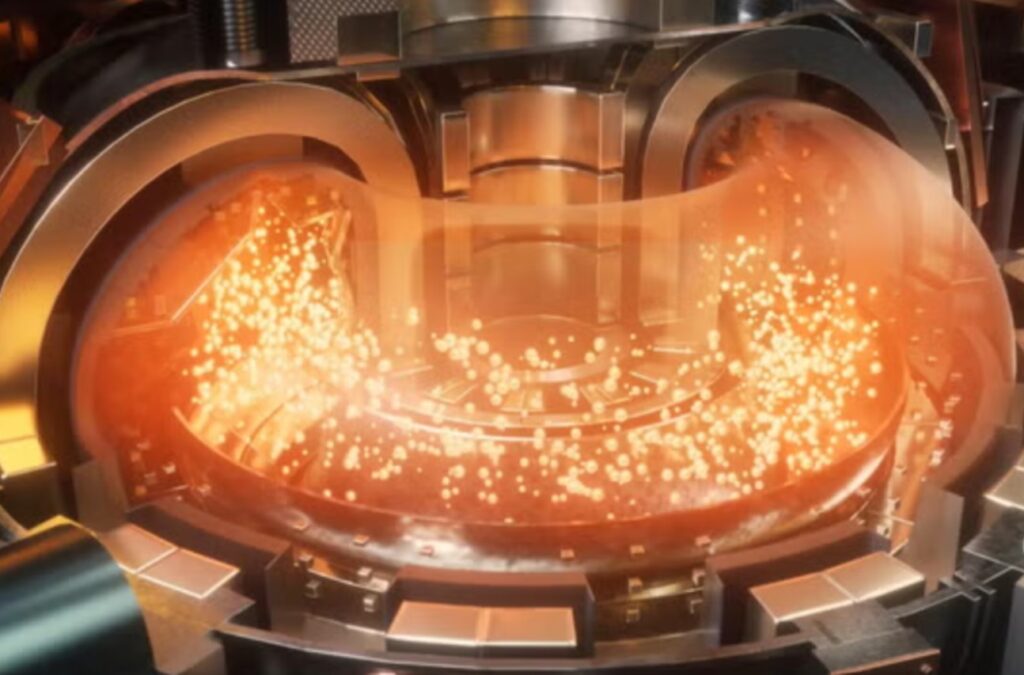
Scientists from the Chinese Academy of Sciences (CAS) have reported a major advance in nuclear fusion research, after their experimental reactor achieved plasma density levels once thought impossible.
The breakthrough was made on CAS’s so-called «artificial Sun», the Experimental Advanced Superconducting Tokamak (EAST), where researchers successfully stabilised ultra-dense plasma beyond the long-standing Greenwald Limit, a theoretical barrier that has constrained fusion performance for decades.
Using a new method known as plasma-wall self-organisation, the team was able to prevent the plasma from becoming unstable even at unprecedented density levels. According to the researchers, this opens the door to significantly higher energy output and brings fusion ignition closer to practical reality.
«The findings suggest a practical and scalable pathway for extending density limits in tokamaks and next-generation burning plasma fusion devices,» said Ping Zhu, who co-led the research.
The results were published in the journal Science Advances, and the team plans to test the method under full high-performance conditions on the EAST reactor.
Nuclear fusion, which replicates the reactions powering the Sun, is widely viewed as a potential source of near-limitless clean energy without long-lived radioactive waste. While commercial fusion power remains years away, momentum is growing globally. In the US, Helion Energy has already signed a deal to supply fusion-generated electricity to Microsoft by 2028.
Despite the challenges ahead, the latest results from China mark another significant step toward making fusion energy a viable power source.
Kursiv Uzbekistan also reports that German President Frank-Walter Steinmeier has issued a sharp rebuke of US foreign policy under President Donald Trump.