Uzbek and Chinese Archaeologists Uncover Walls of Kuva Ancient Settlement


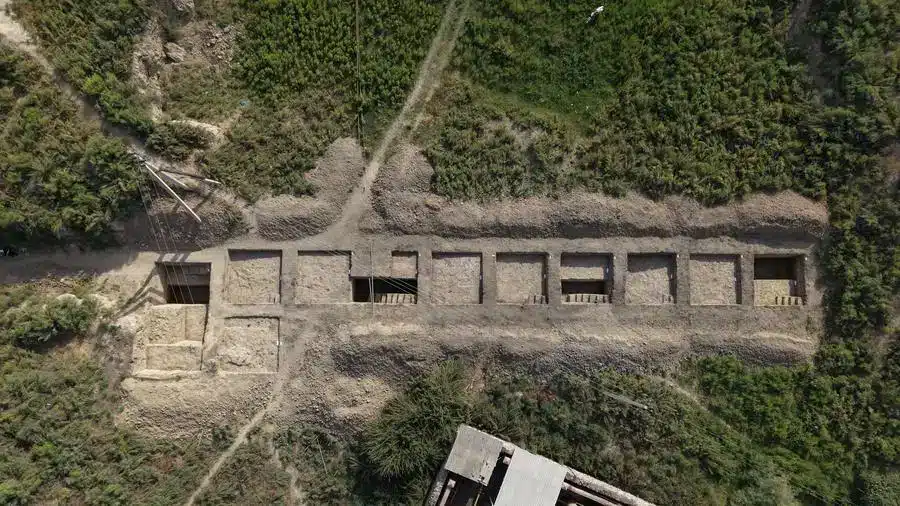
An Uzbek–Chinese archaeological expedition has uncovered fragments of ancient defensive walls belonging to the Kuva settlement in the Fergana Valley. The structures date from the 3rd century BC to the 10th century AD.
The discovery comes from the joint Luoyang–Fergana expedition. Researchers describe the find as important physical evidence of the development of a Silk Road city and of long-standing connections between East and West.
The Kuva ancient settlement covers about 110,000 square metres in eastern Uzbekistan. In antiquity, the region served as a major Silk Road hub and maintained contacts with China for more than 2,000 years.
Preliminary studies show that the settlement’s fortifications underwent repeated reconstruction and remained in use across several historical periods. These include the Parthian era, the states of Dayuan and Sogdiana and later the Samanid period.
Liu Bin, head of the expedition on the Chinese side, said that changes in wall construction techniques help researchers understand which materials builders used in different centuries and how cultural exchange developed between regions.
The Luoyang Archaeological Institute and Fergana State University formed the joint archaeological team in 2023. The group has already identified palaces, city gates, walls, residential buildings, streets and craft workshops.
Next year, researchers plan to begin systematic excavations of the palace complex in order to fully reconstruct the layout and functions of the ancient city.
Kursiv Uzbekistan also reports that Karakalpak kobyz and yurt Added to UNESCO Intangible Heritage List.