— Many investors describe 2026 as a year of permanent geopolitical volatility. Are we entering a structural «geopolitical recession» where instability becomes the baseline rather than the exception? If so, how should investors fundamentally rethink emerging market risk? Does diversification still work in a world where crises are synchronised?
— The pendulum of globalisation and the rules-based order which dominated the global agenda in the last quarter of a century has swung towards the ever-increasing political and ideological fragmentation and economic nationalism. Some even describe it as the de-facto third world war with the general sense of lawlessness and instability spreading and capturing more and more countries around the globe. Emerging markets are no exception and they might be even more susceptible to that as they are often less resilient and stable. However, the good news is that the risk across the emerging markets is not uniform and investors need to be much more selective and nuanced when they approach new frontiers and opportunities. Every market and even every sector in the market needs to be assessed individually and on its own merit. There are no safe havens any more but there are still opportunities and areas of relative stability.
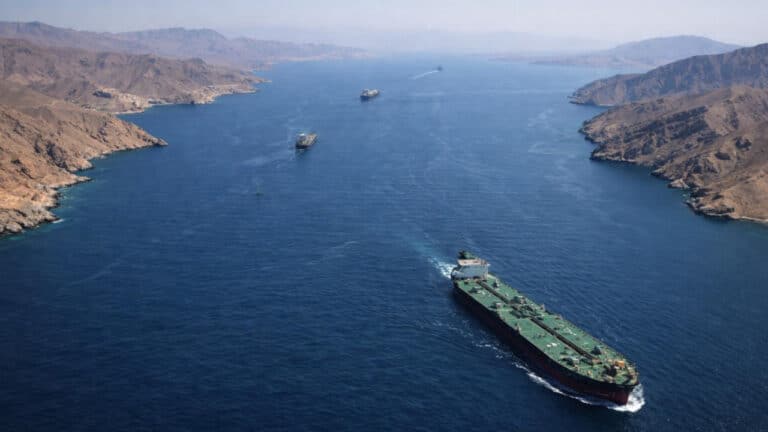
— If confrontation around Iran escalates further, could it become a watershed moment comparable to the Ukraine war in terms of capital reallocation? What asset classes would react first — energy, currencies, sovereign debt? Could we see a permanent repricing of Middle East risk?
— The Middle East and especially the Gulf has been seen for long as a dynamic, fast-growing and relatively safe region, with some elements of the long-term risk (Israel-Palestine) already absorbed and embedded in the investor mindset. The recent escalation and the imagery around it have become a shock for the Gulf monarchies and they are now engaged in a highly active diplomacy – using all available channels, from pressuring the U.S. to mediation by Russia – to restore the status quo and thwart further damage to their reputation as business hubs and investment destinations. It is too early to talk about the long-term impact to things such as sovereign debt but the eyes will be on the ability of the region to recover from a short-term shock and disruption of the energy and logistics sectors and avoid more profound damage to the structure of the economy.

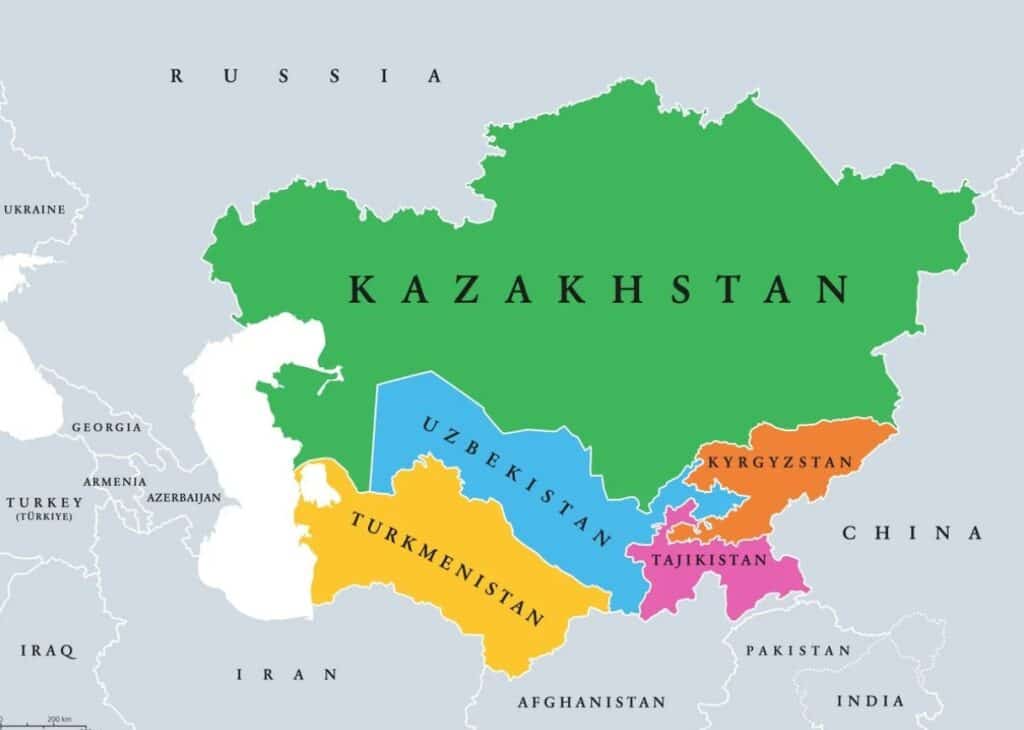
— Some investors now see Central Asia as a «neutral zone» between geopolitical blocs. Is that a real opportunity, or a dangerous illusion? What’s the biggest misconception foreign investors have about the region? Could neutrality quickly disappear in a more polarised world?
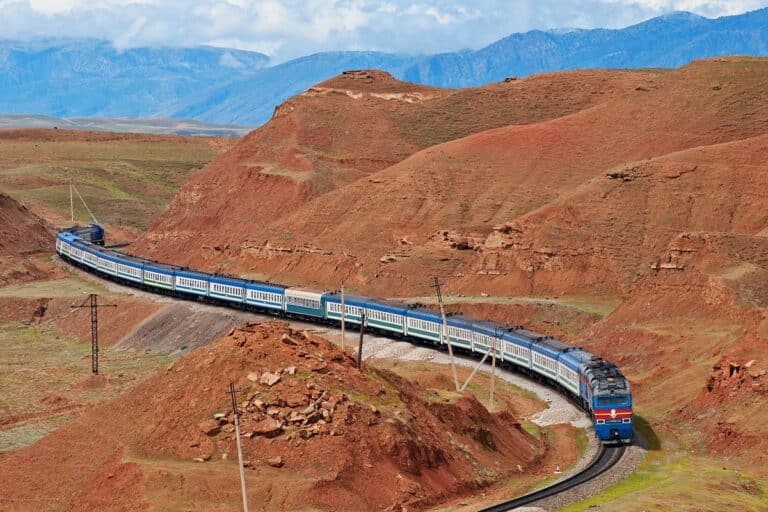
— The region has so far skilfully managed to play an equidistant role with the major global players – China, Russia, the Gulf, Turkey and the West. It is an opportunity which could be amplified by national and regional coordinated policies, and it has not yet been exhausted yet. And stability does not mean stagnation, it can also be very dynamic.
— How seriously are global investors underestimating the Afghanistan–Pakistan escalation as a systemic regional risk? Could this become a reputational risk for investors in Uzbekistan or Kazakhstan? At what point does perceived proximity start affecting capital flows?
— The Central Asian stakeholders and exposed investors will watch the developments closely as there is a real risk of spillover of terrorism and extremism which moderate Islamic nations of Central Asia would want to prevent by all means. It is not an immediate trigger for capital flows but needs to be monitored.
— When geopolitical risk spikes, what really changes inside investment committees — models, timelines, or just gut feeling? Are investors becoming more political in decision-making? Do you see a rise in geopolitical due diligence as a formal discipline?
— Yes, definitely. Almost every major transaction now requires (geo)political due diligence. In my previous job for the political advisory company, this was a big part of our work: helping investors – who are often too much boxed in by the business considerations and specific sectors – to look at a wider set of geopolitical circumstances which could quickly escalate and impact every sector and company. Investors need to price in risk into their deals to avoid their bottom lines and exit strategies being hit too hard by political changes and geopolitical ‘black swans’.
— Are we moving toward a world of overlapping sanctions regimes where companies face multiple compliance universes simultaneously? Could secondary sanctions hit neutral jurisdictions? How should mid-sized companies prepare for this complexity?
— This warrants a separate conversation but in short yes, the compliance regimes also become more fragmented and often need to be aligned with businesses’ own codes of conducts etc. This will become increasingly complex but often also over-formalised, with the need for a new class of sanctions professionals – both political analysts and lawyers – to help navigate these complex environments and sense-check them with reality.
— Dubai has positioned itself as a geopolitical hedge. But can neutrality survive in a world of intensifying blocs? Is there a ceiling to how much geopolitical risk Dubai can absorb? Could reputational pressure from the West grow? I already mentioned it when spoke about Gulf countries. Neutrality be even a more valuable selling point in a world of intensifying blocs and rivalries. Dubai has invested too much in getting to where it is now to sacrifice it easily.
— What is the geopolitical scenario investors are still underpricing in Eurasia today? A sudden sanctions expansion? Internal instability in a «stable» state? Or a shock coming from outside the region entirely?
— There are a few things which could potentially manifest as risk factors. At the moment all of them are of low likelihood and could be detected early and mitigated or averted, but should not be discounted altogether.
The first is some sort of escalation from Russia which might want to prevent the Central Asian countries drifting away from its political and economic influence. It might not be a direct intervention but could be a set of steps and measures which would keep Central Asian nations firmly in its ideological, political and economic orbit, inhibiting their ability to develop their multi-vector policy seen as unfriendly by Moscow.
The second is sanctions expansion and enforcement. The U.S. and their allies have already tried to close the loopholes preventing sanctions circumvention and thus hitting the ability of Central Asian countries to benefit economically from providing alternatives. It has subsided for now but in case of a fallout between Russia and the U.S., or change of mood from the U.S. administration, this risk could manifest again. The third is the threat from the neighbouring countries, first and foremost Afghanistan.
The Central Asian nations are already on high alert about a potential threat of terrorism and instability “export” from Afghanistan, and depending on the trajectory of the Taliban rule there and the potential development of other types of Islamic extremism in the region, vying for new areas and followers, this risk might increase significantly over time.
— If you had to advise a CEO entering Central Asia or the Gulf today, what is the one geopolitical risk they are most likely to misunderstand? And the one opportunity they might be overlooking?
— I think we already spoke enough about risks. I just wanted to highlight an opportunity which is demographics and skills. The Central Asian countries are young, dynamic and aspirational. The population of Uzbekistan grows by 1 mln a year. Together, Central Asian nations equal countries like Turkey or Iran, so they have all the chances to become a notable economic, highly-skilled and educated player in the region, attracting capital and partnerships from all over the world. Access to education and skills allows for the modern economy to develop and strive, moving away from commodity-based and agricultural economies towards technology, fintech, digital, connectivity and trade. Common Turkic and partially Persian heritage, shared culture and history, social philosophy and ethics could also help make Central Asia the destination of choice at the global crossroads again.