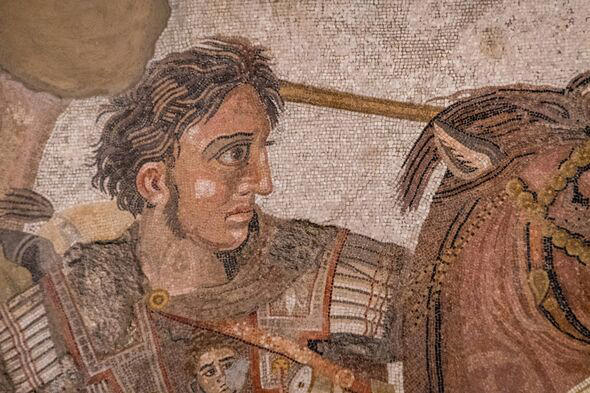
Archaeologists say they have likely located the site of «Alexandria on the Tigris,» a long-lost city founded by Alexander the Great more than 2,300 years ago.
The settlement is believed to lie in southern Iraq near the Persian Gulf, where it once served as a major port connecting ancient Mesopotamia with maritime trade routes across the Gulf.
Founded in the 4th century BC, the city was one of several settlements established by Alexander during his campaign to build an empire stretching from Greece to India. While cities such as Alexandria became world-famous for landmarks like its lighthouse and library, Alexandria on the Tigris remained largely a mystery for centuries.
Researchers now say the newly identified site matches historical descriptions of a strategically located port linking the Tigris River to Gulf shipping routes. At its peak, the city likely functioned as a major hub for trade, ideas and travellers moving between Mesopotamia and the wider ancient world.
Over time, the Tigris River changed course, burying ancient coastlines and settlements beneath layers of sediment. Combined with shifting trade routes and modern conflicts in the region, these changes helped obscure the city’s remains.
Recent high-resolution geophysical scans and drone imagery have revealed a detailed urban layout beneath the surface, including fortification walls, street grids, city blocks and industrial zones. Archaeologists have also detected temple complexes, workshops with kilns and furnaces, and traces of a harbour and canal system.
According to Stefan R. Hauser of University of Konstanz, the quality of preservation is «absolutely stunning,» with building walls visible just below the ground surface.
The city appears to have covered about 6.5 square kilometres (2.5 square miles), making it comparable in size to some major ancient capitals.
Archaeological work began in the 2010s, led by British researchers including Jane Moon, Robert Killick and Stuart Campbell. However, fieldwork was often slowed by security risks and periods of regional conflict.
Further excavations are expected to reveal more about the once-thriving port city and its role in the vast trading networks of the ancient world.
From economics and politics to business, technology and culture, Kursiv Uzbekistan brings you key news and in-depth analysis from Uzbekistan and around the world. To stay up to date and get the latest stories in real time, follow our Telegram channel.