WMO Reports Hottest Decade On Record As Climate Crisis Intensifies


The Earth’s climate is more unstable than at any point in observed history, the World Meteorological Organization (WMO) reports. Rising greenhouse gas concentrations continue to warm the atmosphere and oceans while accelerating ice melt, with impacts that could last for centuries or even millennia.
Hottest Decade On Record
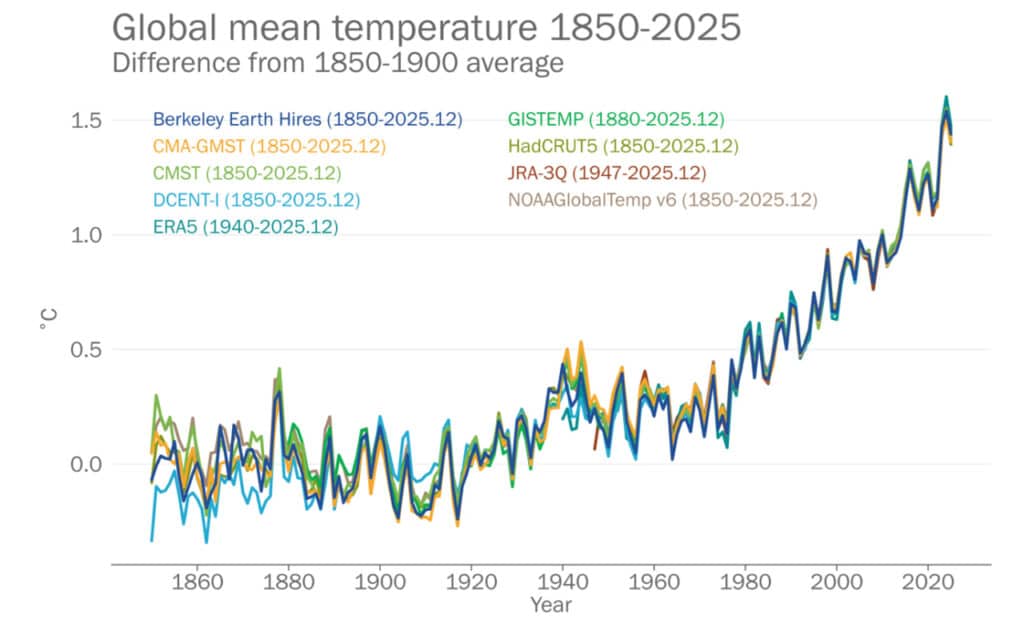
The WMO’s State of the Global Climate 2025 confirms that 2015–2025 were the warmest 11 years ever recorded. The year 2025 ranked as the second or third hottest year, approximately 1.43 °C above pre-industrial levels (1850–1900 average). Extreme weather events, including heatwaves, tropical cyclones and heavy rainfall, caused widespread disruption, highlighting the vulnerability of interconnected economies and societies.
Oceans Absorb Excess Heat
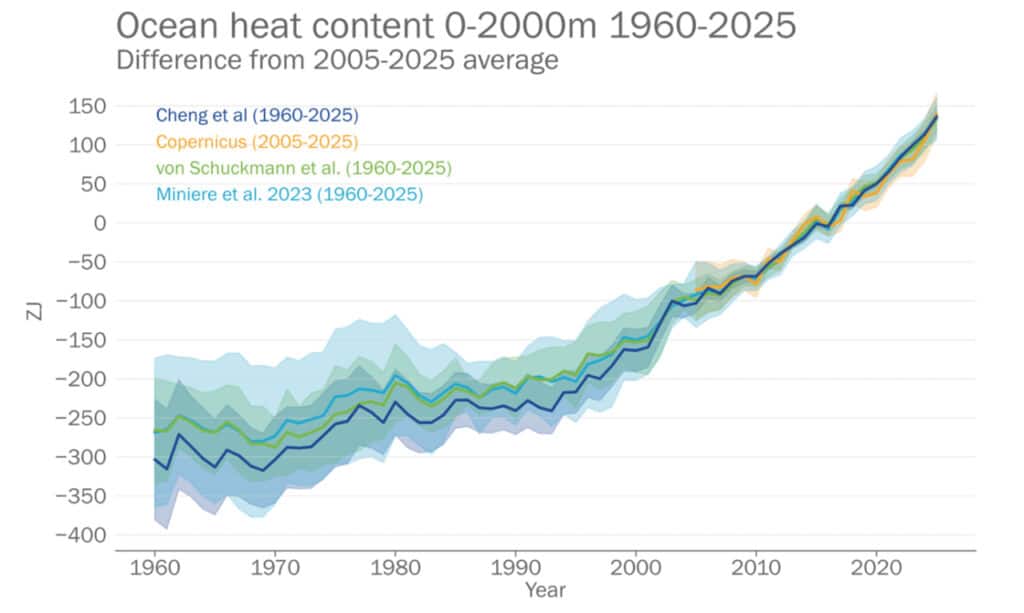
The oceans continue to act as a major buffer, absorbing more than 90% of the Earth’s excess heat. Over the past two decades, the oceans have absorbed energy equivalent to around 18 times annual human energy use each year. Ocean temperatures reached record highs in 2025, doubling the rate of warming compared with 1960–2005. Ocean acidification continues as CO2 absorption lowers pH, harming marine biodiversity and fisheries.
Ice Melt And Rising Sea Levels
Glaciers and polar ice are shrinking rapidly. Arctic sea-ice extent in 2025 was the lowest or second lowest on record, Antarctic sea ice the third lowest, and glaciers in Iceland and along the Pacific coast of North America experienced exceptional mass loss. Melting ice and warming oceans are driving long-term sea-level rise, which has accelerated since satellite records began in 1993 and will continue for centuries.
Extreme Events And Global Impacts
Climate-driven extreme events are affecting millions, causing billions in economic losses and triggering food insecurity and displacement, especially in fragile regions. The report highlights cascading impacts of droughts, storms, wildfires and floods on agriculture, migration and public health.
Health risks are increasing, with vector-borne diseases such as dengue reaching record levels and heat stress affecting more than a third of the global workforce. Only half of countries currently provide heat early warning systems tailored to health needs.
Urgent Call For Action
UN Secretary-General Antonio Guterres described the situation as a planetary emergency, saying,
«Every key climate indicator is flashing red. Humanity has just endured the eleven hottest years on record. When history repeats itself eleven times, it is no longer a coincidence. It is a call to act.»
WMO Secretary-General Celeste Saulo added that human activity is disrupting Earth’s natural energy balance, and consequences will persist for hundreds to thousands of years.
«On a day-to-day basis, our weather has become more extreme,» she said, highlighting the widespread impact on lives, ecosystems and economies.
From economics and politics to business, technology and culture, Kursiv Uzbekistan brings you key news and in-depth analysis from Uzbekistan and around the world. To stay up to date and get the latest stories in real time, follow our Telegram channel.