ADB Study Urges India to Phase Out Universal Subsidies, Target Benefits Better

A new study by the Asian Development Bank (ADB) calls for a major pivot in India’s subsidy regime, recommending a move away from universal benefits toward tightly targeted, Aadhaar-linked transfers.
The report, titled «A Study of Subsidies and Transfers in India», was released in March 2026 to assist the Sixteenth Finance Commission in evaluating public expenditure quality by the central government and 21 major states.
The upward trajectory of state spending
While central government subsidies peaked during the pandemic at 2.7% of gross domestic product (GDP) in 2022/23 before declining to 1.7% by 2024/25, state-level spending has followed a different trajectory.
Across the 21 states analyzed, aggregate subsidies and transfers rose steadily from 2.1% of gross state domestic product (GSDP) in 2017/18 to 3.0% in 2024/25. Driven by new financial assistance and free electricity schemes, this upward trend is projected to continue into 2025/26.
The fiscal burden of these programs is substantial. In 2024/25, central subsidies accounted for 18% of the central government’s revenue receipts and 15% of revenue expenditures. At the state level, the impact is even more pronounced.
States such as Telangana, Andhra Pradesh, Chhattisgarh, Karnataka, and Punjab allocate over 30% of their total revenues to fund subsidies and transfers.
Where is the money going?
The data shows a clear divide in how the central and state governments allocate welfare funds:
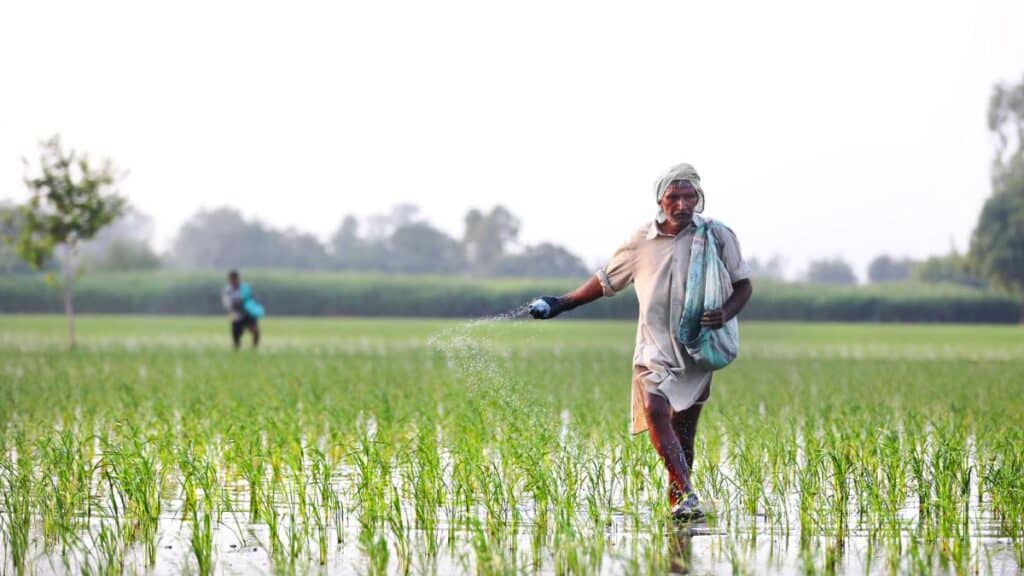
Central Government: Food and fertilizer remain the dominant expenditures, persistently accounting for more than 70% of total central subsidies. Recent years have also seen an increase in financial assistance, driven largely by cash transfers to farmers.
State Governments: For the 21 states covered, 68% of total subsidy expenditure is concentrated in four core areas: electricity, financial assistance, pensions and subsistence subsidies, and food.
Additionally, state-level agricultural price support provided to farmers on top of the minimum support prices (MSPs) for crops like paddy more than doubled as a share of total subsidies, growing from 0.9% in 2017/18 to 2.1% in 2024/25.
The fiscal toll
The study estimates that electricity subsidies paid from state budgets alone amount to approximately 0.8% of GSDP for the covered states. Furthermore, the data highlights a direct relationship between these expenditures and fiscal health.
Aggregate subsidies are large enough to widen revenue deficits, underscoring the trade-offs governments face when balancing immediate welfare initiatives with long-term economic priorities.
Key reforms and recommendations
To ensure efficient, sustainable, and development-oriented public spending, the ADB outlines several key reforms for policymakers:
- Targeted Transfers: Governments must pivot from universal subsidies toward tightly targeted transfers by expanding Aadhaar-linked systems to reduce duplication and leakages.
- Stricter Norms and Audits: Programs should be backed by stricter eligibility norms, sunset clauses, and periodic audits to improve overall spending efficiency.
- Mandatory Impact Assessments: The Centre and states should mandate ex-ante and ex-post impact assessments before rolling out new subsidy programs to promote evidence-based decisions.
- Power Sector Rationalization: The study urges rationalizing consumption subsidies—particularly in the electricity sector—by incentivizing power sector reforms to reduce losses.
- Informal Sector Support: Policymakers should develop an integrated social security framework for informal workers that combines contributory elements with government support to ensure affordability.
- Enhanced Transparency: Governments should standardize definitions and publish annual subsidy reports to enhance fiscal transparency.
By linking cash transfers to fiscal sustainability and improving public investment efficiency, the ADB hopes these recommendations will assist the Sixteenth Finance Commission in undertaking a comparable, accurate assessment of state finances to fortify India’s long-term economic resilience.
From economics and politics to business, technology and culture, Kursiv Uzbekistan brings you key news and in-depth analysis from Uzbekistan and around the world. To stay up to date and get the latest stories in real time, follow our Telegram channel.
