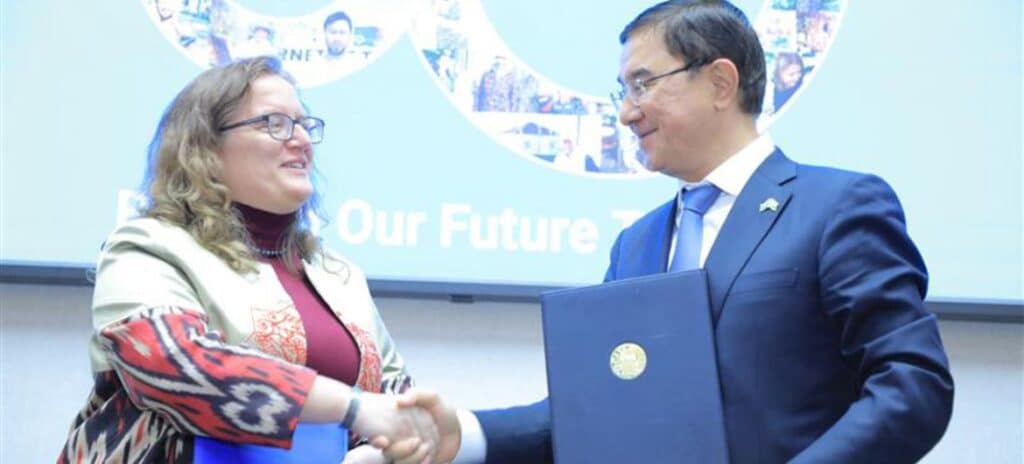
The United Nations (UN) and Uzbekistan have officially closed their 2021–2025 cooperation cycle, presenting a comprehensive review of achievements. The five-year partnership delivered notable progress in social welfare, digital services, healthcare, education and environmental sustainability.
Social support, digital services and infrastructure modernisation
By 2025, around 200,000 people had received vital social assistance, and groundwork was laid for state maternity benefits. Digitalisation became a core reform, giving 12.8 mln citizens access to faster and more convenient government services.
In healthcare, 1.8 mln women and newborns received specialised care, strengthening maternal and child health systems. Schools across the country introduced modern teaching methods and digital literacy programmes. New environmental initiatives combined climate action with the creation of green jobs.
Next phase: investing in people
Following the closure of the current cycle, the UN is moving to implement the 2026–2030 cooperation framework. UN Resident Coordinator in Uzbekistan, Sabina Mahl, said the new phase will focus on investing in people, ensuring inclusive development that empowers all citizens, particularly vulnerable groups, to realise their potential.
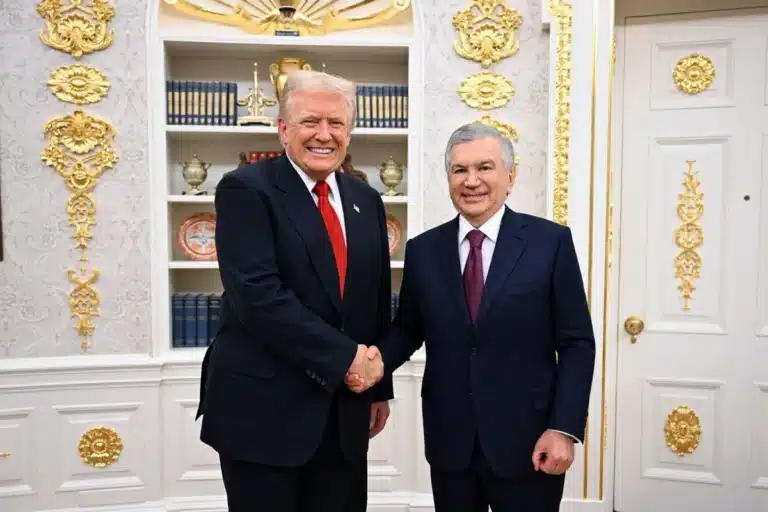
Deputy Minister of Economy and Finance Otabek Fozilkarimov highlighted that sustained dialogue with international partners, especially the UN, has been key to the country’s progress. He noted that under the joint leadership of President Shavkat Mirziyoyev and the UN Secretary-General, cooperation has reached a new level in recent years.
From economics and politics to business, technology and culture, Kursiv Uzbekistan brings you key news and in-depth analysis from Uzbekistan and around the world. To stay up to date and get the latest stories in real time, follow our Telegram channel.