The First Vice President of the European Bank for Reconstruction and Development explains how Uzbekistan has become a key investment destination recently.
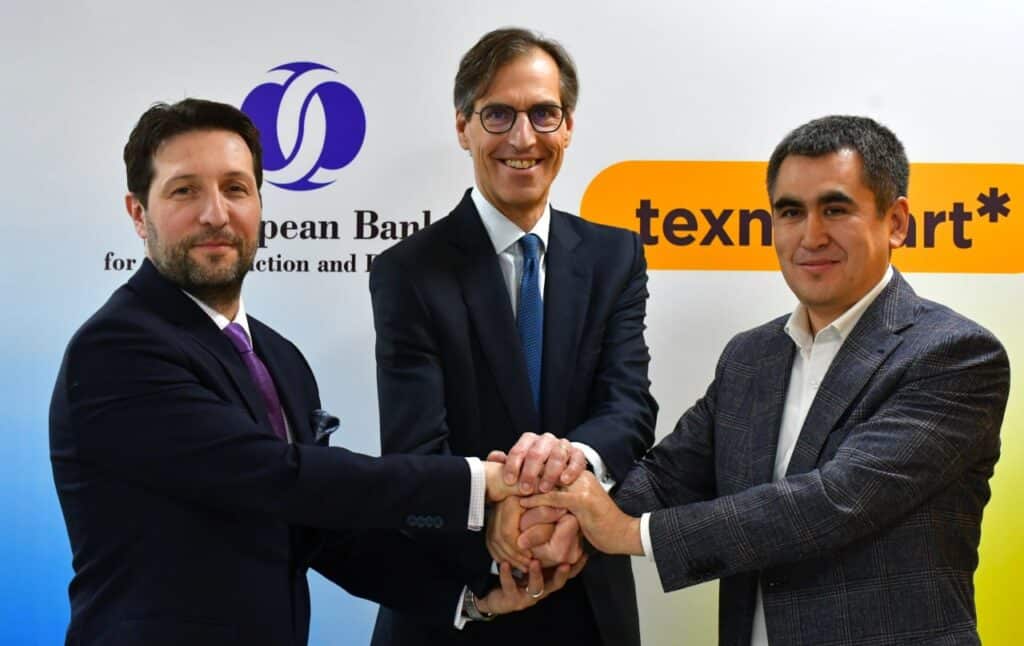
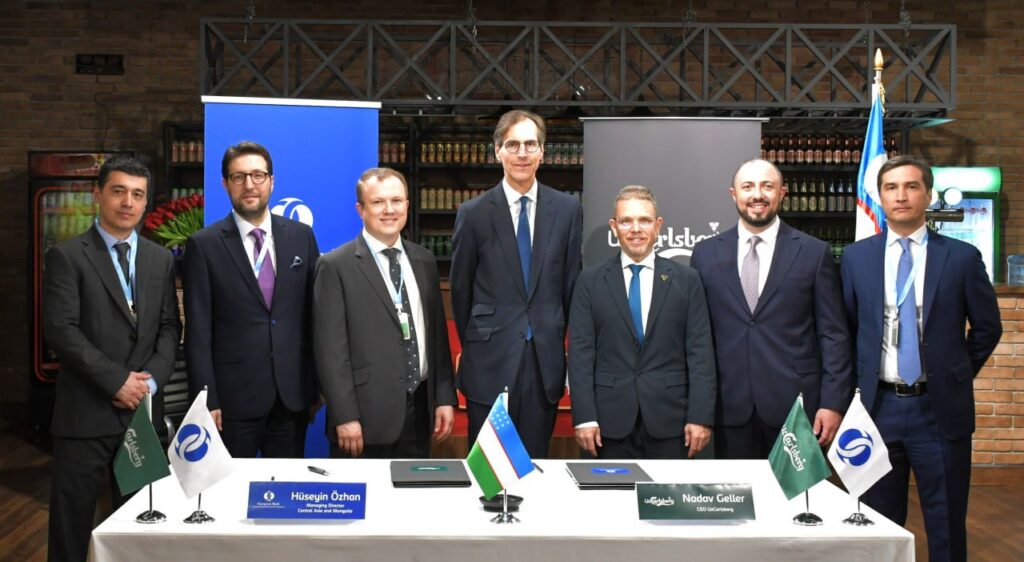
Last week, the European Bank for Reconstruction and Development announced new investments in Uzbekistan: the bank made an equity investment of $15.4 mln in the brewing company UzCarlsberg, and allocated another $10 mln to the home appliance retailer Texnomart. From 2019 to 2025, Uzbekistan has remained the largest recipient of EBRD financing in Central Asia — the total volume of the bank’s investments in the country’s economy has reached approximately $6.9 bn. We spoke with the EBRD First Vice President Greg Guyett, who visited the republic for the first time, about why Uzbekistan is attracting the bank’s attention, its plans, and the prospects of the country’s economy.
Dialogue with Business
— Mr. Guyett, what was the main purpose of your first visit to Uzbekistan?
— The main purpose of my visit was, first of all, to meet with our clients and discuss new opportunities for expanding cooperation. I see great potential for business in Uzbekistan, especially in the private sector, which forms the core of our work in the country.
With private sector partners, we are discussing support for small and medium-sized businesses and what is needed to create new jobs in growing companies. We pay special attention to the energy transition: we help both the government and businesses shape the energy systems of the future, where the development of renewable energy sources plays a key role.
We were also able to discuss a number of significant infrastructure projects with businesses and the government. We are interested in how we can use EBRD financial instruments and our expert support to help achieve government goals in energy, privatisation, and other important reforms.
Reforms as a Driver of Investment
— Uzbekistan has long remained one of the largest destinations for EBRD investment. Does this reflect a real transformation of the economy, or rather a vote of confidence in reforms that are yet to be completed?
— I think several factors explain why Uzbekistan occupies such a significant place in our work and investment portfolio. First of all, the government has made notable progress in advancing reforms.
Of course, many tasks still lie ahead, and we see broad opportunities to support the transition to a private sector–driven economy. But the state has already done a great deal to create the conditions necessary for this process.
It is also worth noting the balanced approach to fiscal policy. The government demonstrates responsibility in managing the budget, controlling the deficit, and bringing a number of tariffs and costs, especially in the energy and transport sectors, closer to market levels. This creates a stable macroeconomic foundation for further transformation.
It is important that the private sector is also developing dynamically in Uzbekistan, especially small and medium-sized businesses. We actively cooperate with local financial institutions, helping to digitalize them and improve efficiency. It is encouraging that government policy in recent years has also contributed to the formation of a more digital economy.
— Which sectors of Uzbekistan’s economy are currently the focus of EBRD investments? Is the bank considering increasing financing for projects in Uzbekistan?
— The EBRD is focused on investments in several key sectors of Uzbekistan’s economy. In the near future, major projects are expected, such as the construction of a new airport and a significant number of initiatives in the energy sector.
The financial sector remains a key area for us. We strongly support further privatisation and the development of sustainable, well-managed financial institutions with a predominance of private capital. Therefore, a significant part of our efforts will be focused on supporting banks and other financial organisations in the country.
I sincerely hope that our team will continue to increase the volume of projects and commitments in the country. While there are always certain constraints, but we have strong interest and a desire to expand our presence in Uzbekistan.
Not Missing the Window of Opportunity
— We often hear about a «window of opportunity» for Uzbekistan. What explains this, and what factors could affect how long this investment window remains open?
— I believe Uzbekistan’s attractiveness is explained by three main factors. First, the world today faces many complex geopolitical challenges. If we recall the Russia-Ukraine War, as well as instability in the Persian Gulf, it becomes clear that Central Asia, and Uzbekistan in particular, plays a strategically important role.
The revival of the old trade and transport routes along the Silk Road is becoming increasingly important amid conflicts and upheavals both north and south of the region. This creates a unique historical moment for the country.
Second, an important role is played by the balanced and responsible fiscal policy of the Uzbek authorities. We see positive assessments from rating agencies, which indicates trust in the country’s economic policy. In addition, current geopolitical shocks have led to rising gold prices, and Uzbekistan is in an advantageous position due to its significant reserves of this resource.
Finally, the third factor is the continuation of the reform program carried out by the government. The country’s leadership demonstrates a thoughtful and balanced strategy in a changing global environment. The economic situation in the country remains stable. Therefore, it is important that the course of reforms continues: it is necessary to further expand opportunities for the private sector, develop infrastructure projects, and at the same time deepen market transformations, including tariff and pricing reforms.
Expectations of Investors
— What are international investors expecting from Uzbekistan today? And how well does the country’s investment climate meet these expectations?
— Investors not only look at Uzbekistan’s economic potential with great optimism, but also closely monitor the implementation of the announced reform program.
An important indicator will be the activity of the Uzbekistan National Investment Fund (UzNIF), which is managed by Franklin Templeton and plans to enter public markets. The level of corporate governance and the degree of independence of the companies within this fund will become one of the key benchmarks for investors.
An equally important signal for the international community will be the successful progress of the privatisation program, both within the framework of the UzNIF and in the financial sector.
Privatisation in Uzbekistan: A Test of Sustainability
— Speaking of banks, how does the EBRD assess reforms in the financial sector?
— We believe that the privatization of financial institutions has multiple positive effects: it is not only a strong signal to the market, but also a tool that ensures fair, transparent, and rational allocation of capital based on real business opportunities. These are precisely the steps that foreign investors pay particular attention to.
The EBRD is encouraged by the government’s commitment to the chosen course of reforming the banking system, including through digitalisation. At the same time, it is extremely important to continue the reforms already underway in the field of corporate governance, ensuring equal conditions for all banks.
— Privatisation of large state assets is one of the key reforms in the «New Uzbekistan.» The EBRD has been actively involved in developing the privatization program. How do you assess this process today? How ready are international investors to participate?
— The key condition for international investors is that enterprises must be managed on a truly commercial basis, and corporate governance must be sufficiently independent to ensure that decisions are made based on market logic rather than administrative interests.
To achieve this, several steps are necessary: first, to strengthen corporate governance systems, and second, to build a transparent, commercially oriented operating model for these companies.
Uzbekistan’s macroeconomic fundamentals are strong and stable. This is not a country with excessive government spending or large budget deficits. Therefore, the foundation for investment is very favorable, but the success of reforms in governance and commercialization of state-owned companies is crucial.
— We have been hearing about the privatization of some state assets for many years. Will this process be delayed?
— When it comes to the pace of privatization, this process is always lengthy and often stretches over years. In Uzbekistan, it has been ongoing for about seven years, and in my view, what matters is not so much time as steady forward progress.
There are always external circumstances that affect the course of reforms: financial crises, the COVID-19 pandemic, recent fluctuations in energy prices. Under their influence, the pace of transformation may slow down or, on the contrary, accelerate. The main thing is that forward movement does not stop.
Capital of Trust
— Last year was marked by structural changes in Uzbekistan’s capital market. Today, state-owned companies are preparing for IPOs and considering listing venues. What role can international financial institutions play in developing the capital market?
— First of all, on behalf of the EBRD, I can say that capital market development is one of our key areas of activity. In different countries, we actively help governments build sustainable infrastructure for efficient and transparent financial markets.
In this area, we traditionally focus on three main elements. First, infrastructure: a reliable system of clearing, settlements, and other supporting mechanisms, without which the capital market cannot function fully.
Second, the legal and regulatory framework — it is necessary to create clear and predictable rules of the game that ensure investor confidence.
Third, the formation of investment instruments that attract market participants and make it liquid.
In this context, it is also important to mention pension reform. Uzbekistan has a young and growing working-age population, and now is the time to think about creating a modern pension savings system that would also serve as a source of domestic investment. This is directly linked to capital market development, as it forms a domestic class of long-term investors willing to invest in risky but promising assets.
When these foundations are in place, it will be possible to move on to listing large companies in order to create the necessary liquidity. It is not enough to simply put a small stake up for trading — it is necessary to create real turnover so that the market is active and transparent. Only then will international investors come.
From Raw Materials to Ideas
— What key challenges does Uzbekistan’s economy face today in terms of long-term development?
— Speaking of external risks, as with many economies around the world, one of the main threats for Uzbekistan remains fluctuations in energy prices. The country is an importer of energy resources, and today these vulnerabilities are becoming particularly noticeable.
The second major risk is geopolitical uncertainty. We have been living for several years in the context of the Russia-Ukraine War. Such events can expand and certainly affect Uzbekistan’s economy.
The third external risk is a possible slowdown in global economic growth and reduced activity in global markets. And although the Uzbek authorities pursue a balanced macroeconomic policy, such a situation will inevitably affect the country and the interest of international investors.
— How do you see the role of the EBRD in Uzbekistan’s economy in the coming years?
— At the EBRD, we see significant potential for further development of Uzbekistan’s economy. We support large infrastructure and energy projects aimed at reducing the country’s dependence on oil and gas imports.
Another strategic direction is stimulating high value-added production, especially in manufacturing industries and the processing of critical minerals.
Uzbekistan has significant reserves of such resources, and we strive to ensure that their processing and the creation of final products take place within the country, rather than being limited to raw material exports.
Our focus is on developing partnerships with strategic international investors to create production capacities in automotive manufacturing, engineering and mineral processing. This will strengthen Uzbekistan’s industrial potential and its integration into global value chains.