
Celebrations erupted across Bosnia and Herzegovina after the national team secured a place at the next FIFA World Cup, with jubilant scenes highlighting the emotional weight of qualification. Yet behind the joy, tensions are growing within European football over how places at the expanded tournament are distributed — and how qualification itself is decided.
The upcoming World Cup will feature 48 teams for the first time, but European governing body UEFA has been allocated just 16 slots — only three more than in the previous 32-team format. Several European associations argue that this increase does not reflect the continent’s depth or competitive strength.
Officials within Europe have voiced frustration, suggesting that the current allocation underrepresents the region compared to others. While Europe will still send the largest number of teams, critics point out that only 16 of UEFA’s 55 member nations will qualify. By contrast, South America will have six representatives out of just 10 countries.
Other confederations, however, defend the distribution. They argue that the expansion is designed to make the tournament more globally inclusive, correcting decades of European dominance and helping develop football in emerging regions. Supporters of the current model also highlight that broader representation aligns with FIFA’s long-term growth strategy.
Some European figures counter that argument on both sporting and commercial grounds. They claim that including more teams from traditionally stronger football nations could enhance the overall quality of the tournament — and generate higher revenues. Comparisons have also been drawn with the Club World Cup, where European representation remains proportionally higher.
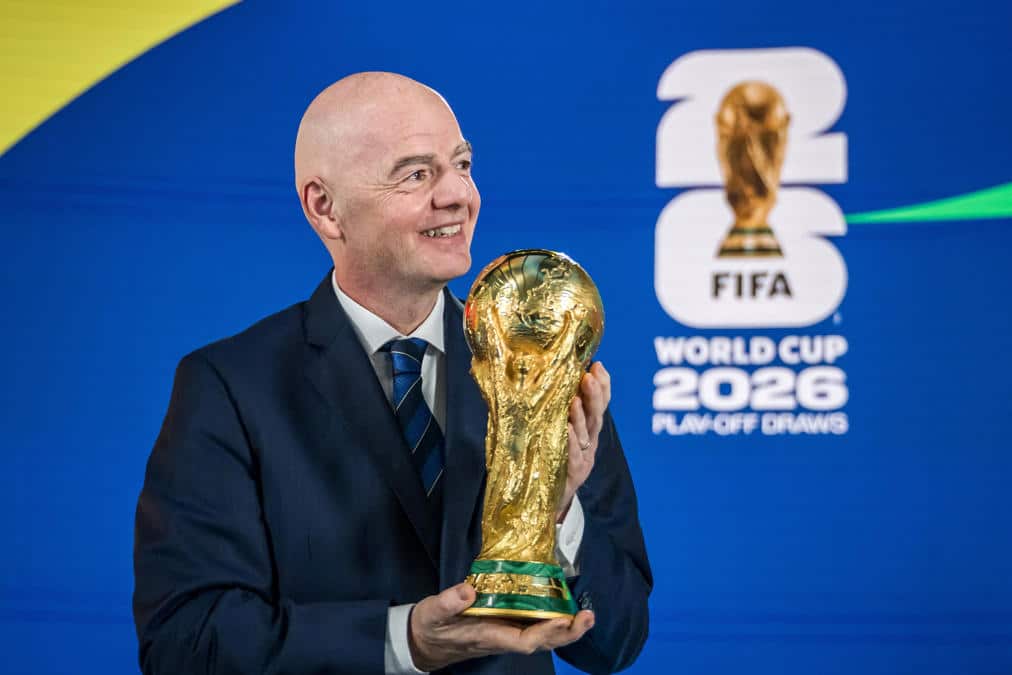
The debate has also taken on a political dimension. FIFA president Gianni Infantino is widely seen as enjoying stronger backing from Asian and African federations, which together form a significant voting bloc. That dynamic, some insiders suggest, makes it unlikely that Europe will secure additional World Cup places in the near future.
At the same time, a separate controversy is emerging over the structure of European play-offs, the final pathway to qualification. The current system, designed by UEFA and approved by FIFA, uses single-match ties rather than traditional two-legged fixtures.
Recent results have intensified criticism: of the 12 play-off matches played in Europe, including semi-finals and finals, eight were won by the home team. Some officials have described the format as «extremely unfair,» arguing that such high-stakes matches should not be decided with one side holding a home advantage.
Calls are growing for future play-offs to be staged at neutral venues. However, a return to two-legged ties is considered unlikely due to an already congested international calendar.
The single-match system was first introduced during qualification for Euro 2020, following the launch of the UEFA Nations League. It has since been used for World Cup and European Championship qualifiers, balancing scheduling demands with commercial priorities.
Despite resistance to major structural changes, discussions are ongoing within UEFA about how qualification formats could evolve. Decisions on the structure for Euro 2028 are expected in the coming months, and could offer clues about whether reforms to the World Cup play-off system are on the horizon.
For now, Bosnia and Herzegovina’s celebrations capture the drama and reward of the current system, even as debate continues over whether it is the fairest way to reach football’s biggest stage.