NASA Shares First High-Resolution Images of Earth From Artemis II Mission

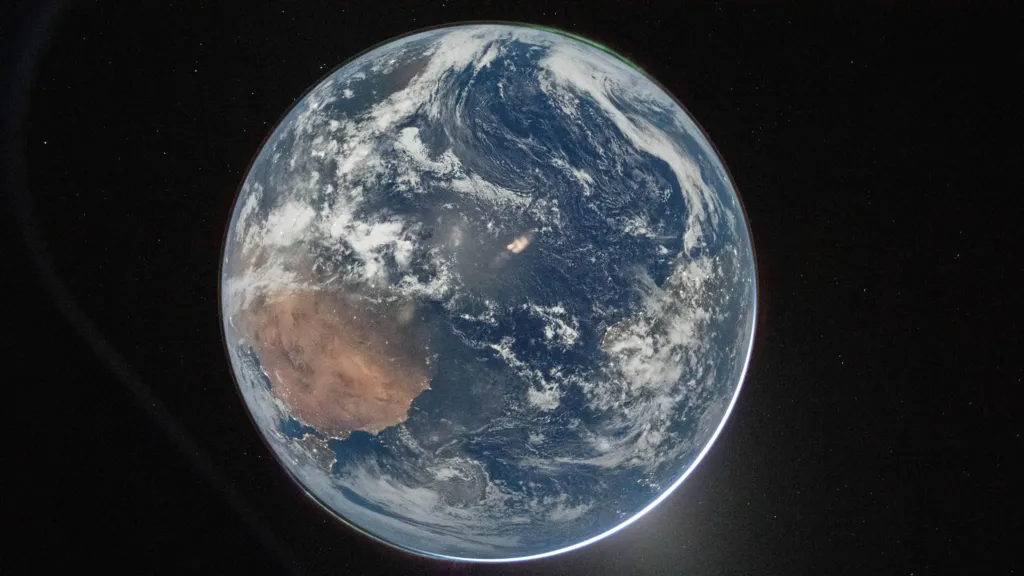
The American space agency has released a stunning collection of high-definition photographs of our planet, snapped by the astronauts aboard the Artemis II mission as they approach the halfway mark of their lunar voyage.
These spectacular pictures were captured by Commander Reid Wiseman shortly after the Orion capsule executed a crucial engine burn to lock in its path towards the Moon. According to official tracking data, the vessel sat roughly 142,000 miles away from Earth and 132,000 miles from the lunar surface at approximately 07:00 BST.
A spectacular new perspective
Among the newly published catalogue is a striking portrait titled Hello, World. This specific frame highlights the deep blue expanse of the Atlantic Ocean bordered by a delicate atmospheric halo.
Because the planet is actively eclipsing the Sun in the shot, vivid green auroral light can be seen glowing at both the northern and southern poles. Geographically, the western edge of the Sahara Desert and the Iberian Peninsula occupy the left side of the image, eastern South America sits on the right and the planet Venus gleams brightly in the lower right corner.
Mission specialist Jeremy Hansen noted that the entire crew remained utterly transfixed by the spacecraft’s windows following their trans-lunar injection manoeuvre on Friday morning. He reported that the astronauts were treated to a magnificent view of Earth’s darkened hemisphere illuminated by lunar light.
Overcoming cosmic photography challenges
Capturing these visuals was not without its technical hurdles. Wiseman admitted to facing early difficulties when adjusting camera exposures across such vast distances. He likened the frustrating challenge to a person standing in their back garden and attempting to photograph the Moon.
Despite these initial setbacks, subsequent pictures successfully showcase the terminator line cleanly splitting the globe between day and night alongside the faint glimmer of urban city lights piercing the darkness.
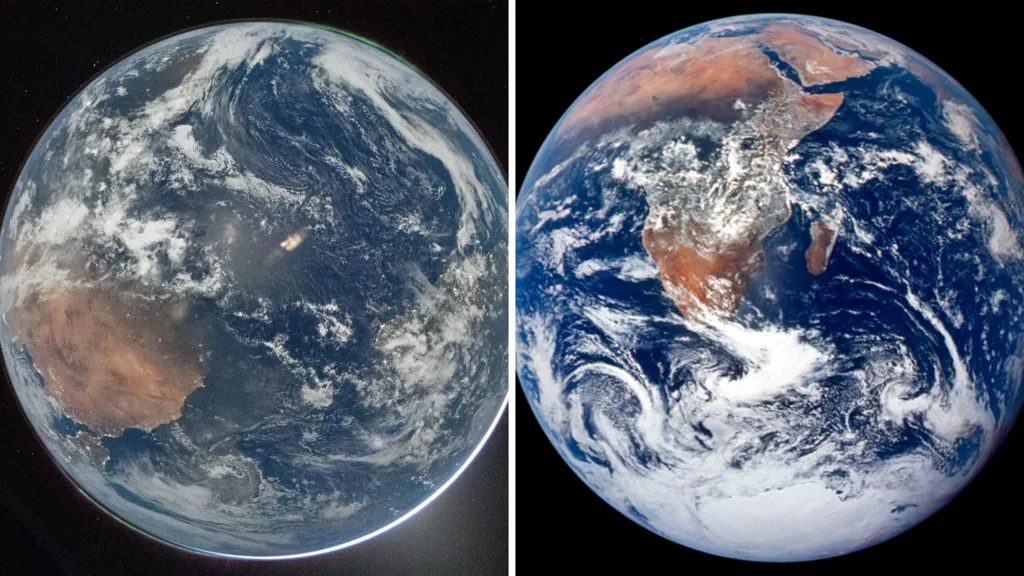
To contextualise the achievement, NASA released a comparative graphic pairing these modern captures with the famous 1972 Apollo 17 portrait of Earth. The agency noted that while technology has advanced immensely over the past 54 years, the intrinsic beauty of our home planet remains completely unchanged.
As for the remainder of the historic expedition, the Artemis II crew is scheduled to navigate around the far side of the Moon on 6 April. The mission will then conclude with a return journey to Earth on 10 April. This monumental voyage marks the very first time human beings have travelled beyond low Earth orbit since the end of the Apollo era in 1972.