
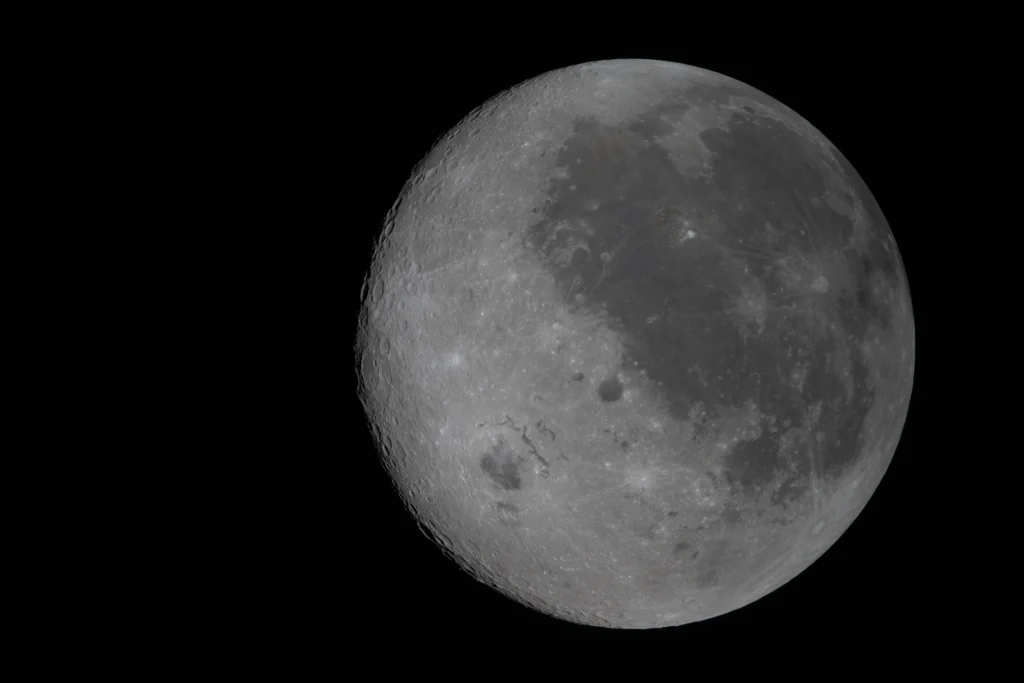
Astronauts aboard NASA’s Artemis II mission have, for the first time in crewed spaceflight, observed the far side of the Moon with the naked eye during their lunar flyby.
As they passed the lunar surface, the crew saw a stark landscape lacking the familiar dark maria visible from Earth, instead dominated by dense craters, including the vast Orientale basin. NASA said images released from the mission show both sides of the Moon, with the near side marked by dark patches formed by ancient lava flows, while the far side remains largely hidden from Earth due to the Moon’s synchronous rotation.
The Orientale basin, measuring around 965 kilometres in diameter and located along the boundary of the two hemispheres, was captured in full, a view not possible from Earth, where only part of it can be seen.
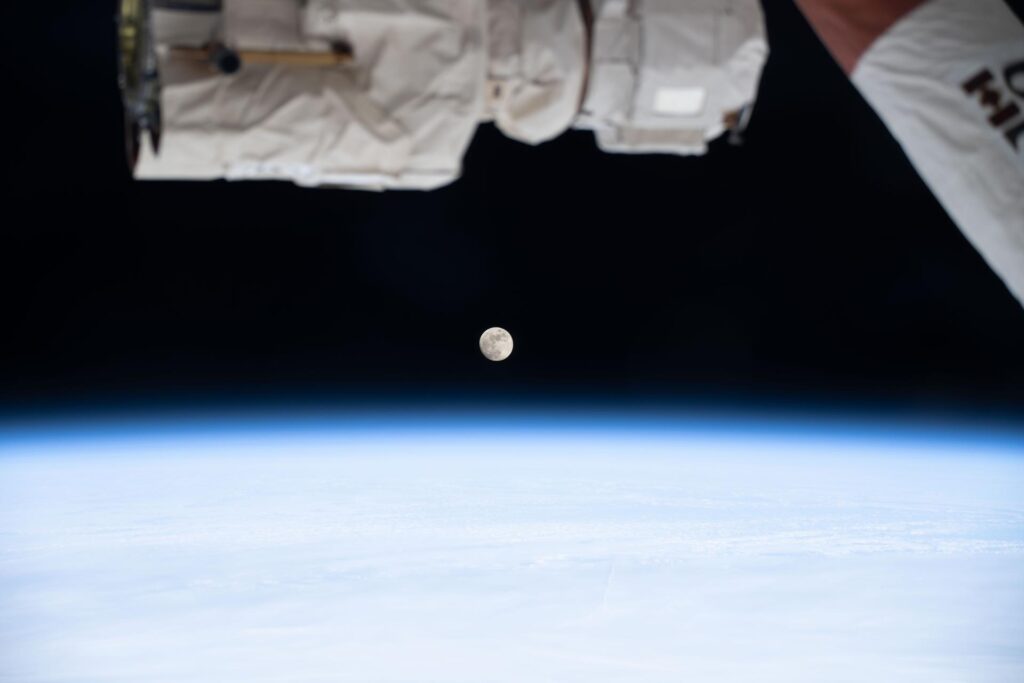
Live coverage of the mission is being streamed across multiple platforms, including YouTube, with the Orion spacecraft transmitting images from cameras mounted on its solar arrays. NASA noted that image quality may vary due to distance and communication limits, and confirmed there would be a brief signal blackout as the spacecraft passed behind the Moon.
A new record
During the mission, Artemis II also set a new record for the furthest distance travelled by a crewed spacecraft, reaching 406,780 kilometres from Earth, about 6,615 kilometres farther than the previous record set by Apollo 13 more than 50 years ago.
Astronauts also witnessed rare phenomena known as Earthset and Earthrise, as the planet disappeared behind the lunar horizon before reappearing as Orion emerged from behind the Moon.

The crew has proposed names for two visible craters, suggesting «Integrity» in honour of the mission, and «Carroll» in memory of commander Reid Wiseman’s late wife. The proposals will be submitted to the International Astronomical Union for consideration.
Following the flyby, the astronauts spoke with U.S. President Donald Trump, who congratulated them and said the mission had made the nation proud.
The crew has now concluded observations of the Moon and begun their journey back to Earth. Orion is expected to leave the Moon’s gravitational influence on Tuesday at around 13:25 Eastern Time.
From economics and politics to business, technology and culture, Kursiv Uzbekistan brings you key news and in-depth analysis from Uzbekistan and around the world. To stay up to date and get the latest stories in real time, follow our Telegram channel.