KitKat Heist Sparks Viral Security Convoy Stunt

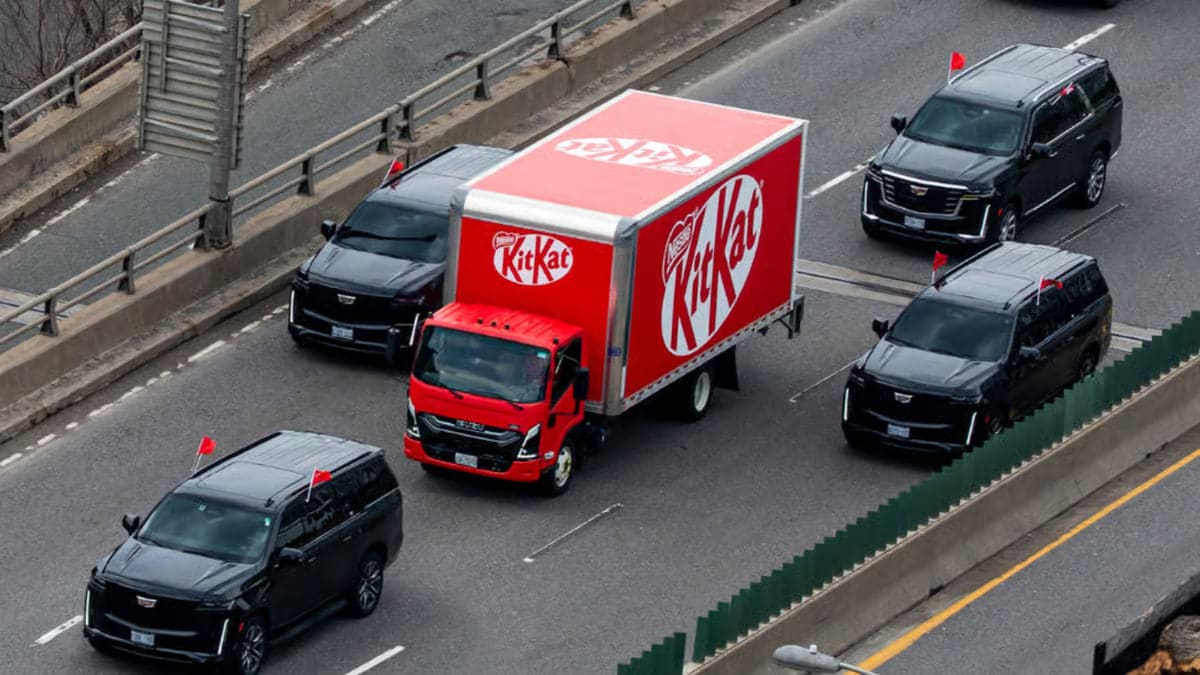
In March, criminals made off with a lorry containing over 12 tonnes of KitKat bars. This staggering loss of nearly 414,000 chocolate wafers rapidly captured the public’s imagination and turned a standard freight robbery into an internet sensation.
Hoping to recover the snacks, Nestle activated a tracking mechanism relying on the distinct batch numbers stamped onto individual wrappers. If scanned, these digits identify the sweets as stolen property and offer directions on how to notify authorities so the manufacturer can map where the contraband eventually surfaces.
Presidential-Style Escorts
The narrative took a highly theatrical turn when Canadian motorists began spotting KitKat delivery lorries flanked by imposing motorcades of black SUVs. These sightings coincided with a peculiar employment advert seeking security personnel skilled in safeguarding premium cargo.
Footage of these heavily guarded transports exploded across social platforms. Content creator Shawn Molko captured one such motorcade navigating downtown Toronto for Instagram. In his broadcast he quipped about the extreme measures, joking that the company either feared another raid or was secretly transporting Beyonce.
Similar clips on TikTok amassed vast viewerships whilst sparking intense debate regarding the authenticity of the escorts. Commentators were completely divided; some expressed certainty that the operation was a promotional trick while others simply praised the brand’s advertising department for their sheer ingenuity.
The mastermind behind the motorcade
The confectionery giant eventually admitted that the intimidating convoys were indeed a clever publicity manoeuvre orchestrated by the creative agency Courage. The firm’s founder Joel Holtby explained that the campaign capitalised on the organic buzz surrounding the robbery.
He noted that the absurd sight of a heavily guarded chocolate delivery lorry required no heavy-handed messaging to be effective.
Even with the massive online engagement generated by the campaign, the original 12-tonne shipment remains unaccounted for as Nestle persists with its tracking operations.