Artemis II Astronauts Promise Unseen Photos and Untold Stories Ahead of Return to Earth

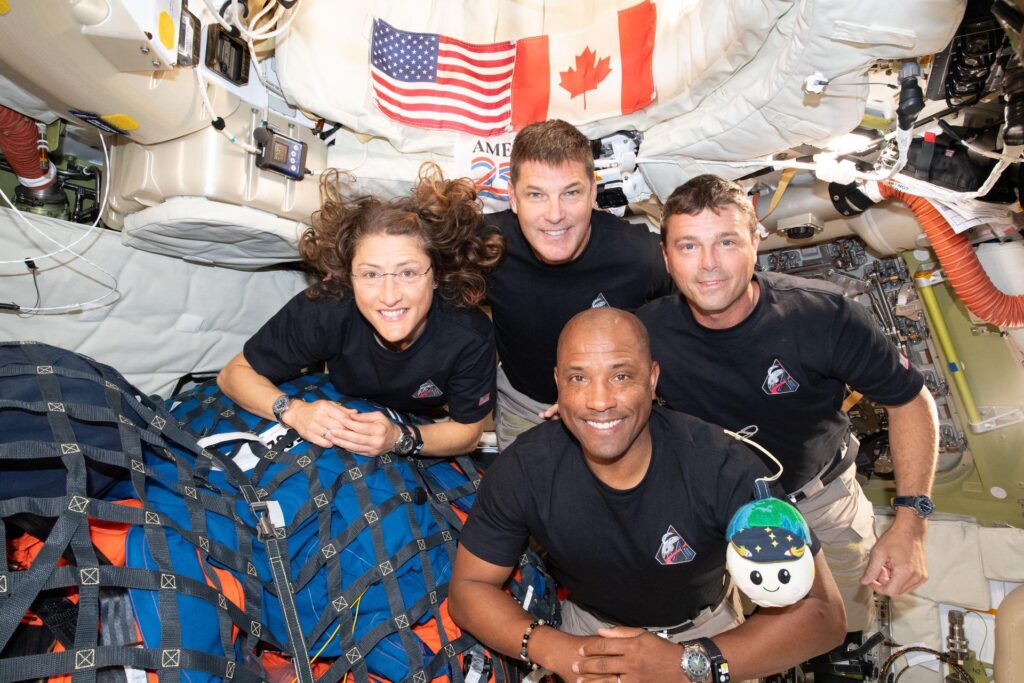
As they prepare for their journey back to Earth, the Artemis II crew members say they possess a wealth of unreleased photographs and untold stories to share with the public, BBC reports.
Having successfully navigated around the Moon, the four astronauts aboard the Orion spacecraft are scheduled to splash down near the coast of San Diego at approximately 20:00 U.S. EST on Friday (00:00 GMT).
Eager to Share the Experience
Addressing the press from the vacuum of space, mission pilot Victor Glover expressed the team’s immense eagerness to reveal what they have witnessed. This virtual press conference marked the first public communication from the crew since their record-breaking lunar flyby took them further into deep space than any humans before them.
Questioned on Wednesday evening regarding their imminent re-entry, Glover emphasised the sheer volume of material they are bringing home.
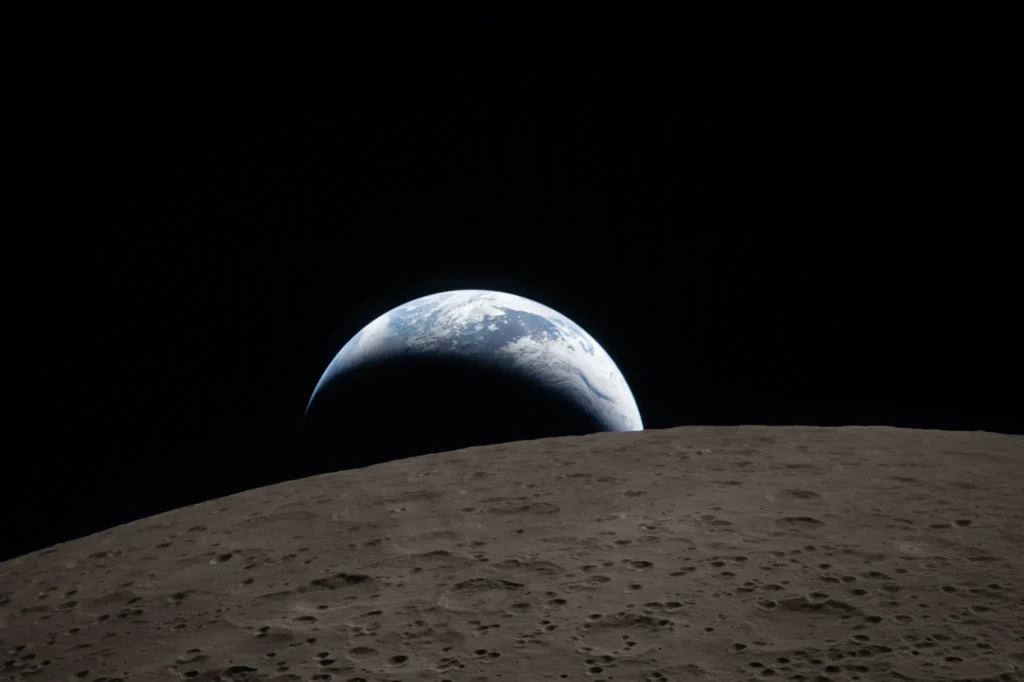
«We have to get back. There’s so much data that you’ve already seen, but all the good stuff is coming back with us,» he explained, adding that there are countless more images and tales yet to be unveiled.
He noted the crew still faced a couple of days to process their monumental journey, stating he would be reflecting upon and discussing these experiences for the rest of his life.
Shattering Records and Exploring the Far Side
On Monday at roughly 13:56 EDT (18:56 BST), the Orion capsule shattered the human spaceflight distance record. It surpassed the 248,655-mile (400,000-kilometre) milestone established by the Apollo 13 mission back in 1970.
Rather than landing on the lunar surface, the spacecraft charted a course around the Moon’s far side. While satellites have previously captured this hidden hemisphere, these astronauts became the very first humans to lay eyes on its expansive lava plains and rugged craters.
Immediately following this historic flyby, President Trump reached out to offer his congratulations, telling the crew they had made history and made America incredibly proud.
Solitude, Science and Emotional Milestones
During the recent broadcast beamed directly into Nasa’s Johnson Space Center in Houston, the quartet passed a floating microphone between them to answer reporters’ questions despite significant communication delays.
When prompted by the Los Angeles Times about the 40 minutes of absolute radio silence while behind the Moon, Commander Reid Wiseman detailed the intense scientific workload involved.
He described it as perhaps the most vital period for their geology team. However, the crew also took a brief pause. Wiseman shared that they spent a few minutes eating maple cookies provided by crewmate Jeremy Hansen and reflecting quietly on their profound isolation.
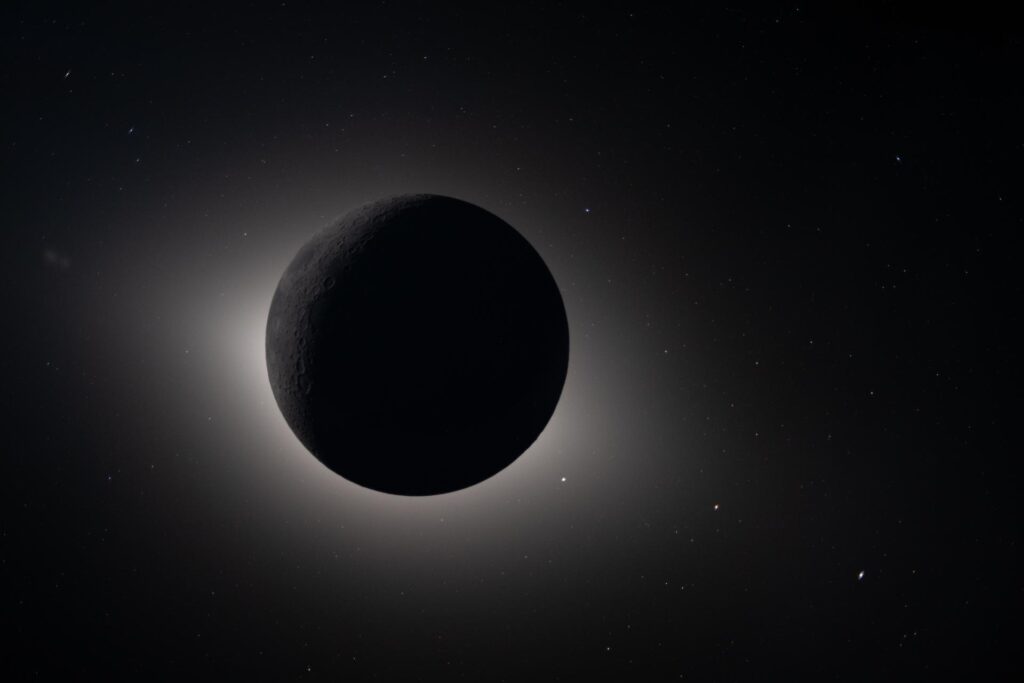
Each astronaut highlighted distinct personal highlights. Glover described witnessing a lunar eclipse from beyond the far side of the Moon as his ultimate gift. For Wiseman, the mission’s zenith occurred when the team named a newly observed lunar crater in honour of his late wife Carroll, who tragically succumbed to cancer in 2020.
He recounted the overwhelming emotion of the moment, noting that as Jeremy spelled out her name, he looked across the cabin to see Christina Koch in tears.
Camaraderie and the Final Plunge
The astronauts admitted they rely primarily on their families for news from home. Wiseman joked that their relatives serve as their main gauge for how the public perceives the mission, though he conceded they are naturally biased.
When BBC Science Editor Rebecca Morelle asked what she would miss most about space, Christina Koch pointed to the deep sense of camaraderie. As for what she would not miss, Koch insisted there was absolutely nothing.
She argued that humanity cannot push the boundaries of deep space exploration without enduring inconvenience, making sacrifices and taking calculated risks, all of which she deemed entirely worthwhile.
The team now faces a few relatively quiet days dedicated to system checks and scientific experiments. Soon they will confront their final hurdle: a blistering atmospheric re-entry at nearly 25,000 mph followed by a parachute-assisted splashdown in the Pacific Ocean.