Artemis II Splashdown: Astronauts Return to Earth With Lunar Discoveries

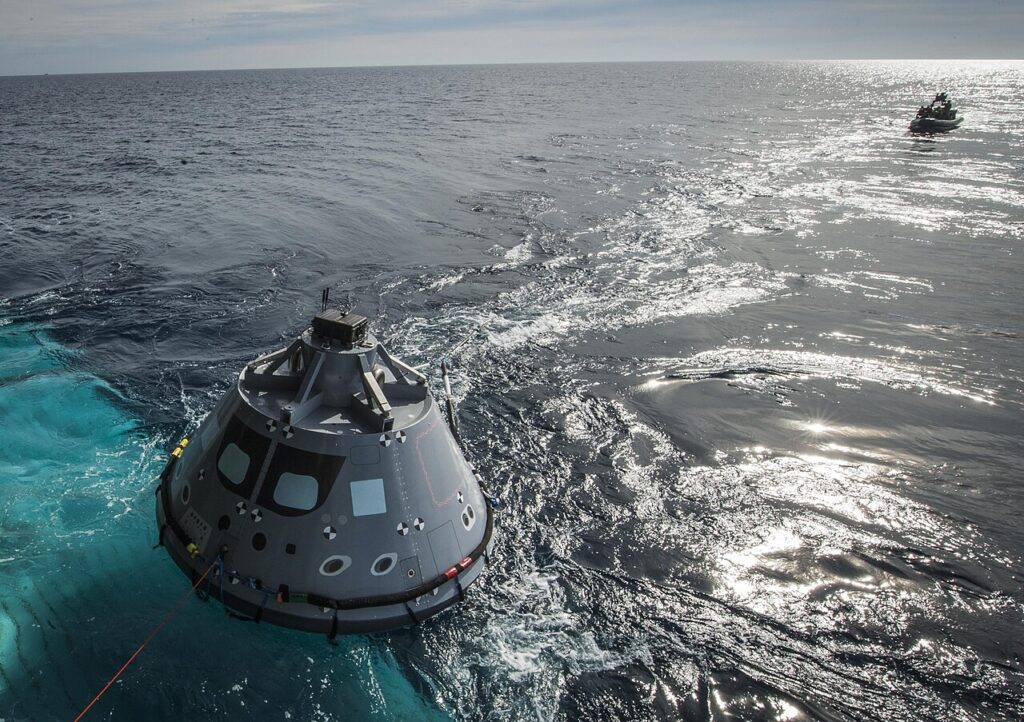
The four astronauts aboard NASA’s Orion spacecraft have safely splashed down in the Pacific Ocean, marking the triumphant conclusion of the historic 10-day Artemis II mission, NASA reports.
Commander Reid Wiseman, pilot Victor Glover, mission specialist Christina Koch and Canadian Space Agency astronaut Jeremy Hansen touched down off the coast of San Diego on Friday night following an extraordinary flyby of the moon. The landmark journey represented the first time humans had ventured beyond low Earth orbit since the Apollo 17 mission in 1972.
A fiery descent and successful recovery
The return journey culminated in a crucial test of the spacecraft’s descent capabilities. Re-entering the Earth’s atmosphere at speeds of roughly 25,000 miles per hour, the Orion capsule’s state-of-the-art heat shield was forced to endure extreme temperatures. Following the fiery plunge a complex system of parachutes deployed perfectly to slow the vessel and guide it to a gentle water landing.
Recovery teams led by the U.S. Navy were heavily positioned in the drop zone and moved in rapidly to secure the bobbing capsule. Specialist divers, helicopter crews and naval personnel worked together to extract the crew and transport them to a nearby recovery ship for immediate medical evaluations.
Lunar discoveries and stunning observations
While the mission did not involve landing on the moon the crew made several significant observations and discoveries during their close encounter. Passing just over 4,000 miles from the lunar surface the astronauts captured more than 7,000 high-resolution images of the stark terrain.
Their vast photographic collection includes striking views of an «earthset» and «earthrise», ancient lava flows, surface fractures and the sprawling Milky Way galaxy. The crew also carefully documented the complex topography along the terminator line where lunar day meets night.
The low-angle sunlight in this region casts long shadows that simulate the challenging illumination conditions astronauts will face when landing near the lunar south pole in the future.
During their deep-space transit the crew witnessed a rare solar eclipse from an unprecedented vantage point as the moon completely blocked the sun. The dramatic drop in sunlight even allowed the astronauts to photograph Mars and other bright planets glowing in the dark backdrop.
Additionally the team reported spotting meteoroid impact flashes on the night side of the moon and proposed names for two lunar craters. The astronauts suggested naming one crater «Integrity» in honour of their spacecraft and another «Carroll» in memory of Wiseman’s late wife.
Paving the way for future exploration
During the flight the crew broke the record for the farthest distance humans have ever travelled from Earth. Reaching an incredible 252,756 miles into space they surpassed the benchmark previously set by the Apollo 13 mission in 1970.
By proving that the Orion spacecraft can safely carry a human crew to the moon, facilitate significant scientific observation and return them home the space agency has paved the way for Artemis III. The next phase of the programme aims to put humans back on the lunar surface later this decade and establish a sustainable presence to prepare for eventual missions to Mars.