“The need for long-term funding arises faster in a digital bank” — CFO of TBC Uzbekistan Sharof Sharipov

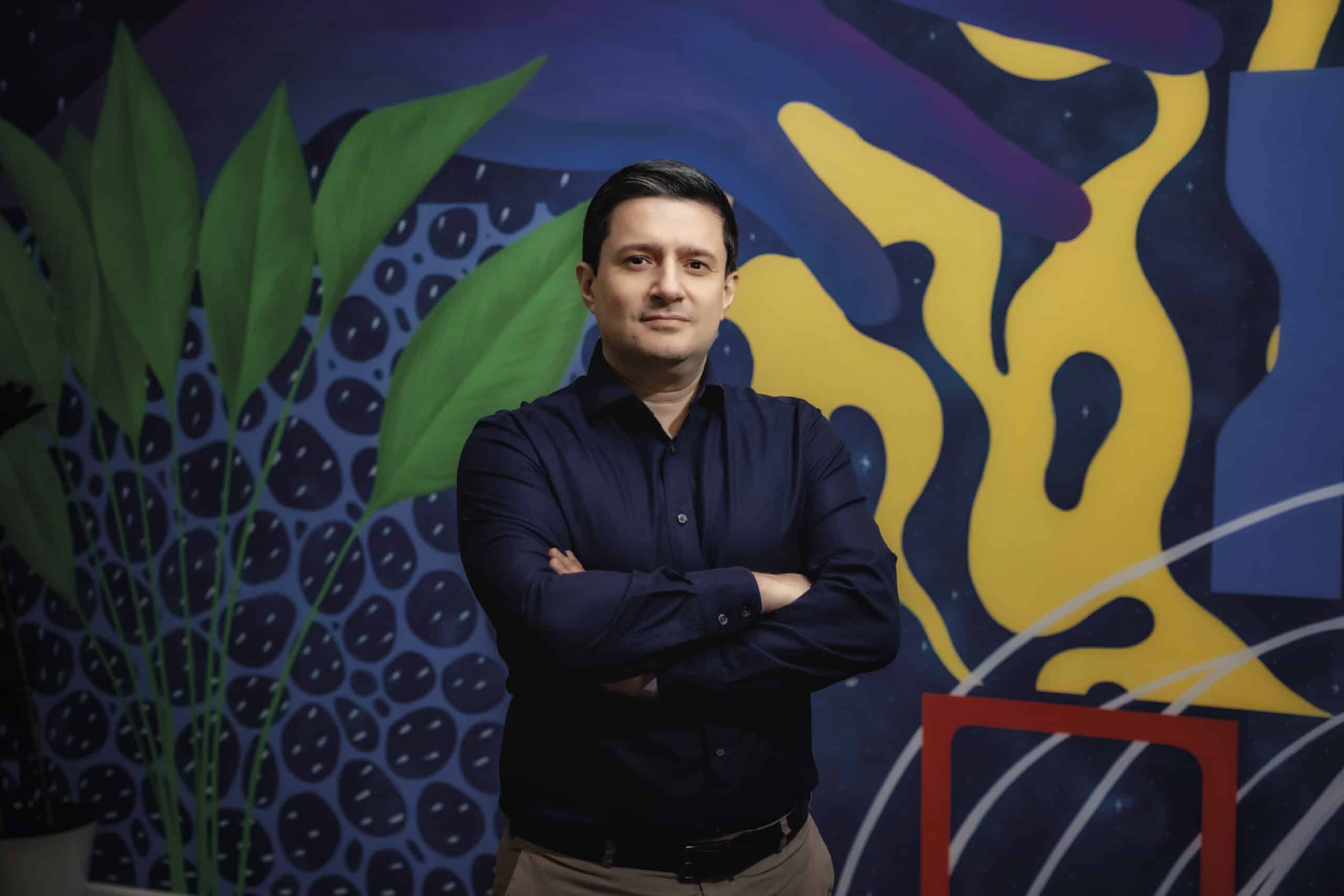
Having completed last year with another bond issue of 49.6 bn soums at 19%, TBC Bank has finally secured its status as a systemic issuer. Taking into account the group’s placement of $200 mln in the summer of 2025 and the first entries into the market in 2024, this is already the fourth issuance aimed at developing the business in the country.
Kursiv Research spoke with CFO of TBC Uzbekistan Sharof Sharipov about the strategy of funding diversification and the culture of transparency to understand how debt instruments help a digital bank grow faster than the market.
— Sharof, let’s start with the fundamentals. If we look at the history of Uzbekistan’s banking sector, for a long time the model of state participation dominated. At what moment did this system break down and banks move to debt markets?
— Before the acceleration of reforms in 2015–2016, state funding dominated the sector. The system was directive: the state itself decided which industries to support and directed money through banks. The second source was corporate deposits. After market liberalisation, the situation changed, and banks gained access to instruments that were previously considered unattractive.
The main breakthrough was retail. Previously, banks considered lending to the population unprofitable, but with the arrival of digital players such as TBC, everything changed.
Competition for resources began. To ensure rapid growth, banks first competed for household deposits, money from under mattresses flowed into the economy. Later, with the opening of external markets, it became possible to issue Eurobonds. Diversification of funding became a direct result of explosive growth in the loan portfolio.
— TBC entered the Uzbekistan market not by acquiring an existing player, but through a greenfield model — obtaining a licence from scratch. How did this path affect your capital-raising strategy?
— Many foreign investors are afraid to enter from scratch, preferring to buy ready-made structures. Our entry into the market was indeed unique in this sense. Since then, the group has injected nearly $300 mln in equity capital directly into Uzbekistan’s economy.
At the first stage of our development, the group focused on developing the retail segment to ensure scale and customer engagement, offering a convenient app, payments and transfers, and retail lending as tools to attract users. Since the beginning of 2025, the focus has shifted to servicing businesses, merchants and individual entrepreneurs by providing them with tools to improve their operational efficiency. As a result, the group has now formed a loan portfolio of more than 10 trillion soums in Uzbekistan.
At such growth rates, capital alone is not enough. Wholesale funding plays a key role. The TBC group has an advantage — long-standing relationships with international institutions: EBRD, IFC, DEG, FMO, KfW. This history of relationships helps us effectively attract resources to maintain high growth rates.
__________________________________________________________________________________________
Sharof Sharipov
Chief Financial Officer (CFO) of TBC Uzbekistan, one of the leading digital banking ecosystems in Central Asia, part of TBC Bank Group listed on the London Stock Exchange. The ecosystem includes the digital bank TBC Bank, the payment app payme, TBC Sug‘urta insurance, and the business automation platform BILLZ. He is responsible for the group’s financial and overall strategy, financial planning, funding management and investor relations.
He received education and professional qualifications in the United Kingdom, is a certified accountant and has more than 20 years of experience in corporate management, financial management, investment banking, audit and compliance. Before joining TBC, he held senior financial positions in international companies and financial institutions in the UK and the US. For five years, he was a member of the supervisory board of TBC Bank in Uzbekistan since its launch and participated in shaping its financial strategy.
____________________________________________________________________________________________
— According to Kursiv Research estimates, in the first nine months of 2025, the bank entered the top three in terms of loan portfolio growth in absolute terms. What helps a digital bank grow faster than the market average and what distinguishes it from traditional banks?
— Traditional banks are called brick and mortar. They start slowly and move very slowly. We can grow loan and deposit portfolios much faster. This is because sales channels and decision-making channels are digital, the portfolio grows faster, and the need for additional funding sources arises much earlier.
This is the key difference. If you have a niche business model, then you may not need a deposit portfolio at all to avoid funding risk, but this is not our case. It the moment, the group’s ratio is approximately 60–65% deposits and 35–40% other funding. A ratio of up to 50/50 is considered normal, but deposits should be slightly higher so that the bank benefits from their lower cost.
— In 2024, you issued two-year bonds that will mature this year. How do you build dialogue with investors over this period and what is the key parameter?
— It is not without reason that the word «credit» originates from the Latin word for «trust». Trust is the key ingredient in proper relationships.And it is built on different things: transparency, discipline, regularity. When you build relationships on a transparent basis, understand your own business well and present it clearly to a potential investor, trust gradually forms.
A proper culture of execution is important. If two years ago you told investors you wanted to achieve certain goals and later demonstrate discipline in achieving them, this creates a foundation. Mathematically, almost everything can be calculated, but in the end there are always a few percent left that I call a leap of faith. This is the moment when the investor relies on instinct and trusts you. Our corporate governance systems meet London standards, which helps achieve this level of relationships. Even when issuing bonds through disclosure procedures, investors feel this transparency and predictability.
— Do you have a calendar for communication with investors? How systematic is this process?
— Yes, the calendar is part of our annual budget planning. We plan what indicators we want to achieve and what balance sheet structure we want to reach. From this follow our requirements for deposit and wholesale funding volumes. Within wholesale funding, we understand when we need to refinance loans or increase the portfolio.
There are cases when we simply maintain communication with an investor who we do not yet need. We can hold non-deal meetings, just discuss matters, present ourselves, again building trust for the future.
— If you summarise your experience, what checklist would you offer to companies planning to enter the bond market? What investor requirements are critical?
— The economic justification for the need for financing is key. If investors feel that a loan is sought for non-economic reasons, this immediately leaves a negative impression. There must be a clear understanding of why you need the money and why it is beneficial. The second element is the predictability of your financial model and behaviour. You need to minimise unknowns so that the investor understands your model. Next is the specificity of the Uzbek market: asset quality and risk management. You need to honestly and transparently show asset quality and inspire confidence in the control system.
Finally, corporate governance and independence of decision-making. If an investor believes that lending decisions are made not by management but by some other party behind the scenes, this destroys predictability. These are hygiene factors: they will not make you healthier, but they will prevent illness. And on top of all this you add IFRS, numbers and economics.
— How important are the presence of large international institutions in the capital and the personalities of managers in this process?
— In our case, this plays an important role because it creates a certain weight of trust. This applies both to professionals from Georgia and other countries, and to international financial institutions that are our shareholders. Our group is part of the FTSE 250 — the 250 leading companies listed on the London Stock Exchange — which also creates a level of trust.
If the bank and the group are structured correctly, it is very difficult to make a decision that violates corporate governance standards. This is a huge advantage, but again these are hygiene factors. If trust is created but in reality the investor sees that everything is not so, they still will not give the loan.
— TBC has already issued four bond placements, but not all of them were on the local market. What do you consider critically important for the development of the local debt market in Uzbekistan?
— I have seen how markets were formed in Poland, the Czech Republic, Russia, Ukraine and other Eastern European countries. Building a financial market is like constructing a stone arch. While you are placing stones on the sides, the structure is unstable and can collapse from any shock. But once you place the final keystone in the centre, the arch gains fundamental stability.
We already have many ingredients: a legal framework, a culture of fulfilling obligations and governance standards. But the main missing element for stability is secondary market liquidity. Without the ability to sell a bond before maturity, it turns into a regular loan.
For an investor, this is a completely different risk: they fear being left alone at the helm without an exit. Creating a secondary market is difficult, it depends on pension funds and the operational maturity of the market, but this is our keystone.
— And what should an investor be like in such a market? How can institutional players be activated?
— The investor must be long-term. Speculative short-term decisions do not benefit either the market or the investor. A good example is Poland in the 1990s, where the focus was placed on pension funds. But it is important not to force them to invest money by directive. There must be independence: the fund manager must decide how to maximise returns. If this mechanism works, everything else follows.The issuer must be disciplined and understandable. If a company violates even non-financial obligations, it undermines trust. Without trust, a market cannot be built.
— Tell us about the development strategy of your ecosystem: payme, insurance, banking services. Where are the raised funds directed?
— We do not reinvent the wheel but build verticals around customer needs. The first is payments: debit cards, transfers and credit cards. The second is borrowing: loans for individuals and businesses. The third is financial protection, or insurance — another cornerstone of stability. The fourth is savings and deposits. The fifth vertical we are aiming for is investments.
We want to give clients the opportunity to invest in financial assets. In Uzbekistan, this is especially relevant from the perspective of Islamic finance. Many clients want not just to earn interest but to participate in profits or dividends in line with their beliefs.
— So the bond market is the foundation for investment development?
— Absolutely. It is the basis for arbitrage between terms and rates. So far, we have issued bonds only at the bank level, but this structure has its limitations. In the future, we are considering raising capital through bonds for other companies within our group. This is a quickly growing direction that we will continue to develop.